Russo-Abrahão Thais, Lacerda-Abreu Marco Antônio, Gomes Tainá, Cosentino-Gomes Daniela, Carvalho-de-Araújo Ayra Diandra, Rodrigues Mariana Figueiredo, Oliveira Ana Carolina Leal de, Rumjanek Franklin David, Monteiro Robson de Queiroz, Meyer-Fernandes José Roberto
Instituto de Bioquímica Médica Leopoldo De Meis, Centro de Ciências da Saúde, Universidade Federal do Rio de Janeiro, Rio de Janeiro, RJ, Brazil.
Instituto Nacional de Ciência e Tecnologia em Biologia Estrutural e Bioimagem, Rio de Janeiro, RJ, Brazil.
PLoS One. 2018 Feb 7;13(2):e0191270. doi: 10.1371/journal.pone.0191270. eCollection 2018.
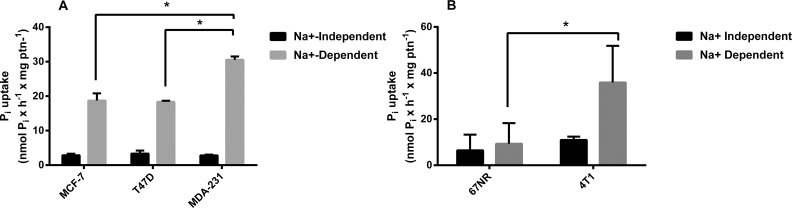
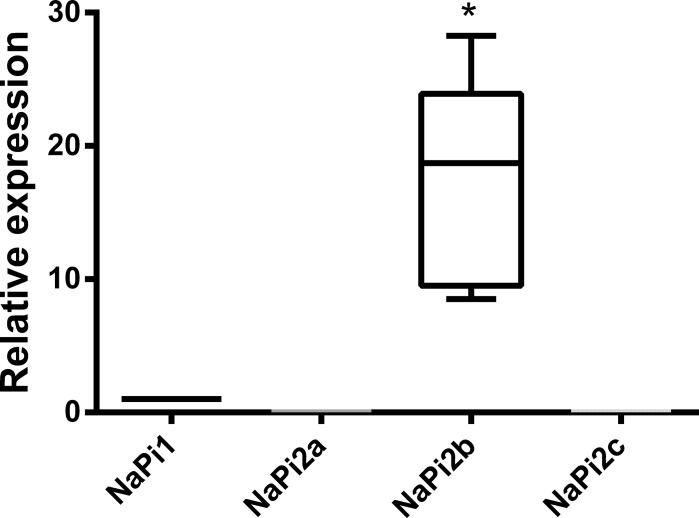
Recent studies demonstrate that interstitial inorganic phosphate is significantly elevated in the breast cancer microenvironment as compared to normal tissue. In addition it has been shown that breast cancer cells express high levels of the NaPi-IIb carrier (SLC34A2), suggesting that this carrier may play a role in breast cancer progression. However, the biochemical behavior of inorganic phosphate (Pi) transporter in this cancer type remains elusive.
In this work, we characterize the kinetic parameters of Pi transport in the aggressive human breast cancer cell line, MDA-MB-231, and correlated Pi transport with cell migration and adhesion.
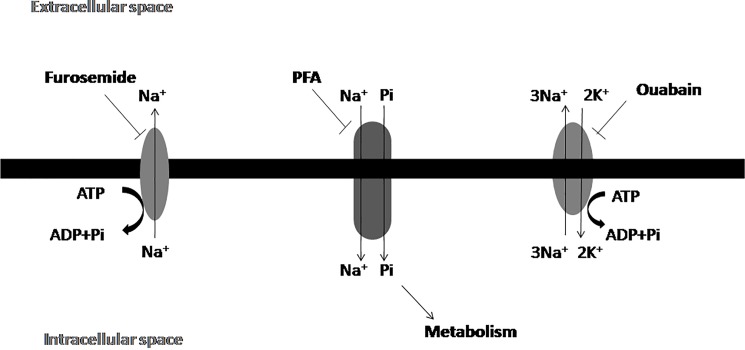
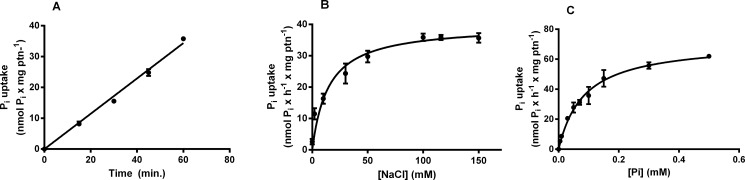
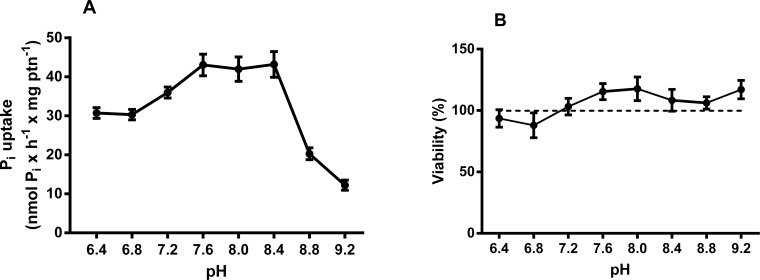
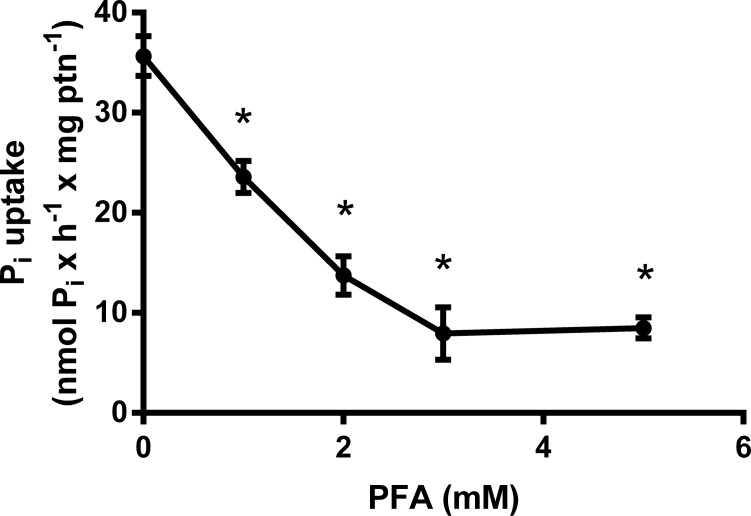
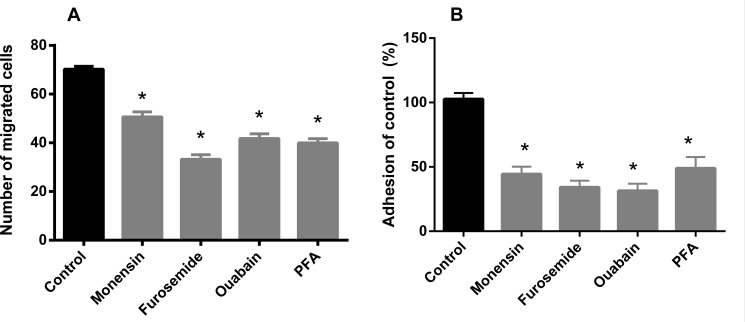
We determined the influence of sodium concentration, pH, metabolic inhibitors, as well as the affinity for inorganic phosphate in Pi transport. We observed that the inorganic phosphate is dependent on sodium transport (K0,5 value = 21.98 mM for NaCl). Furthermore, the transport is modulated by different pH values and increasing concentrations of Pi, following the Michaelis-Menten kinetics (K0,5 = 0.08 mM Pi). PFA, monensin, furosemide and ouabain inhibited Pi transport, cell migration and adhesion.
Taken together, these results showed that the uptake of Pi in MDA-MB-231 cells is modulated by sodium and by regulatory mechanisms of intracellular sodium gradient. General Significance: Pi transport might be regarded as a potential target for therapy against tumor progression.
最近的研究表明,与正常组织相比,乳腺癌微环境中的间质无机磷酸盐显著升高。此外,已有研究表明乳腺癌细胞表达高水平的NaPi-IIb载体(SLC34A2),这表明该载体可能在乳腺癌进展中发挥作用。然而,这种癌症类型中无机磷酸盐(Pi)转运体的生化行为仍然不清楚。
在这项研究中,我们对侵袭性人乳腺癌细胞系MDA-MB-231中Pi转运的动力学参数进行了表征,并将Pi转运与细胞迁移和黏附相关联。
我们确定了钠浓度、pH值、代谢抑制剂以及Pi转运中对无机磷酸盐的亲和力的影响。我们观察到无机磷酸盐的转运依赖于钠转运(NaCl的K0.5值 = 21.98 mM)。此外,转运受不同pH值和Pi浓度的调节,遵循米氏动力学(K0.5 = 0.08 mM Pi)。甲醛、莫能菌素、速尿和哇巴因抑制Pi转运、细胞迁移和黏附。
综上所述,这些结果表明MDA-MB-231细胞中Pi的摄取受钠和细胞内钠梯度调节机制的调控。一般意义:Pi转运可能被视为对抗肿瘤进展治疗的潜在靶点。