Shen Yuan, Benner Ronald
School of the Earth, Ocean and Environment, University of South Carolina, Columbia, South Carolina, 29208, USA.
Ocean Sciences Department, University of California, Santa Cruz, California, 95064, USA.
Sci Rep. 2018 Feb 7;8(1):2542. doi: 10.1038/s41598-018-20857-5.
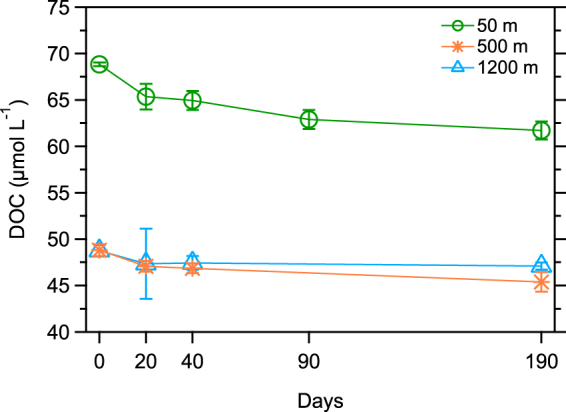
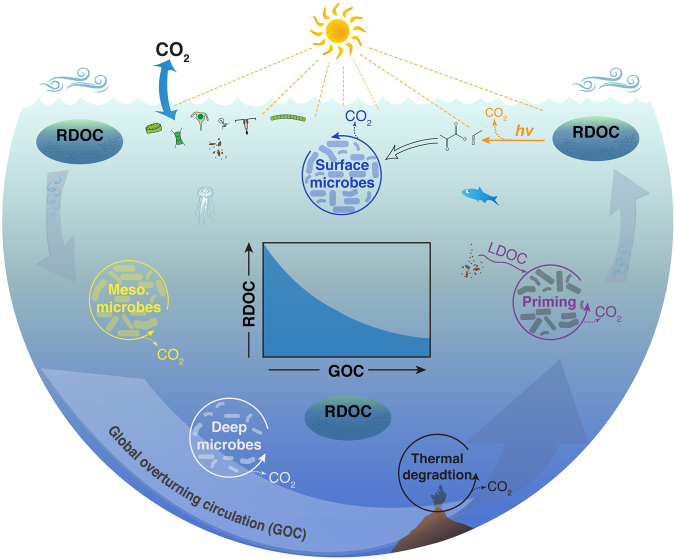
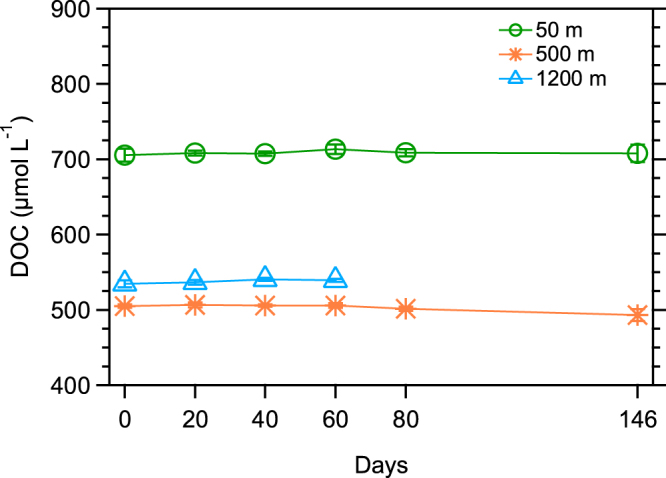
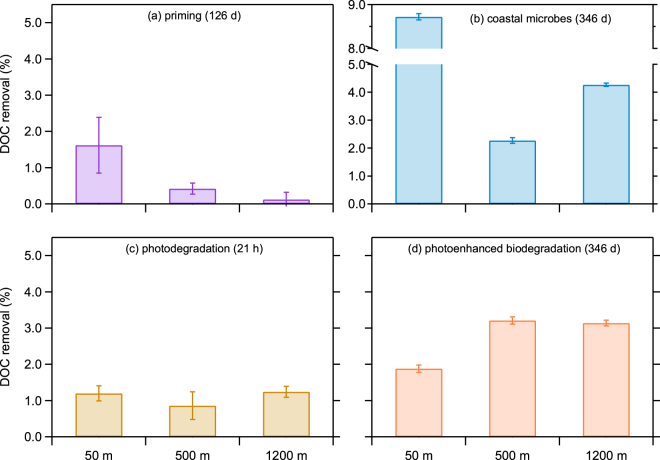
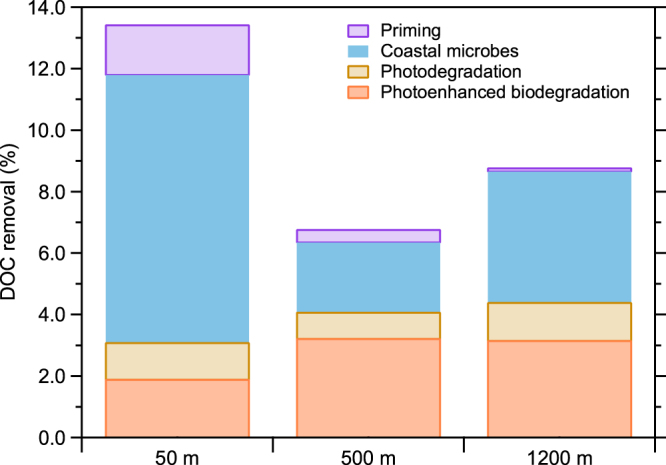
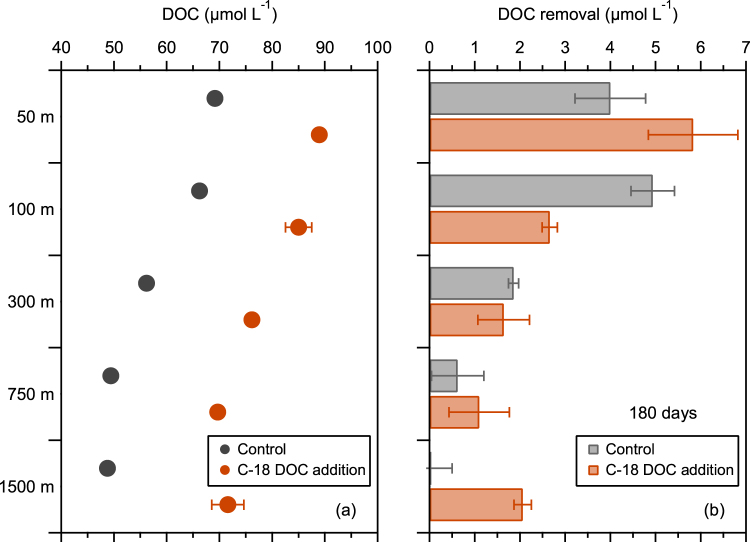
A large quantity of reduced carbon is sequestered in the ocean as refractory dissolved molecules that persist through several circuits of global overturning circulation. Key aspects of the cycling of refractory dissolved organic carbon (DOC) remain unknown, making it challenging to predict how this large carbon reservoir will respond to climate change. Herein we investigate mechanisms that remove refractory DOC using bioassay experiments with DOC isolated from surface, mesopelagic and deep waters of the Atlantic Ocean. The isolated DOC was refractory to degradation by native microbial communities, even at elevated concentrations. However, when the refractory DOC was introduced to a series of novel environmental conditions, including addition of a labile substrate, a microbial community from coastal waters and exposure to solar radiation, a substantial fraction (7-13%) was removed within 1.5 years. Our results suggest that while refractory molecules can persist in the ocean for millennia, removal is rapid when they encounter their fate. The observed and projected climate-induced slowdown of global overturning circulation could reduce the exposure of refractory molecules to disparate removal processes. Assuming a constant rate of production, the reservoir size of refractory DOC could increase as overturning circulation slows, providing a negative feedback to rising atmospheric CO.
大量还原态碳以难降解溶解分子的形式被封存于海洋中,这些分子在全球海洋翻转环流的多个循环过程中持续存在。难降解溶解有机碳(DOC)循环的关键方面仍不为人知,这使得预测这个巨大的碳库将如何应对气候变化具有挑战性。在此,我们利用从大西洋表层、中层和深层水体中分离出的DOC进行生物测定实验,研究去除难降解DOC的机制。即使在高浓度下,分离出的DOC也难以被天然微生物群落降解。然而,当将难降解DOC置于一系列新的环境条件下,包括添加易降解底物、引入沿海水体的微生物群落以及暴露于太阳辐射时,在1.5年内有很大一部分(7%-13%)被去除。我们的结果表明,虽然难降解分子可以在海洋中持续存在数千 年,但当它们遇到其归宿时,去除速度会很快。观测到的和预计的由气候引起的全球海洋翻转环流减缓可能会减少难降解分子与不同去除过程的接触。假设生产速率恒定,随着翻转环流减缓,难降解DOC的库容量可能会增加,这为大气CO上升提供了一个负反馈。