Urra Soledad, Fischer Martin C, Martínez José R, Véliz Loreto, Orellana Paulina, Solar Antonieta, Bohmwald Karen, Kalergis Alexis, Riedel Claudia, Corvalán Alejandro H, Roa Juan C, Fuentealba Rodrigo, Cáceres C Joaquin, López-Lastra Marcelo, León Augusto, Droppelmann Nicolás, González Hernán E
Department of Surgical Oncology, Faculty of Medicine, Pontificia Universidad Católica de Chile, Santiago, Chile.
Department of Physiology, Faculty of Biological Sciences, Pontificia Universidad Católica de Chile, Santiago, Chile.
Oncotarget. 2017 Dec 20;9(2):2445-2467. doi: 10.18632/oncotarget.23502. eCollection 2018 Jan 5.
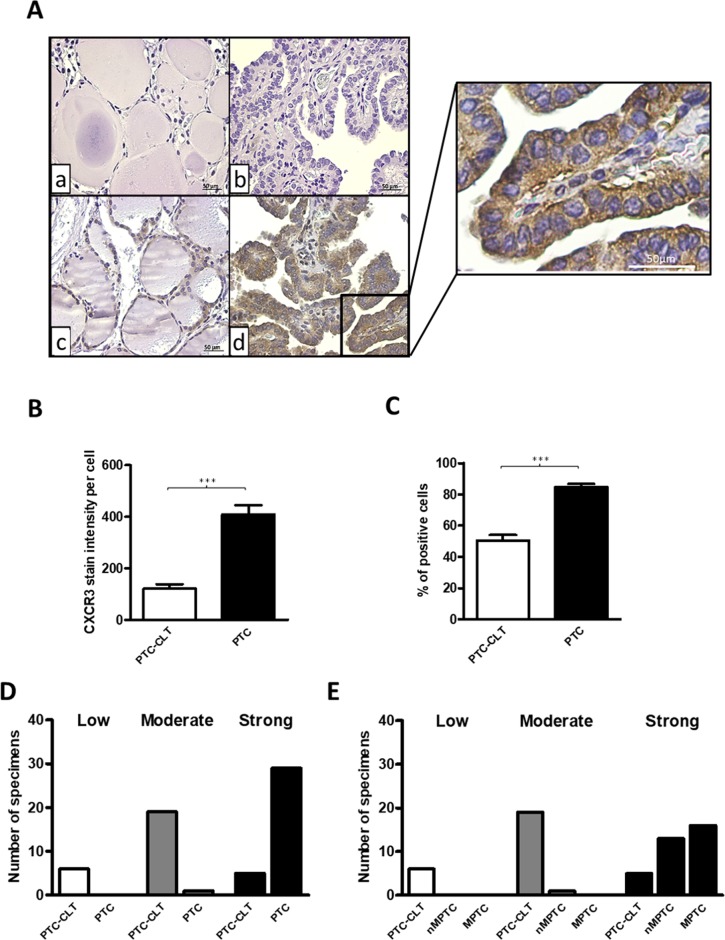
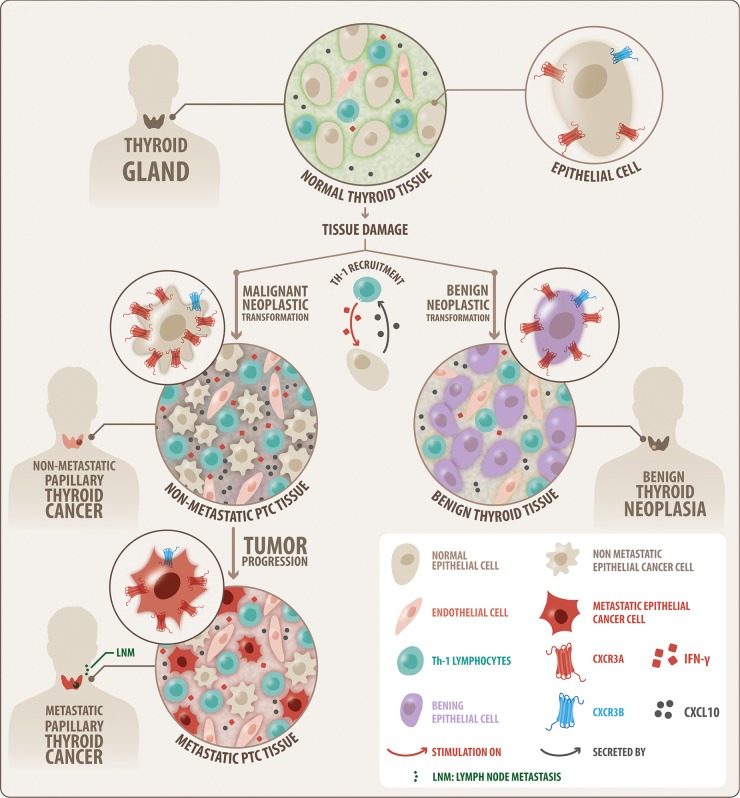
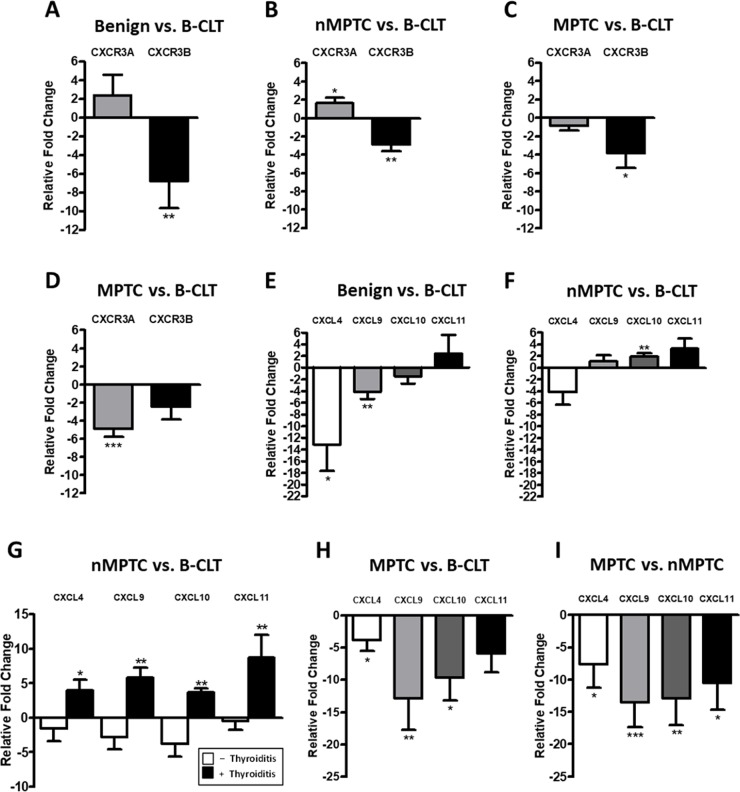
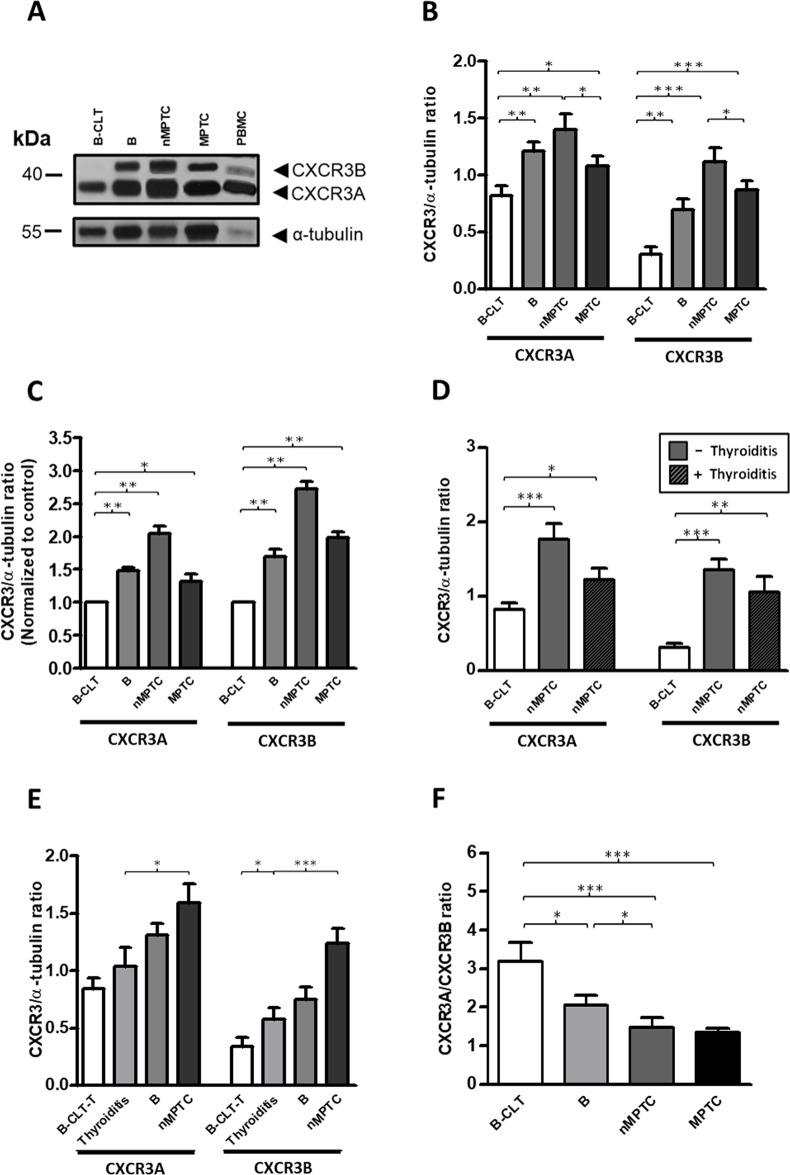
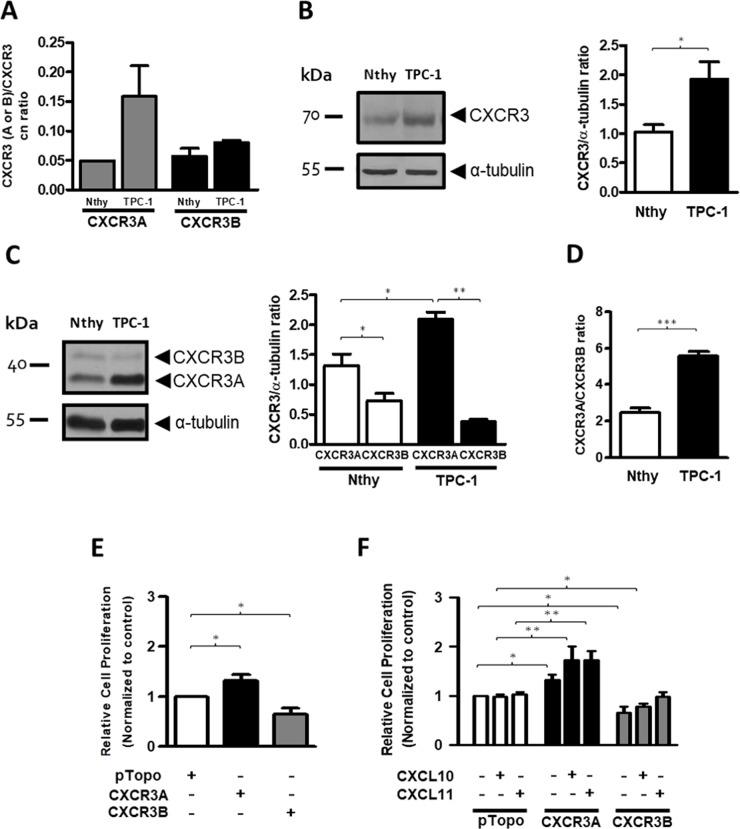
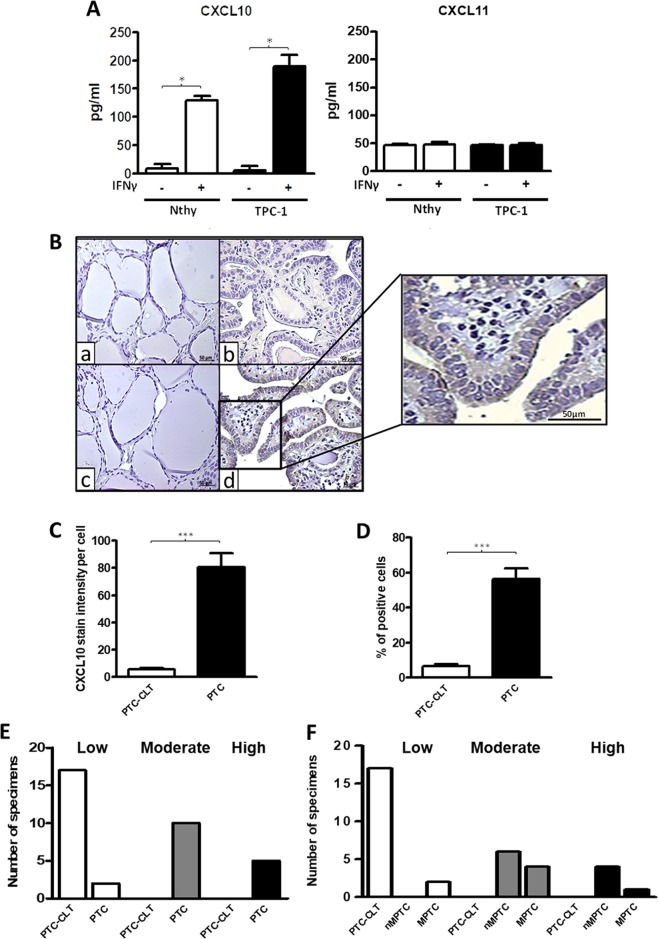
Papillary thyroid cancer (PTC) is the most prevalent endocrine neoplasia. The increased incidence of PTC in patients with thyroiditis and the frequent immune infiltrate found in PTC suggest that inflammation might be a risk factor for PTC development. The CXCR3-ligand system is involved in thyroid inflammation and CXCR3 has been found upregulated in many tumors, suggesting its pro-tumorigenic role under the inflammatory microenvironment. CXCR3 ligands (CXCL4, CXCL9, CXCL10 and CXCL11) trigger antagonistic responses partly due to the presence of two splice variants, CXCR3A and CXCR3B. Whereas CXCR3A promotes cell proliferation, CXCR3B induces apoptosis. However, the relation between CXCR3 variant expression with chronic inflammation and PTC development remains unknown. Here, we characterized the expression pattern of CXCR3 variants and their ligands in benign tumors and PTC. We found that CXCR3A and CXCL10 mRNA levels were increased in non-metastatic PTC when compared to non-neoplastic tissue. This increment was also observed in a PTC epithelial cell line (TPC-1). Although elevated protein levels of both isoforms were detected in benign and malignant tumors, the CXCR3A expression remained greater than CXCR3B and promoted proliferation in Nthy-ori-3-1 cells. In non-metastatic PTC, inflammation was conditioning for the CXCR3 ligands increased availability. Consistently, CXCL10 was strongly induced by interferon gamma in normal and tumor thyrocytes. Our results suggest that persistent inflammation upregulates CXCL10 expression favoring tumor development via enhanced CXCR3A-CXCL10 signaling. These findings may help to further understand the contribution of inflammation as a risk factor in PTC development and set the basis for potential therapeutic studies.
甲状腺乳头状癌(PTC)是最常见的内分泌肿瘤。甲状腺炎患者中PTC发病率的增加以及PTC中频繁发现的免疫浸润表明,炎症可能是PTC发生发展的一个危险因素。CXCR3配体系统参与甲状腺炎症,并且已发现CXCR3在许多肿瘤中上调,提示其在炎症微环境下的促肿瘤作用。CXCR3配体(CXCL4、CXCL9、CXCL10和CXCL11)引发拮抗反应,部分原因是存在两种剪接变体CXCR3A和CXCR3B。CXCR3A促进细胞增殖,而CXCR3B诱导细胞凋亡。然而,CXCR3变体表达与慢性炎症及PTC发生发展之间的关系仍不清楚。在此,我们对良性肿瘤和PTC中CXCR3变体及其配体的表达模式进行了表征。我们发现,与非肿瘤组织相比,非转移性PTC中CXCR3A和CXCL10 mRNA水平升高。在PTC上皮细胞系(TPC-1)中也观察到了这种增加。尽管在良性和恶性肿瘤中均检测到两种异构体的蛋白质水平升高,但CXCR3A的表达仍高于CXCR3B,并促进Nthy-ori-3-1细胞的增殖。在非转移性PTC中,炎症是CXCR3配体可用性增加的条件。同样,正常和肿瘤甲状腺细胞中的CXCL10均被干扰素γ强烈诱导。我们的结果表明,持续炎症通过增强CXCR3A-CXCL10信号上调CXCL10表达,有利于肿瘤发展。这些发现可能有助于进一步理解炎症作为PTC发生发展危险因素的作用,并为潜在的治疗研究奠定基础。