Zhang Xiao-Feng, Zhang Shaoyan, Guo Qin, Sun Rong, Wei Taiyun, Qu Feng
State Key Laboratory of Ecological Pest Control for Fujian and Taiwan Crops, Fujian Key Laboratory of Plant Virology, Institute of Plant Virology, Fujian Agriculture and Forestry University, Fuzhou, China.
Department of Plant Pathology, Ohio Agricultural Research and Development Center, Ohio State University, Wooster, OH, United States.
Front Plant Sci. 2018 Jan 25;9:40. doi: 10.3389/fpls.2018.00040. eCollection 2018.
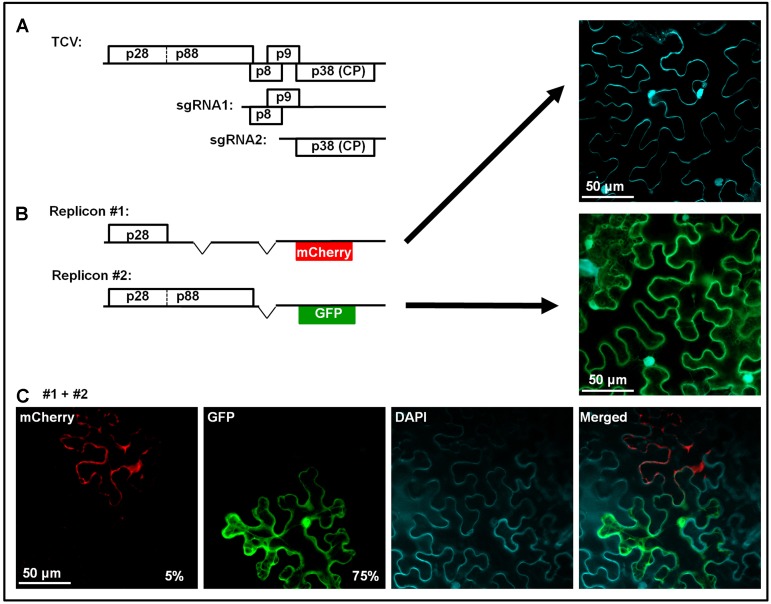
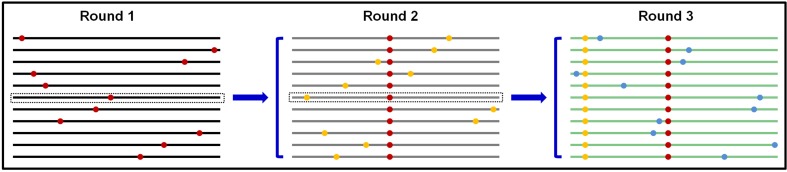
Plants pre-infected with a mild variant of a virus frequently become protected against more severe variants of the same virus through the cross protection phenomenon first discovered in 1929. Despite its widespread use in managing important plant virus diseases, the mechanism of cross protection remains poorly understood. Recent investigations in our labs, by analyzing the whole-plant dynamics of a turnip crinkle virus (TCV) population, coupled with cell biological interrogation of individual TCV variants, revealed possible novel mechanisms for cross protection and the closely related process of superinfection exclusion (SIE). Our new mechanistic model postulates that, for RNA viruses like TCV, SIE manifests a viral function that denies progeny viruses the chance of re-replicating their genomes in the cells of their "parents," and it collaterally targets highly homologous superinfecting viruses that are indistinguishable from progeny viruses. We further propose that SIE may be evolutionarily selected to maintain an optimal error frequency in progeny genomes. Although primarily based on observations made with TCV, this new model could be broadly applicable to other viruses as it provides a molecular basis for maintaining virus genome fidelity in the face of the error-prone nature of virus replication process.
1929年首次发现的交叉保护现象表明,预先感染病毒温和变体的植物常常会对同一病毒的更严重变体产生抗性。尽管交叉保护在重要植物病毒病防治中广泛应用,但其机制仍不清楚。最近我们实验室通过分析芜菁皱缩病毒(TCV)群体在整株植物中的动态变化,并结合对单个TCV变体进行细胞生物学研究,揭示了交叉保护以及与之密切相关的超感染排除(SIE)过程可能的新机制。我们的新机制模型假定,对于像TCV这样的RNA病毒,SIE表现为一种病毒功能,它使子代病毒无法在其“亲本”细胞中再次复制其基因组,并且附带靶向那些与子代病毒无法区分的高度同源的超感染病毒。我们进一步提出,SIE可能是在进化过程中被选择出来,以维持子代基因组中的最佳错误频率。尽管该新模型主要基于对TCV的观察,但它可能广泛适用于其他病毒,因为它为在病毒复制过程易出错的情况下维持病毒基因组保真度提供了分子基础。