Nakhli Mohamed Said, Kahloul Mohamed, Guizani Taieb, Zedini Chekib, Chaouch Ajmi, Naija Walid
a Department of Anesthesia and Intensive Care , Sahloul Teaching Hospital; Faculty of Medicine 'Ibn El Jazzar' , Sousse , Tunisia.
b Department of Family and Community Medicine , Faculty of Medicine 'Ibn El Jazzar' , Sousse , Tunisia.
Libyan J Med. 2018 Dec;13(1):1433418. doi: 10.1080/19932820.2018.1433418.
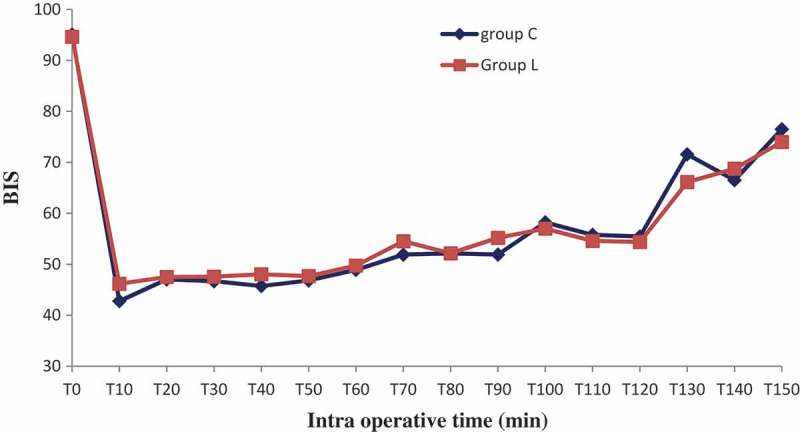
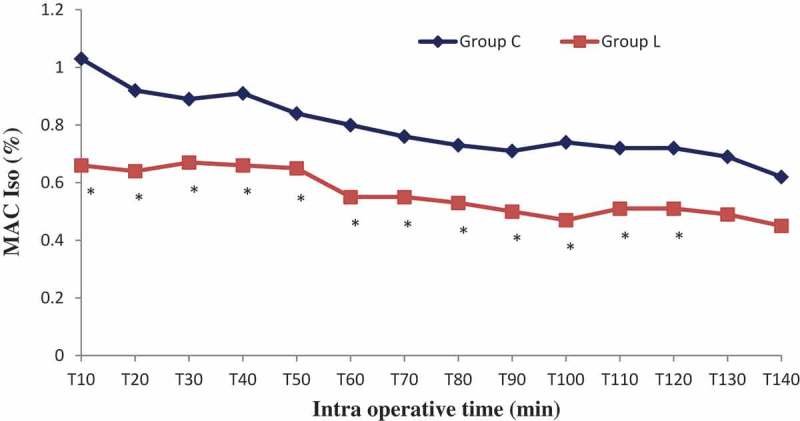
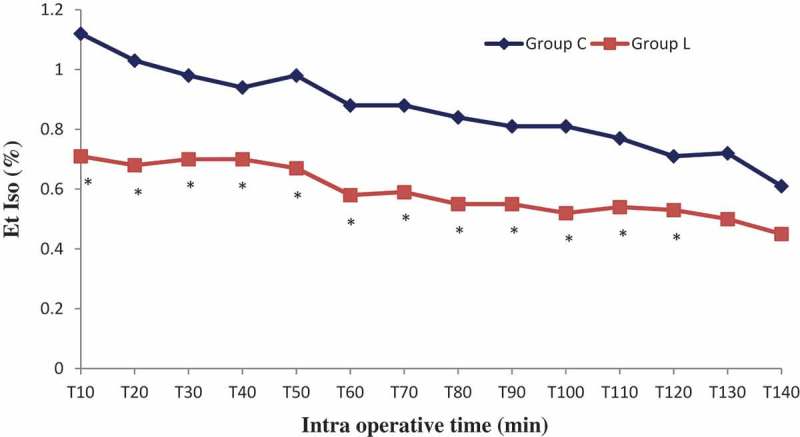
The role of intraoperative intravenous lidocaine infusion has been previously evaluated for pain relief, inflammatory response, and post-operative recovery, particularly in abdominal surgery. The present study is a randomized double-blinded trial in which we evaluated whether IV lidocaine infusion reduces isoflurane requirement, intraoperative remifentanil consumption and time to post-operative recovery in non-laparoscopic renal surgery. Sixty patients scheduled to undergo elective non-laparoscopic renal surgery under general anesthesia were enrolled to receive either systemic lidocaine infusion (group L: bolus 1.5 mg/kg followed by a continuous infusion at the rate of 2 mg/kg/hr until skin closure) or normal saline (0.9% NaCl solution) (Group C). The depth of anesthesia was monitored using the Bispectral Index Scale (BIS), which is based on measurement of the patient's cerebral electrical activity. Primary outcome of the study was End-tidal of isoflurane concentration (Et-Iso) at BIS values of 40-60. Secondary outcomes include remifentanil consumption during the operation and time to extubation. Et-Iso was significantly lower in group L than in group C (0.63% ± 0.10% vs 0.92% ± 0.11%, p < 10. Mean remifentanil consumption of was significantly lower in group L than in group C (0.13 ± 0.04 µg/kg/min vs 0.18 ± 0.04 µg/kg/min, p < 10). Thus, IV lidocaine infusion permits a reduction of 31% in isoflurane concentration requirement and 27% in the intraoperative remifentanil need. In addition, recovery from anesthesia and extubation time was shorter in group L (5.8 ± 1.8 min vs 7.9 ± 2.0 min, p < 10). By reducing significantly isoflurane and remifentanil requirements during renal surgery, intravenous lidocaine could provide effective strategy to limit volatile agent and intraoperative opioids consumption especially in low and middle income countries.
术中静脉输注利多卡因的作用此前已针对疼痛缓解、炎症反应和术后恢复进行了评估,尤其是在腹部手术中。本研究是一项随机双盲试验,我们评估了静脉输注利多卡因是否能降低非腹腔镜肾手术中异氟烷的需求量、术中瑞芬太尼的消耗量以及术后恢复时间。60例计划在全身麻醉下接受择期非腹腔镜肾手术的患者被纳入研究,分别接受全身利多卡因输注(L组:静脉推注1.5mg/kg,随后以2mg/kg/小时的速度持续输注直至皮肤缝合)或生理盐水(0.9%氯化钠溶液)(C组)。使用基于测量患者脑电活动的脑电双频指数(BIS)监测麻醉深度。研究的主要结局是BIS值为40 - 60时的异氟烷呼气末浓度(Et - Iso)。次要结局包括手术期间瑞芬太尼的消耗量和拔管时间。L组的Et - Iso显著低于C组(0.63% ± 0.10% 对0.92% ± 0.11%,p < 0.01)。L组的平均瑞芬太尼消耗量显著低于C组(0.13 ± 0.04μg/kg/分钟对0.18 ± 0.04μg/kg/分钟,p < 0.01)。因此,静脉输注利多卡因可使异氟烷浓度需求量降低31%,术中瑞芬太尼需求量降低27%。此外,L组的麻醉恢复和拔管时间更短(5.8 ± 1.8分钟对7.9 ± 2.0分钟,p < 0.01)。通过显著降低肾手术期间异氟烷和瑞芬太尼的需求量,静脉输注利多卡因可为限制挥发性麻醉剂和术中阿片类药物的消耗提供有效的策略,尤其是在中低收入国家。