Biselli Chiara, Bagnaresi Paolo, Faccioli Primetta, Hu Xinkun, Balcerzak Margaret, Mattera Maria G, Yan Zehong, Ouellet Therese, Cattivelli Luigi, Valè Giampiero
CREA-Research Centre for Genomics and Bioinformatics, Fiorenzuola d'Arda, Italy.
Ottawa Research and Development Centre, Agriculture and Agri-Food Canada, Ottawa, ON, Canada.
Front Plant Sci. 2018 Jan 30;9:37. doi: 10.3389/fpls.2018.00037. eCollection 2018.
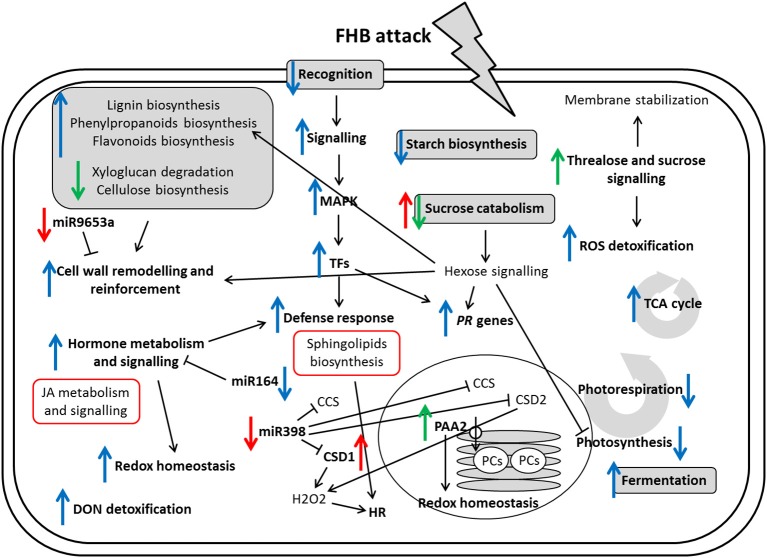
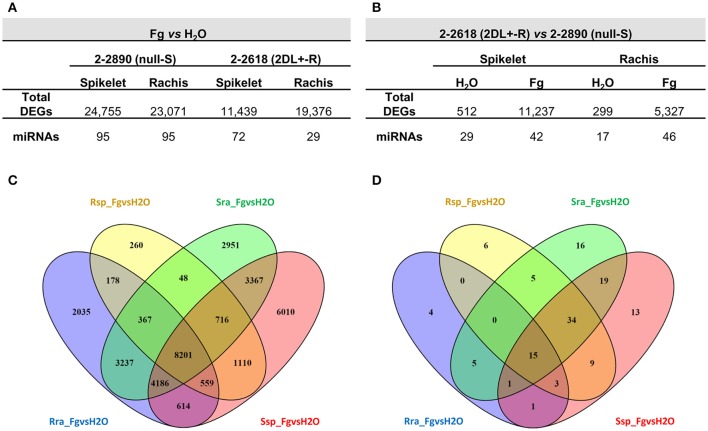
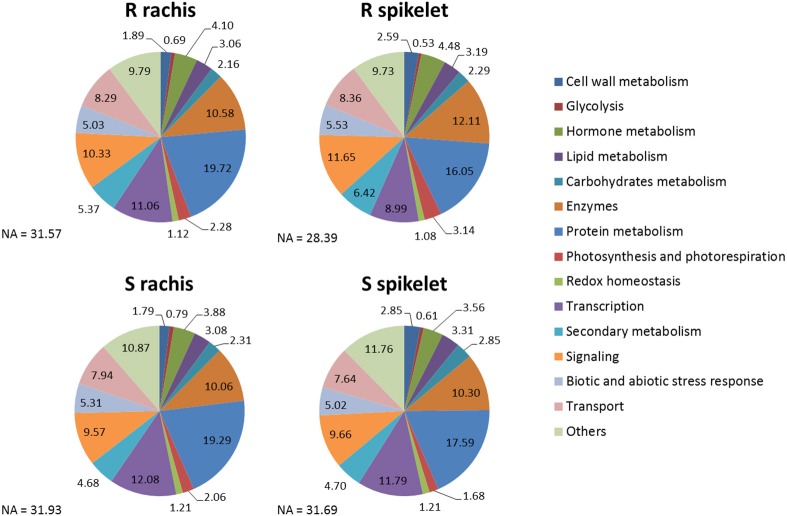
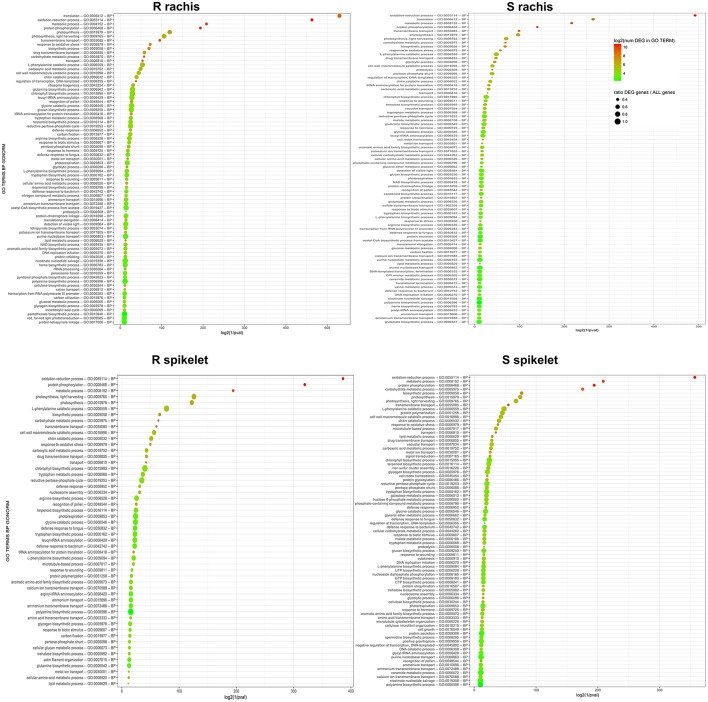
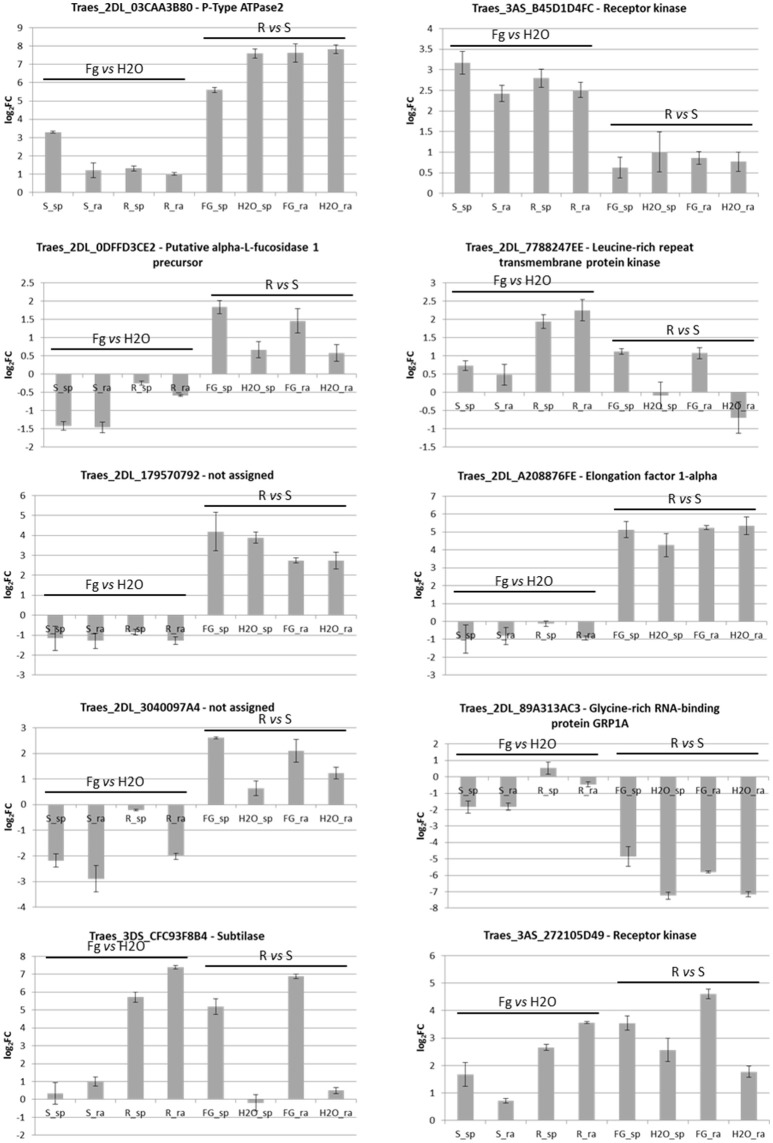
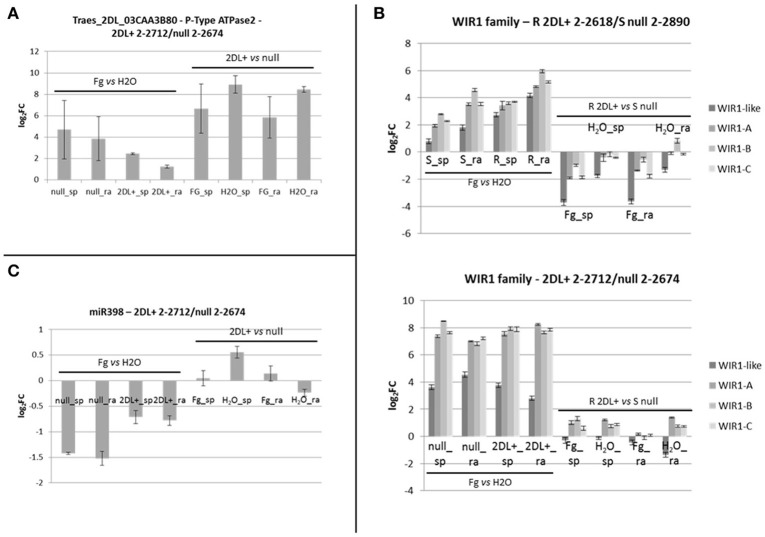
Fusarium head blight (FHB), caused by the fungus , represents one of the major wheat diseases worldwide, determining severe yield losses and reduction of grain quality due to the accumulation of mycotoxins. The molecular response associated with the wheat 2DL FHB resistance QTL was mined through a comprehensive transcriptomic analysis of the early response to infection, at 3 days post-inoculation, in spikelets and rachis. The analyses were conducted on two near isogenic lines (NILs) differing for the presence of the 2DL QTL (2-2618, resistant 2DL+ and 2-2890, susceptible null). The general response to fungal infection in terms of mRNAs accumulation trend was similar in both NILs, even though involving an higher number of DEGs in the susceptible NIL, and included down-regulation of the primary and energy metabolism, up-regulation of enzymes implicated in lignin and phenylpropanoid biosynthesis, activation of hormons biosynthesis and signal transduction pathways and genes involved in redox homeostasis and transcriptional regulation. The search for candidate genes with expression profiles associated with the 2DL QTL for FHB resistance led to the discovery of processes differentially modulated in the R and S NILs related to cell wall metabolism, sugar and JA signaling, signal reception and transduction, regulation of the redox status and transcription factors. Wheat FHB response-related miRNAs differentially regulated were also identified as putatively implicated in the superoxide dismutase activities and affecting genes regulating responses to biotic/abiotic stresses and auxin signaling. Altered gene expression was also observed for fungal non-codingRNAs. The putative targets of two of these were represented by the wheat gene , involved in resistance response, and a gene encoding a jacalin-related lectin protein, which participate in biotic and abiotic stress response, supporting the presence of a cross-talk between the plant and the fungus.
由镰刀菌引起的小麦赤霉病(FHB)是全球主要的小麦病害之一,由于霉菌毒素的积累,会导致严重的产量损失和谷物品质下降。通过对小穗和穗轴接种后3天对感染的早期反应进行全面的转录组分析,挖掘了与小麦2DL抗FHB数量性状位点(QTL)相关的分子反应。分析是在两个近等基因系(NILs)上进行的,这两个系因2DL QTL的存在而不同(2-2618,抗性2DL+和2-2890,易感空缺)。尽管易感NIL中涉及的差异表达基因数量较多,但两个NIL在mRNA积累趋势方面对真菌感染的总体反应相似,包括初级代谢和能量代谢的下调、木质素和苯丙烷生物合成相关酶的上调、激素生物合成和信号转导途径的激活以及参与氧化还原稳态和转录调控的基因。对具有与2DL QTL相关的FHB抗性表达谱的候选基因的搜索,导致发现了在R和S NIL中与细胞壁代谢、糖和茉莉酸信号传导、信号接收和转导、氧化还原状态调节和转录因子相关的差异调节过程。还鉴定了差异调节的与小麦FHB反应相关的miRNA,推测它们参与超氧化物歧化酶活性,并影响调节对生物/非生物胁迫和生长素信号反应的基因。还观察到真菌非编码RNA的基因表达发生了变化。其中两个的推定靶标分别是参与抗性反应的小麦基因和编码jacalin相关凝集素蛋白的基因,该蛋白参与生物和非生物胁迫反应,支持植物与真菌之间存在相互作用。