Department of Endocrinology, Guangdong Medical College Affiliated Shenzhen Nanshan Hospital, Shenzhen, Guangdong 518052, P.R. China.
Mol Med Rep. 2018 Apr;17(4):5642-5651. doi: 10.3892/mmr.2018.8554. Epub 2018 Feb 2.
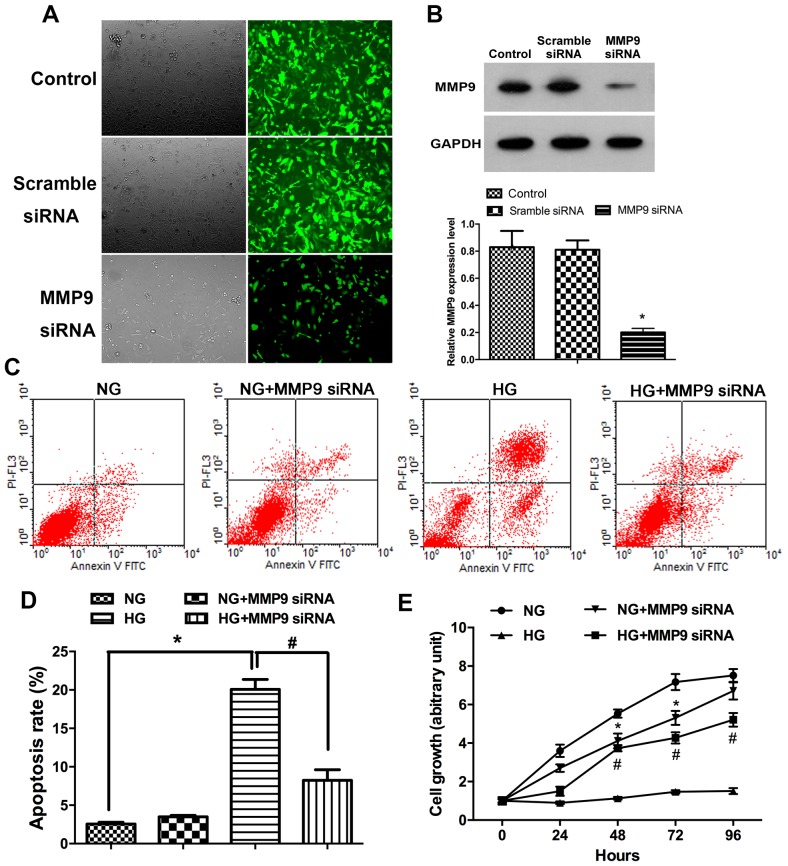
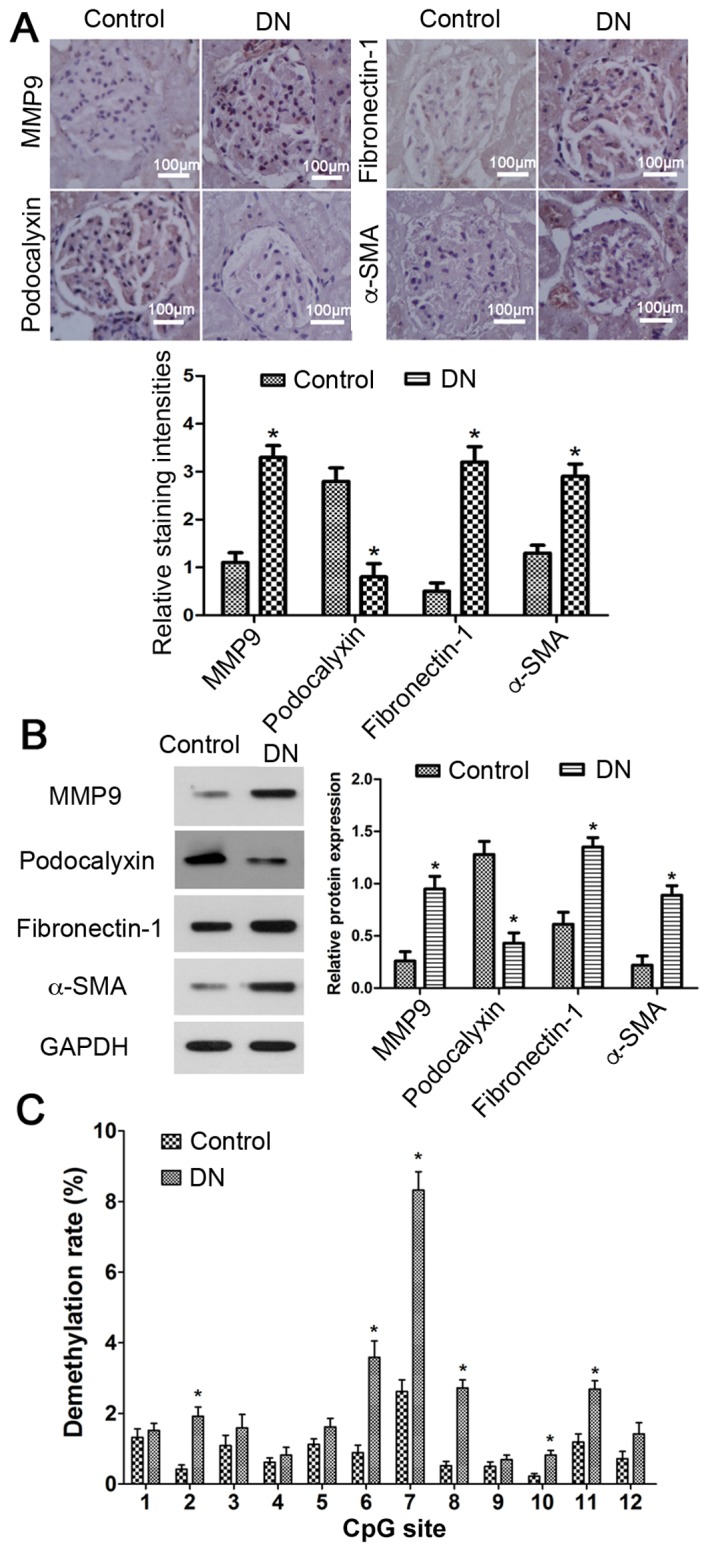
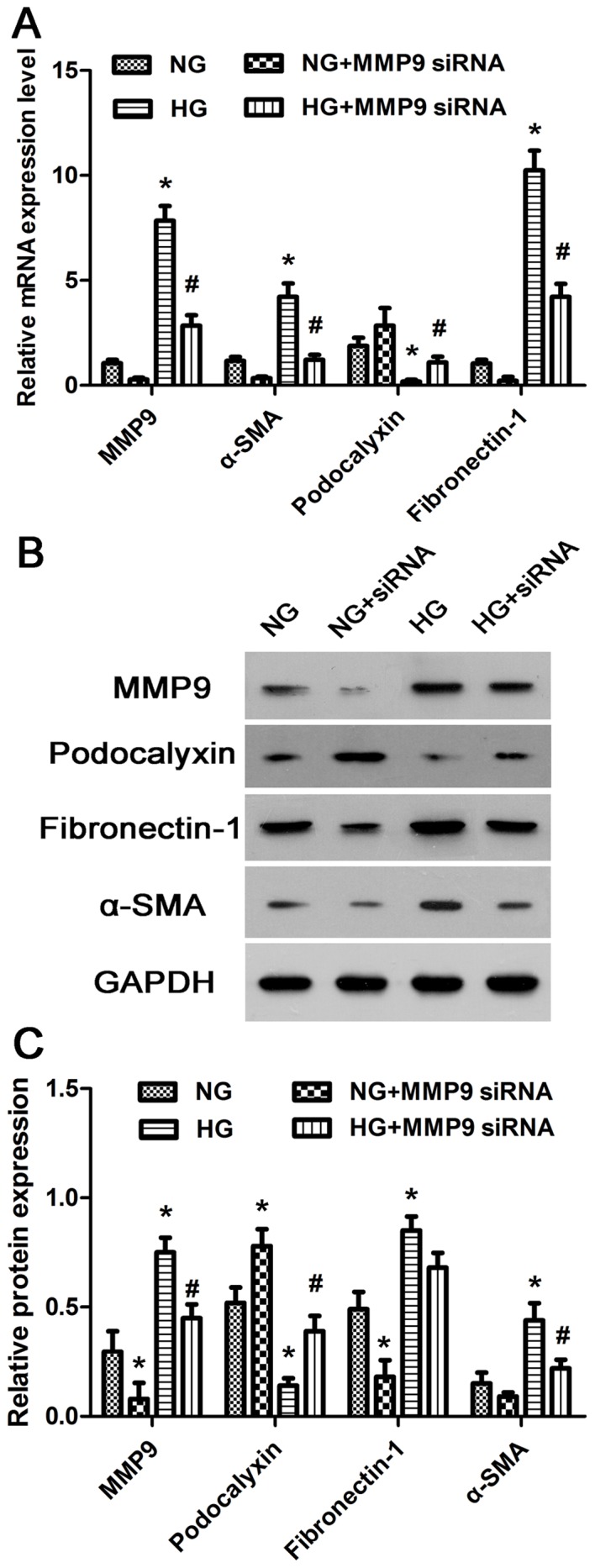
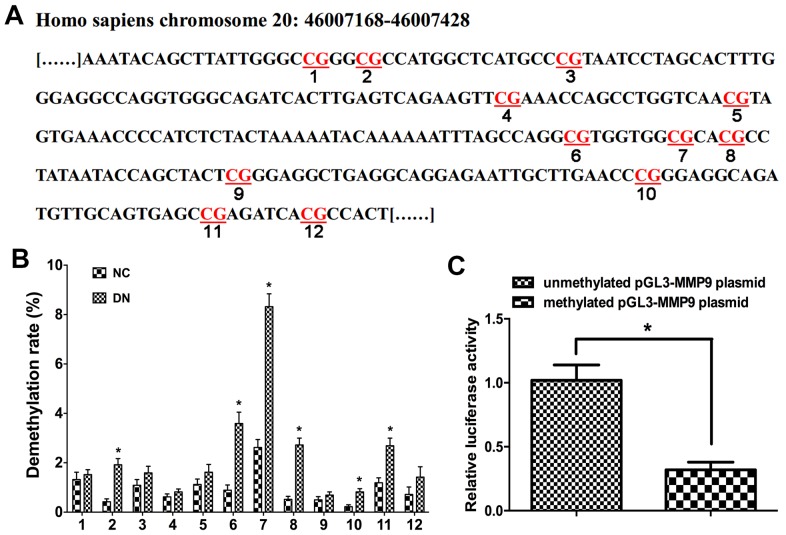
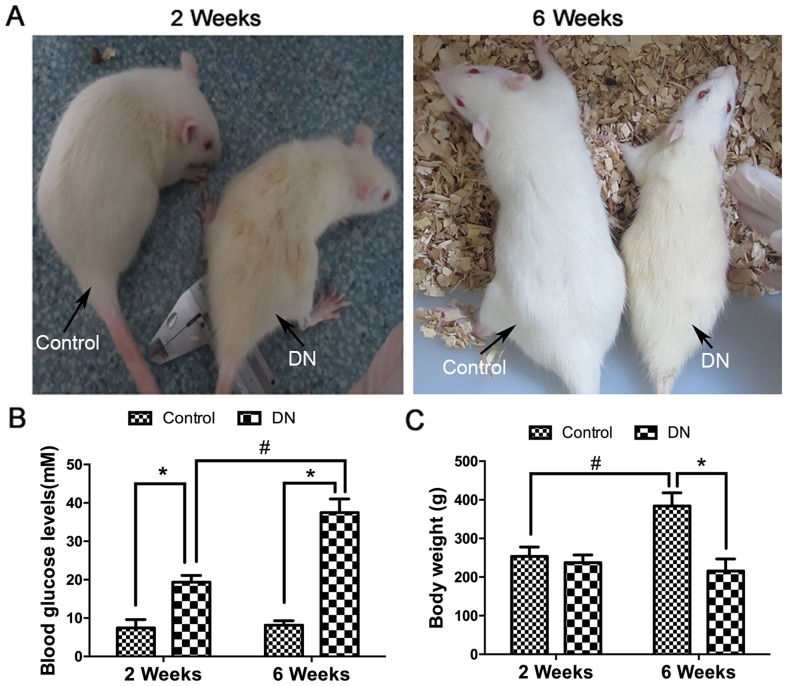
Abnormal expression of matrix metalloproteinase 9 (MMP9) is correlated with podocyte epithelial-to---mesenchymal transition (EMT) in diabetic nephropathy (DN). However, the mechanisms underlying this process are not well defined. Site‑specific demethylation may sustain high expression levels of target genes. In the present study, in order to investigate the association between DNA demethylation of MMP9 promoter and podocyte EMT in DN, human podocytes were cultured in high‑glucose (HG) medium and a rat model of DN was established by intraperitoneal injection of streptozotocin (STZ) to determine whether site‑specific demethylation of the MMP9 promoter was involved in regulating podocyte EMT in DN. The MTT assay was used to assess the effects of HG culture on the growth of podocytes, and the demethylation status of the MMP9 promoter was assessed by bisulfite sequencing polymerase chain reaction. mRNA and protein expression levels of MMP9, α‑smooth muscle actin (α‑SMA), podocalyxin and fibronectin‑1 in podocytes were assessed by reverse transcription‑quantitative PCR (RT‑qPCR) and western blot analyses. The results demonstrated that HG treatment up regulated the expression of MMP9, α‑SMA and fibronectin‑1, but down regulated the expression of podocalyxin in podocytes. The MMP9 promoter region was revealed to contain a variety of demethylated CpG sites, and HG treatment reduced the rate of MMP9 promotermethylation, which, in turn, enhanced its promoter activity. In summary, these data suggested that demethylation of the MMP9 promoter may serve an important role in podocyte EMT in DN. The demethylation status of the MMP9 promoter maybe used as an important prognostic marker of DN in clinic.
基质金属蛋白酶 9(MMP9)的异常表达与糖尿病肾病(DN)中足细胞上皮-间充质转化(EMT)有关。然而,这一过程的机制尚不清楚。特异性去甲基化可能维持靶基因的高表达水平。在本研究中,为了研究 MMP9 启动子的 DNA 去甲基化与 DN 中足细胞 EMT 之间的关系,将人足细胞在高糖(HG)培养基中培养,并通过腹腔注射链脲佐菌素(STZ)建立大鼠 DN 模型,以确定 MMP9 启动子的特异性去甲基化是否参与调节 DN 中足细胞 EMT。MTT 法检测 HG 培养对足细胞生长的影响,亚硫酸氢盐测序聚合酶链反应检测 MMP9 启动子的去甲基化状态。采用逆转录-定量 PCR(RT-qPCR)和 Western blot 分析检测足细胞中 MMP9、α-平滑肌肌动蛋白(α-SMA)、足突蛋白和纤维连接蛋白-1 的 mRNA 和蛋白表达水平。结果表明,HG 处理上调了 MMP9、α-SMA 和纤维连接蛋白-1 的表达,而下调了足突蛋白的表达。MMP9 启动子区域含有多种去甲基化 CpG 位点,HG 处理降低了 MMP9 启动子的甲基化率,从而增强了其启动子活性。综上所述,这些数据表明,MMP9 启动子的去甲基化可能在 DN 中足细胞 EMT 中发挥重要作用。MMP9 启动子的去甲基化状态可作为 DN 的重要预后标志物在临床上使用。