Seeker Luise A, Ilska Joanna J, Psifidi Androniki, Wilbourn Rachael V, Underwood Sarah L, Fairlie Jennifer, Holland Rebecca, Froy Hannah, Bagnall Ainsley, Whitelaw Bruce, Coffey Mike, Nussey Daniel H, Banos Georgios
Animal & Veterinary Sciences, SRUC, Easter Bush, Midlothian, United Kingdom.
The Roslin Institute and Royal (Dick) School of Veterinary Studies, University of Edinburgh, Easter Bush, Midlothian, United Kingdom.
PLoS One. 2018 Feb 13;13(2):e0192864. doi: 10.1371/journal.pone.0192864. eCollection 2018.
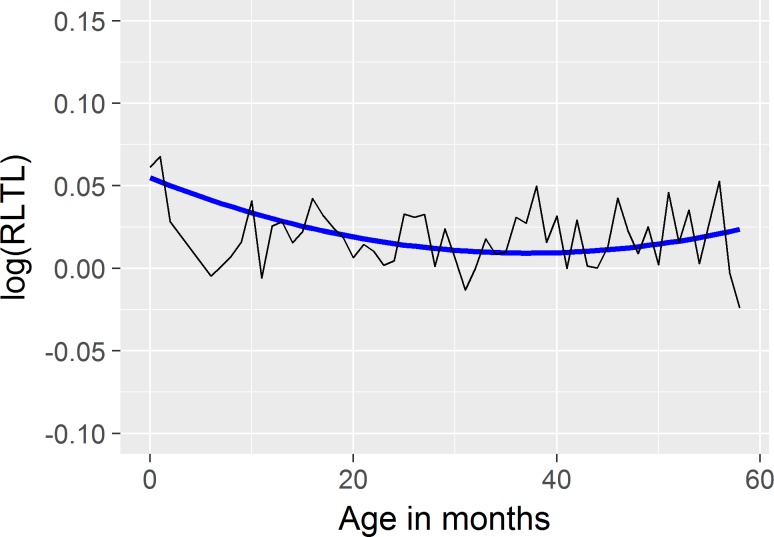
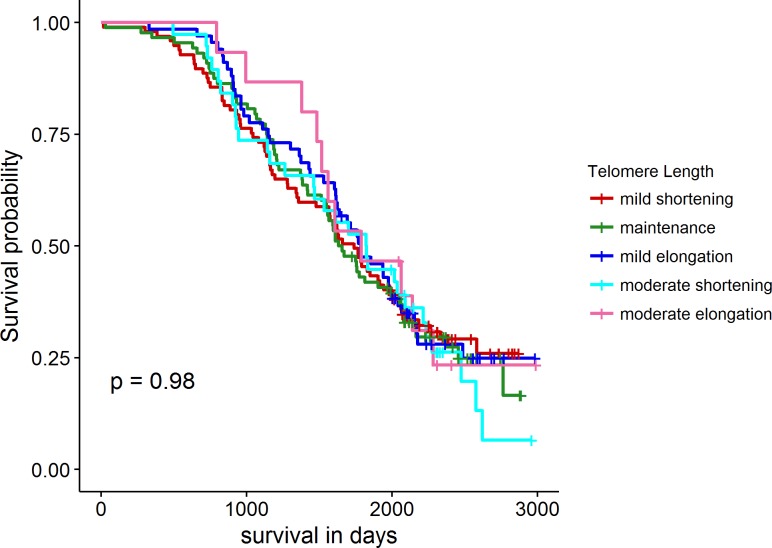
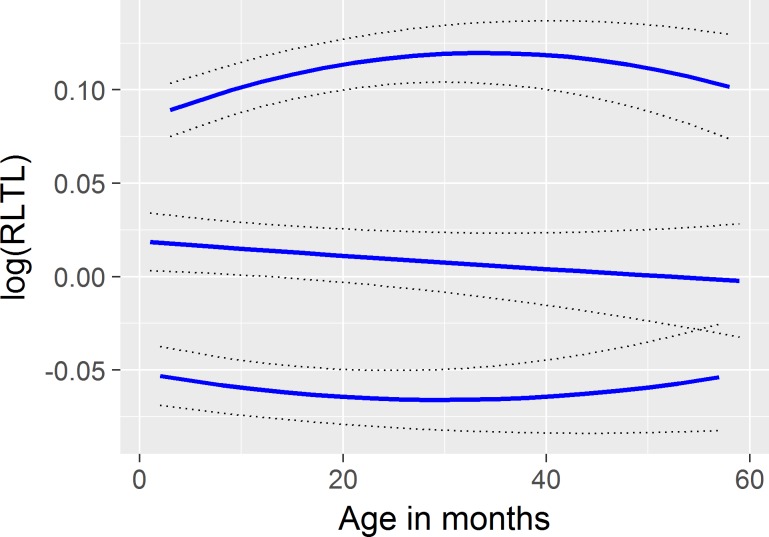
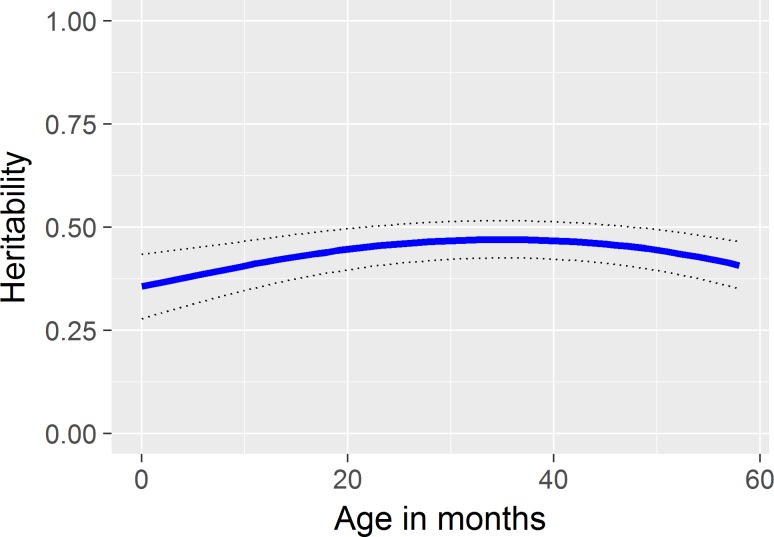
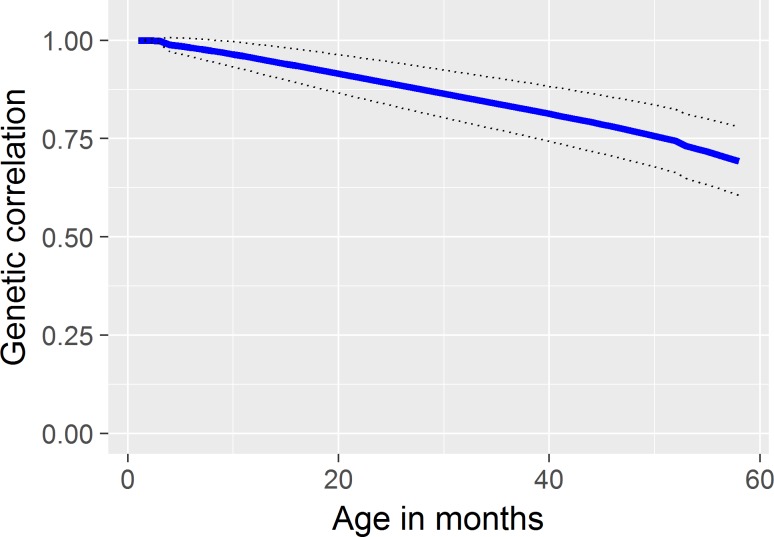
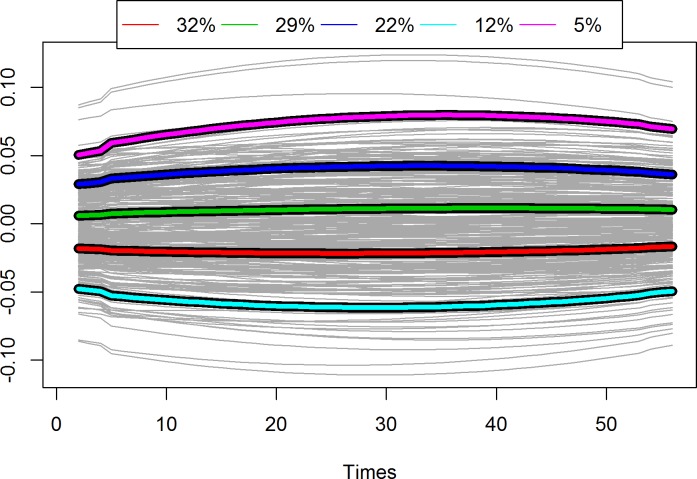
Telomeres cap the ends of linear chromosomes and shorten with age in many organisms. In humans short telomeres have been linked to morbidity and mortality. With the accumulation of longitudinal datasets the focus shifts from investigating telomere length (TL) to exploring TL change within individuals over time. Some studies indicate that the speed of telomere attrition is predictive of future disease. The objectives of the present study were to 1) characterize the change in bovine relative leukocyte TL (RLTL) across the lifetime in Holstein Friesian dairy cattle, 2) estimate genetic parameters of RLTL over time and 3) investigate the association of differences in individual RLTL profiles with productive lifespan. RLTL measurements were analysed using Legendre polynomials in a random regression model to describe TL profiles and genetic variance over age. The analyses were based on 1,328 repeated RLTL measurements of 308 female Holstein Friesian dairy cattle. A quadratic Legendre polynomial was fitted to the fixed effect of age in months and to the random effect of the animal identity. Changes in RLTL, heritability and within-trait genetic correlation along the age trajectory were calculated and illustrated. At a population level, the relationship between RLTL and age was described by a positive quadratic function. Individuals varied significantly regarding the direction and amount of RLTL change over life. The heritability of RLTL ranged from 0.36 to 0.47 (SE = 0.05-0.08) and remained statistically unchanged over time. The genetic correlation of RLTL at birth with measurements later in life decreased with the time interval between samplings from near unity to 0.69, indicating that TL later in life might be regulated by different genes than TL early in life. Even though animals differed in their RLTL profiles significantly, those differences were not correlated with productive lifespan (p = 0.954).
端粒覆盖线性染色体的末端,在许多生物体中会随着年龄增长而缩短。在人类中,短端粒与发病率和死亡率有关。随着纵向数据集的积累,研究重点从调查端粒长度(TL)转向探索个体随时间的端粒长度变化。一些研究表明,端粒损耗速度可预测未来疾病。本研究的目的是:1)描述荷斯坦弗里生奶牛一生中相对白细胞端粒长度(RLTL)的变化;2)估计RLTL随时间的遗传参数;3)研究个体RLTL谱差异与生产寿命的关联。使用勒让德多项式在随机回归模型中分析RLTL测量值,以描述随年龄变化的端粒长度谱和遗传方差。分析基于对308头雌性荷斯坦弗里生奶牛的1328次重复RLTL测量。将二次勒让德多项式拟合到月龄的固定效应和动物个体身份的随机效应上。计算并说明了沿年龄轨迹的RLTL变化、遗传力和性状内遗传相关性。在群体水平上,RLTL与年龄的关系由正二次函数描述。个体在一生中RLTL变化的方向和幅度差异显著。RLTL的遗传力范围为0.36至0.47(标准误=0.05 - 0.08),且随时间在统计学上保持不变。出生时的RLTL与生命后期测量值的遗传相关性随着采样时间间隔从接近1下降到0.69,这表明生命后期的端粒长度可能由与生命早期不同的基因调控。尽管动物的RLTL谱差异显著,但这些差异与生产寿命无关(p = 0.954)。