Yeom Jeong Seon, Chu Eunmi, Jung Bang Chul, Jin Hu
Department of Electronics Engineering, Chungnam National University, Daejeon 34134, Korea.
Division of Electrical Engineering, Hanyang University, Ansan 15588, Korea.
Sensors (Basel). 2018 Feb 10;18(2):536. doi: 10.3390/s18020536.
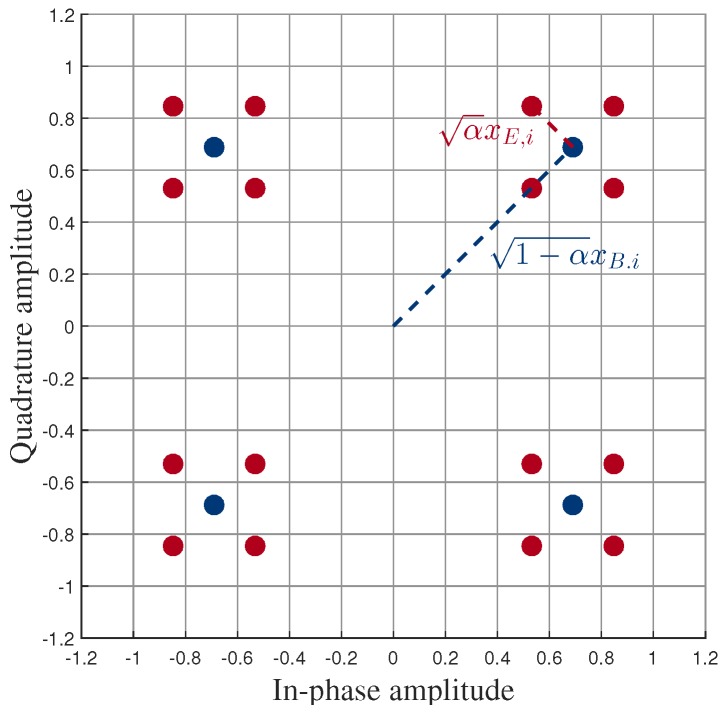
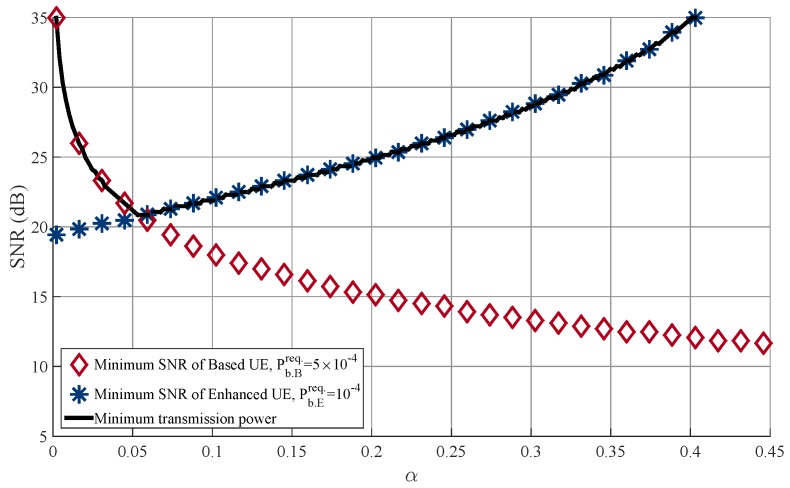
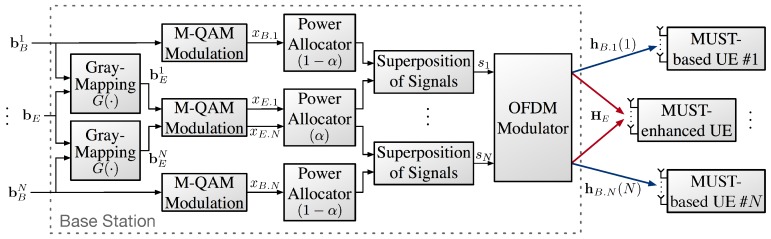
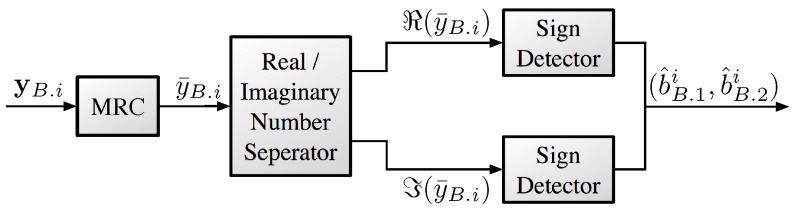
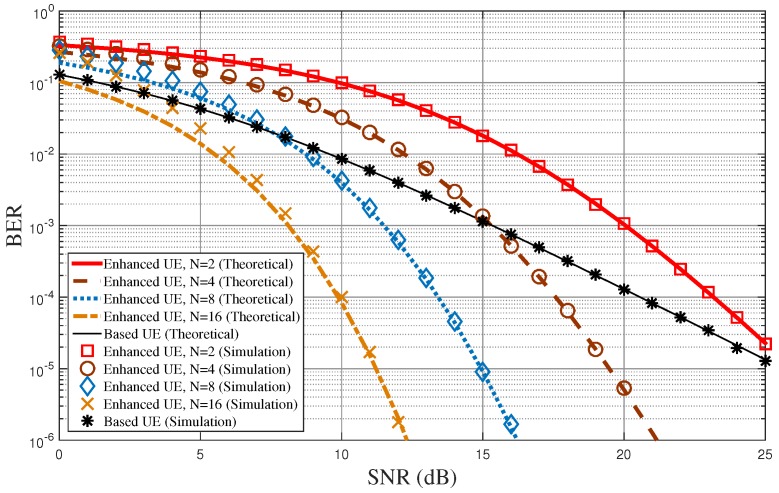
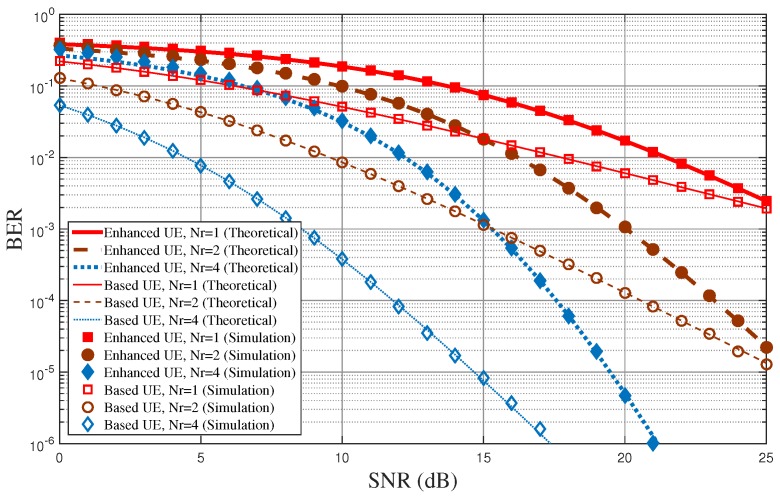
In this paper, we propose a novel low-complexity multi-user superposition transmission (MUST) technique for 5G downlink networks, which allows multiple cell-edge users to be multiplexed with a single cell-center user. We call the proposed technique since the cell-center user enjoys the frequency diversity effect via signal repetition over multiple orthogonal frequency division multiplexing (OFDM) sub-carriers. We assume that a base station is equipped with a single antenna but users are equipped with multiple antennas. In addition, we assume that the quadrature phase shift keying (QPSK) modulation is used for users. We mathematically analyze the bit error rate (BER) of both cell-edge users and cell-center users, which is the first theoretical result in the literature to the best of our knowledge. The mathematical analysis is validated through extensive link-level simulations.
在本文中,我们为5G下行链路网络提出了一种新颖的低复杂度多用户叠加传输(MUST)技术,该技术允许多个小区边缘用户与单个小区中心用户进行复用。我们将所提出的技术称为[具体名称未给出],因为小区中心用户通过在多个正交频分复用(OFDM)子载波上进行信号重复来享受频率分集效应。我们假设基站配备单个天线,但用户配备多个天线。此外,我们假设用户采用正交相移键控(QPSK)调制。我们从数学上分析了小区边缘用户和小区中心用户的误码率(BER),据我们所知,这是文献中的首个理论结果。通过广泛的链路级仿真验证了该数学分析。