Key Laboratory of Animal Genetics and Breeding and Reproduction of Ministry of Agriculture, Institute of Animal Science, Chinese Academy of Agricultural Sciences, Beijing 100193, China.
College of Animal Science and Technology, China Agricultural University, Beijing 100193, China.
Int J Mol Sci. 2018 Feb 11;19(2):539. doi: 10.3390/ijms19020539.
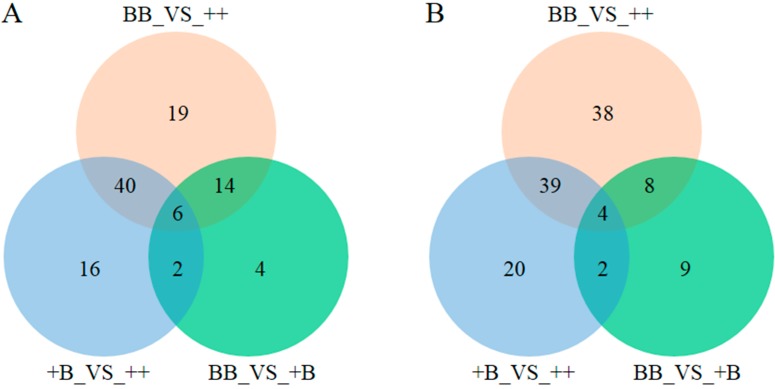
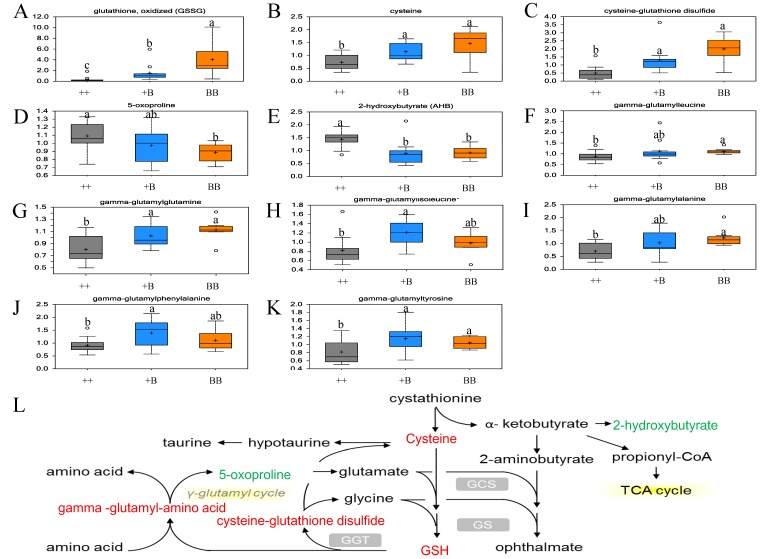
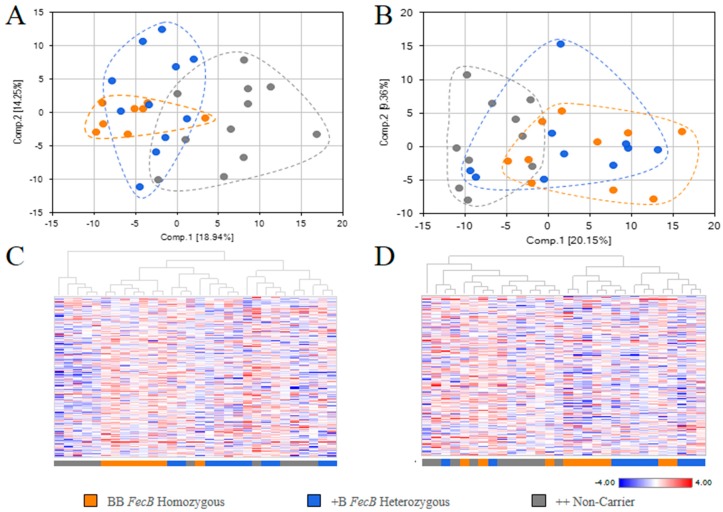
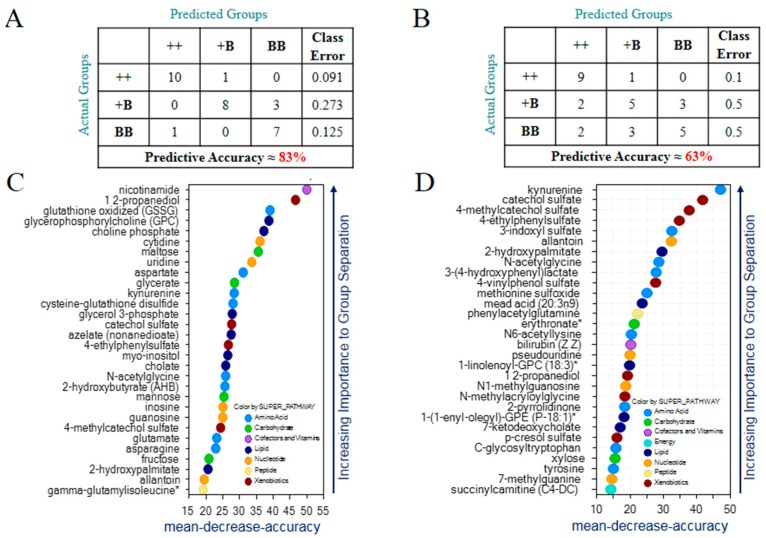
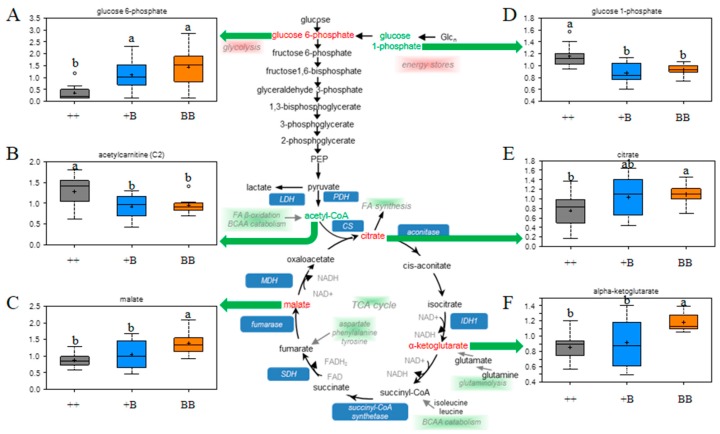
The gene has been discovered as an important gene in sheep for its high relationship with the ovulation rate, but its regulatory mechanism remains unknown. In the present study, liquid chromatography-mass spectrometry (LC-MS) and gas chromatography-mass spectrometry (GC-MS) techniques were adopted to detect the metabolic effects of gene in follicular fluid (FF) and ovarian vein serum (OVS) in Small Tail Han (STH) sheep. ANOVA and random forest statistical methods were employed for the identification of important metabolic pathways and biomarkers. Changes in amino acid metabolism, redox environment, and energy metabolism were observed in FF from the three genotype STH ewes. Principal component analysis (PCA) and hierarchical clustering analysis (HCA) showed that metabolic effects of gene are more pronounced in FF than in OVS. Therefore, the difference of the metabolic profile in FF is also affected by the genotypes. In Spearman correlation analysis, key metabolites (e.g., glucose 6-phosphate, glucose 1-phosphate, aspartate, asparagine, glutathione oxidized (GSSG), cysteine-glutathione disulfide, γ-glutamylglutamine, and 2-hydrosybutyrate) in ovine FF samples showed a significant correlation with the ovulation rate. Our findings will help to explain the metabolic mechanism of high prolificacy ewes and benefit fertility identification.
该基因已被发现是绵羊排卵率的一个重要基因,与其高度相关,但调控机制尚不清楚。本研究采用液相色谱-质谱联用(LC-MS)和气相色谱-质谱联用(GC-MS)技术检测了小尾寒羊卵泡液(FF)和卵巢静脉血清(OVS)中基因的代谢效应。采用方差分析和随机森林统计方法对重要代谢途径和生物标志物进行了鉴定。在三种基因型小尾寒羊的 FF 中观察到氨基酸代谢、氧化还原环境和能量代谢的变化。主成分分析(PCA)和层次聚类分析(HCA)表明,基因在 FF 中的代谢效应比在 OVS 中更为明显。因此,FF 中代谢谱的差异也受基因型的影响。在 Spearman 相关分析中,绵羊 FF 样品中的关键代谢物(如葡萄糖 6-磷酸、葡萄糖 1-磷酸、天冬氨酸、天冬酰胺、氧化型谷胱甘肽(GSSG)、半胱氨酸-谷胱甘肽二硫化物、γ-谷氨酰谷氨酰胺和 2-羟丁酸)与排卵率呈显著相关。本研究结果将有助于解释高产母羊的代谢机制,有利于鉴定其繁殖力。