
GEPNET 细胞系的神经内分泌表型、基因组特征和治疗敏感性。
The neuroendocrine phenotype, genomic profile and therapeutic sensitivity of GEPNET cell lines.
机构信息
Sahlgrenska Cancer CenterDepartment of Pathology and Genetics, Institute of Biomedicine, Sahlgrenska Academy at the University of Gothenburg, Gothenburg, Sweden
Sahlgrenska Cancer CenterDepartment of Pathology and Genetics, Institute of Biomedicine, Sahlgrenska Academy at the University of Gothenburg, Gothenburg, Sweden.
出版信息
Endocr Relat Cancer. 2018 Mar;25(3):367-380. doi: 10.1530/ERC-17-0445.
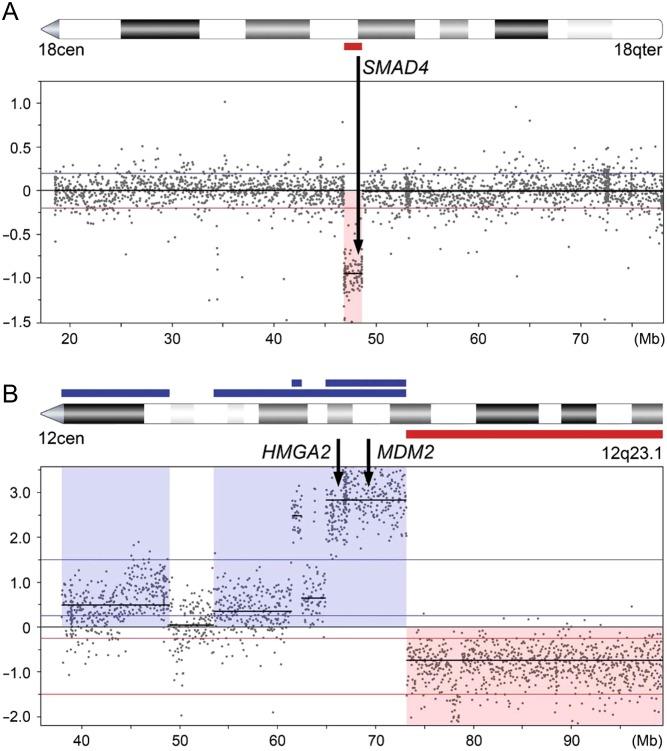
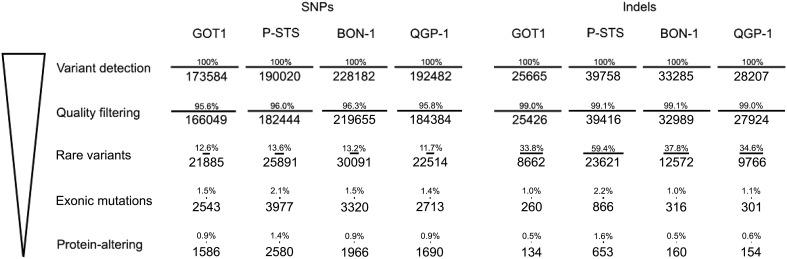
Experimental models of neuroendocrine tumour disease are scarce, and no comprehensive characterisation of existing gastroenteropancreatic neuroendocrine tumour (GEPNET) cell lines has been reported. In this study, we aimed to define the molecular characteristics and therapeutic sensitivity of these cell lines. We therefore performed immunophenotyping, copy number profiling, whole-exome sequencing and a large-scale inhibitor screening of seven GEPNET cell lines. Four cell lines, GOT1, P-STS, BON-1 and QGP-1, displayed a neuroendocrine phenotype while three others, KRJ-I, L-STS and H-STS, did not. Instead, these three cell lines were identified as lymphoblastoid. Characterisation of remaining authentic GEPNET cell lines by copy number profiling showed that GOT1, among other chromosomal alterations, harboured losses on chromosome 18 encompassing the gene, while P-STS had a loss on 11q. BON-1 had a homozygous loss of and , and QGP-1 harboured amplifications of and Whole-exome sequencing revealed both disease-characteristic mutations (e.g. mutation in QGP-1) and, for patient tumours, rare genetic events (e.g. mutation in P-STS, BON-1 and QGP-1). A large-scale inhibitor screening showed that cell lines from pancreatic NETs to a greater extent, when compared to small intestinal NETs, were sensitive to inhibitors of MEK. Similarly, neuroendocrine NET cells originating from the small intestine were considerably more sensitive to a group of HDAC inhibitors. Taken together, our results provide a comprehensive characterisation of GEPNET cell lines, demonstrate their relevance as neuroendocrine tumour models and explore their therapeutic sensitivity to a broad range of inhibitors.
神经内分泌肿瘤疾病的实验模型稀缺,且目前尚无对现有胃肠胰神经内分泌肿瘤(GEPNET)细胞系的全面描述。在本研究中,我们旨在确定这些细胞系的分子特征和治疗敏感性。因此,我们对 7 种 GEPNET 细胞系进行了免疫表型分析、拷贝数分析、全外显子组测序和大规模抑制剂筛选。4 种细胞系 GOT1、P-STS、BON-1 和 QGP-1 显示出神经内分泌表型,而另外 3 种细胞系 KRJ-I、L-STS 和 H-STS 则没有。相反,这 3 种细胞系被鉴定为淋巴母细胞样。通过拷贝数分析对其余真正的 GEPNET 细胞系进行特征描述显示,GOT1 除其他染色体改变外,还在 18 号染色体上缺失了包含 基因的区域,而 P-STS 在 11q 上缺失。BON-1 存在 和 的纯合缺失,QGP-1 存在 和 的扩增。全外显子组测序揭示了疾病特征性突变(例如 QGP-1 中的 突变)以及患者肿瘤中的罕见遗传事件(例如 P-STS、BON-1 和 QGP-1 中的 突变)。大规模抑制剂筛选显示,与小肠 NET 相比,源自胰腺 NET 的细胞系在更大程度上对 MEK 抑制剂敏感。同样,起源于小肠的神经内分泌 NET 细胞对一组 HDAC 抑制剂也更为敏感。综上所述,我们的研究结果全面描述了 GEPNET 细胞系,证明了它们作为神经内分泌肿瘤模型的相关性,并探讨了它们对广泛抑制剂的治疗敏感性。



 Zotero 插件