Chang Chun-Hung, Chen Shaw-Ji, Liu Chieh-Yu, Tsai Hsin-Chi
Brain Disease Research Center, Department of Psychiatry, China Medical University Hospital, Taichung, Taiwan.
Institute of Clinical Medical Science, China Medical University, Taichung, Taiwan.
Neuropsychiatr Dis Treat. 2018 Feb 7;14:443-450. doi: 10.2147/NDT.S157494. eCollection 2018.
The purpose of this study was to investigate the incidence and risk of suicidal drug overdose (SDO) after stroke in older patients.
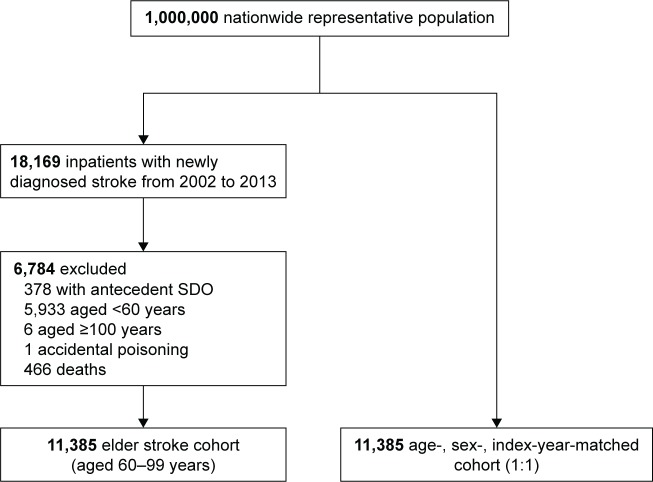
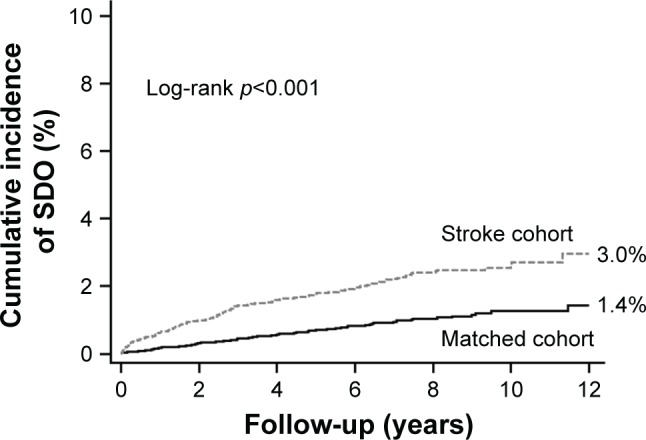
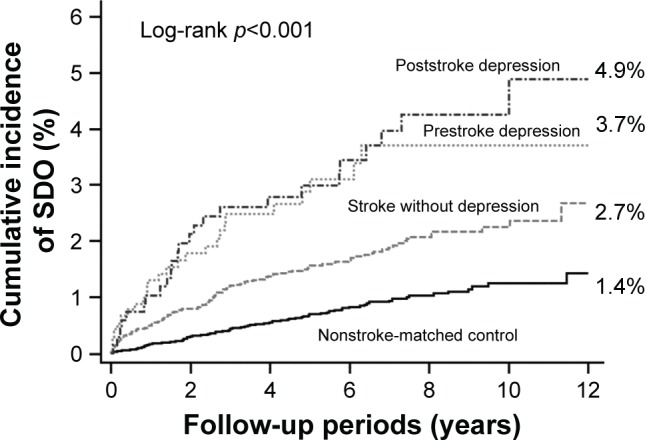
We enrolled patients aged 60-99 years who were diagnosed with new-onset stroke between 2002 and 2013 and age-, sex-, and index-year-matched controls who did not have stroke. Patients with a history of SDO before enrollment were excluded. Both groups were observed until December 31, 2013. The primary end point was the occurrence of newly diagnosed SDO. The cumulative incidence rates of the study and control groups were estimated using the Kaplan-Meier method. Furthermore, we used the Cox proportional hazards model to identify risk factors for SDO.
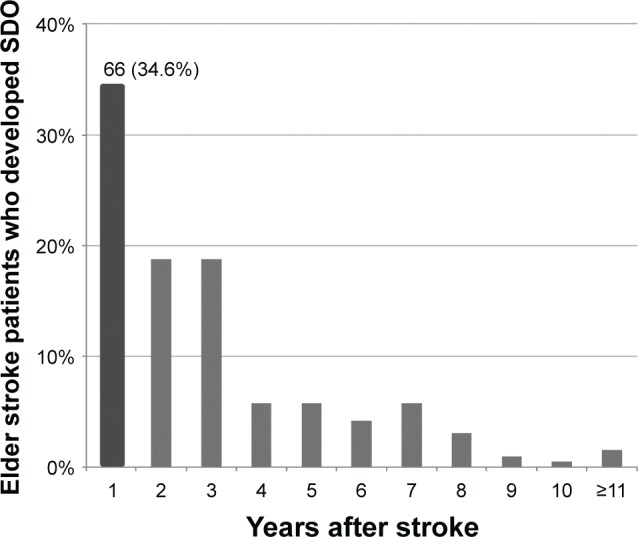
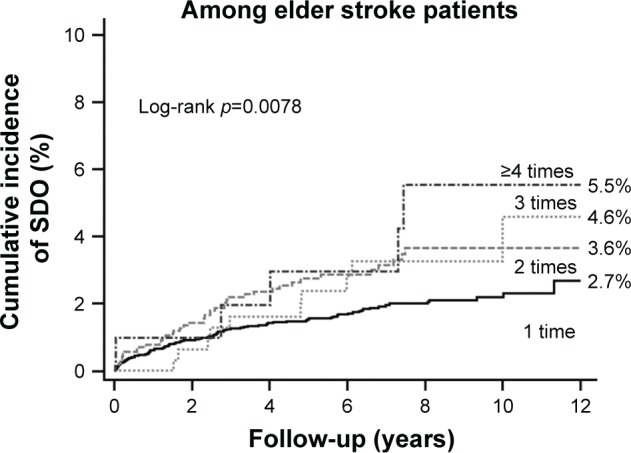
We selected 22,770 individuals. Among them, 11,385 were older patients (aged 60-99 years) who had newly diagnosed stroke and 11,385 were controls. Of the 22,770 individuals, 275 (1.21%) had SDO during a mean follow-up period of 5.33±3.30 years, comprising 191 (1.68%) from the stroke group and 84 (0.74%) from the control group. Older patients with stroke had a significantly higher risk of SDO than the controls (adjusted hazard ratio: 2.288, 95% confidence interval [CI]: 1.746-2.999, <0.001). Moreover, in older patients with stroke, the risk significantly increased with the number of stroke events. Patients with depressive disorder or coronary disease had an increased risk of SDO. Additionally, benzodiazepines and anticoagulants were the two most commonly prescribed medications for SDO.
Clinicians should be aware of the risk of SDO and risk factors in older patients with stroke. Psychological assessment and medication monitoring should be incorporated into current clinical diagnoses in neurology and treatments following stroke.
本研究旨在调查老年患者中风后自杀性药物过量(SDO)的发生率及风险。
我们纳入了2002年至2013年间被诊断为新发中风的60 - 99岁患者以及年龄、性别和索引年份匹配的无中风对照者。排除入组前有SDO病史的患者。两组均观察至2013年12月31日。主要终点是新诊断的SDO的发生情况。采用Kaplan - Meier方法估计研究组和对照组的累积发病率。此外,我们使用Cox比例风险模型来确定SDO的风险因素。
我们选取了22770名个体。其中,11385名是新诊断为中风的老年患者(60 - 99岁),11385名是对照者。在这22770名个体中,275名(1.21%)在平均5.33±3.30年的随访期内发生了SDO,其中中风组191名(1.68%),对照组84名(0.74%)。中风老年患者发生SDO的风险显著高于对照组(调整后风险比:2.288,95%置信区间[CI]:1.746 - 2.999,<0.001)。此外,在中风老年患者中,SDO风险随中风事件数量显著增加。患有抑郁症或冠心病的患者发生SDO的风险增加。此外,苯二氮䓬类药物和抗凝剂是SDO最常用的两种处方药。
临床医生应意识到中风老年患者发生SDO的风险及风险因素。心理评估和药物监测应纳入当前神经内科临床诊断及中风后的治疗中。