Durham Jo, Brolan Claire E, Lui Chi-Wai, Whittaker Maxine
1Faculty of Medicine & Biomedical Sciences, School of Public Health School of Public Health, The University of Queensland, Herston Road, Herston, Queensland 4006 Australia.
2Dalla Lana School of Public Health, University of Toronto, Toronto, Canada.
Public Health Rev. 2016 Aug 22;37:6. doi: 10.1186/s40985-016-0020-9. eCollection 2016.
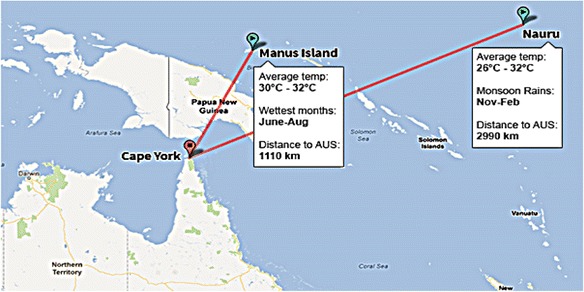
Public health professionals have a responsibility to protect and promote the right to health amongst populations, especially vulnerable and disenfranchised groups, such as people seeking asylum and whose health care is frequently compromised. As at 31 March 2016, there was a total of 3707 people (including 384 children) in immigration detention facilities or community detention in Australia, with 431 of them detained for more than 2 years. The Public Health Association of Australia and the Australian Medical Association assert that people seeking asylum in Australia have a right to health in the same way as Australian citizens, and they denounce detention of such people in government facilities for prolonged and indeterminate periods of time. The position of these two professional organisations is consistent with the compelling body of evidence demonstrating the negative impact detention has on health. Yet in recent years, both the Labour and Liberal parties-when at the helm of Australia's Federal Government-have implemented a suite of regressive policies toward individuals seeking asylum. This has involved enforced legal restrictions on dissenting voices of those working with these populations, including health professionals. This paper outlines Australia's contemporary offshore immigration detention policy and practices. It summarises evidence on asylum seeker health in detention centres and describes the government's practice of purposeful silencing of health professionals. The authors examine how Australia's treatment of asylum seekers violates their health rights. Based on these analyses, the authors call for concrete action to translate the overwhelming body of evidence on the deleterious impacts of immigration detention into ethical policy and pragmatic interventions. To this end, they provide four recommendations for action.
公共卫生专业人员有责任保护和促进民众的健康权,尤其是弱势群体和被剥夺权利的群体,比如寻求庇护者,他们的医疗保健常常受到损害。截至2016年3月31日,澳大利亚共有3707人(包括384名儿童)被关押在移民拘留设施或社区拘留场所,其中431人被拘留超过两年。澳大利亚公共卫生协会和澳大利亚医学协会宣称,在澳大利亚寻求庇护者享有与澳大利亚公民同等的健康权,他们谴责将这些人长期关押在政府设施中且关押期限不确定的做法。这两个专业组织的立场与大量有力证据一致,这些证据表明拘留对健康有负面影响。然而近年来,工党和自由党在执掌澳大利亚联邦政府期间,都对寻求庇护者实施了一系列倒退政策。这包括对与这些人群打交道的人,包括卫生专业人员的不同意见实施强制法律限制。本文概述了澳大利亚当代的境外移民拘留政策与做法。总结了拘留中心寻求庇护者健康状况的证据,并描述了政府有意压制卫生专业人员言论的做法。作者们审视了澳大利亚对待寻求庇护者的方式如何侵犯了他们的健康权。基于这些分析,作者们呼吁采取具体行动,将关于移民拘留有害影响的大量证据转化为符合道德的政策和切实可行的干预措施。为此,他们提出了四项行动建议。