Department of Pathology and Laboratory Medicine, Temple University, Philadelphia, PA, United States.
Laboratory of Dendritic Cell Biology, Department of Microbiology and Immunology, Lewis Katz School of Medicine, Temple University, Philadelphia, PA, United States.
Front Immunol. 2018 Feb 2;9:156. doi: 10.3389/fimmu.2018.00156. eCollection 2018.
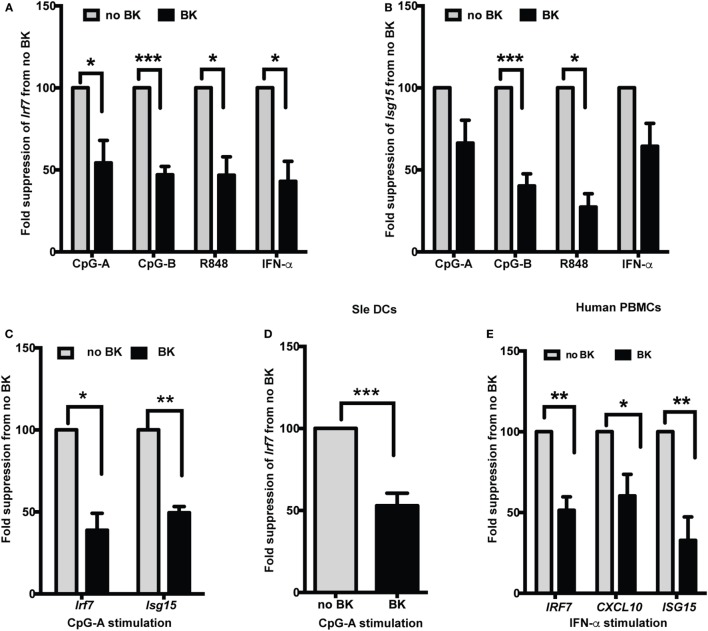
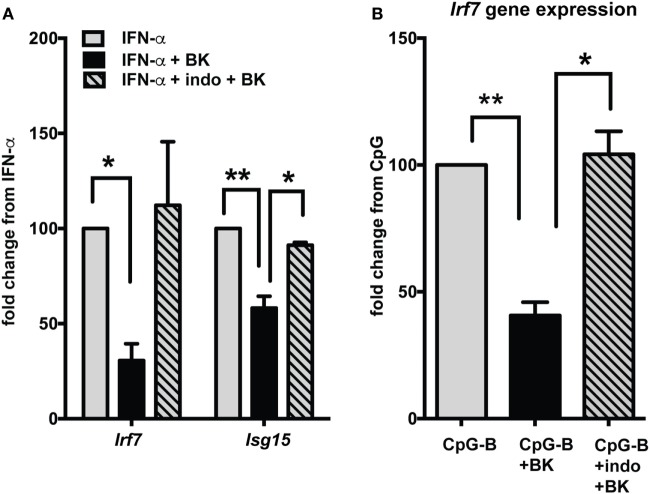
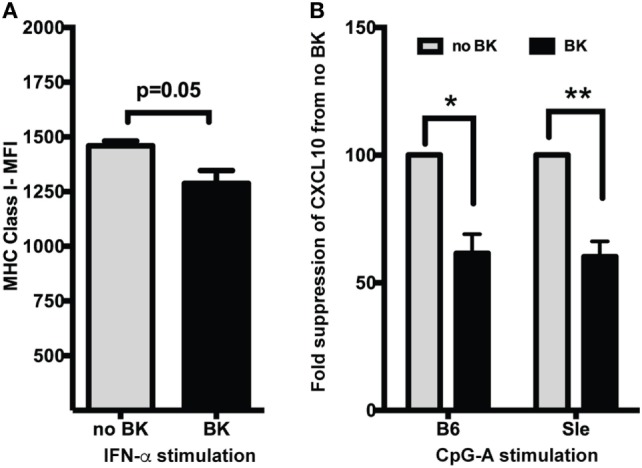
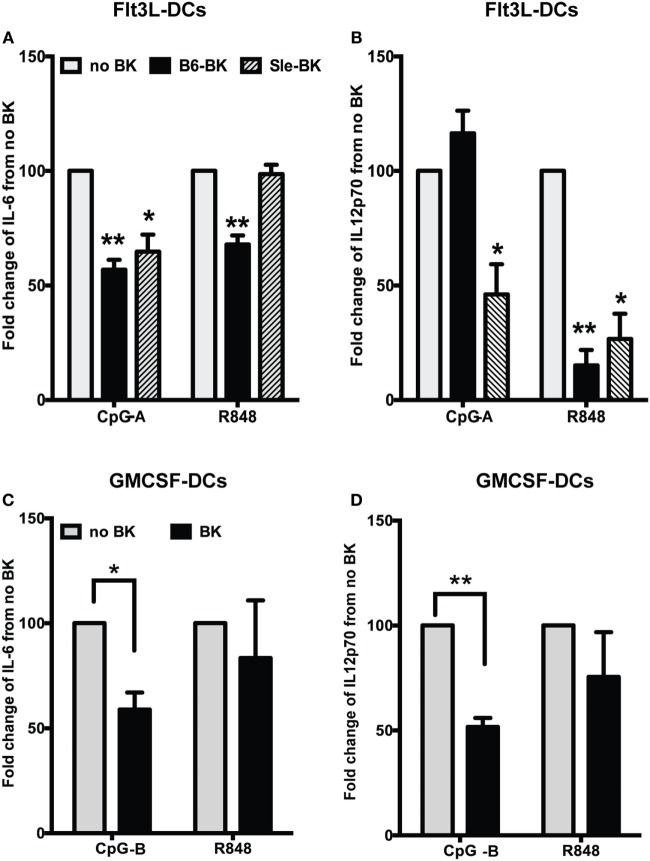
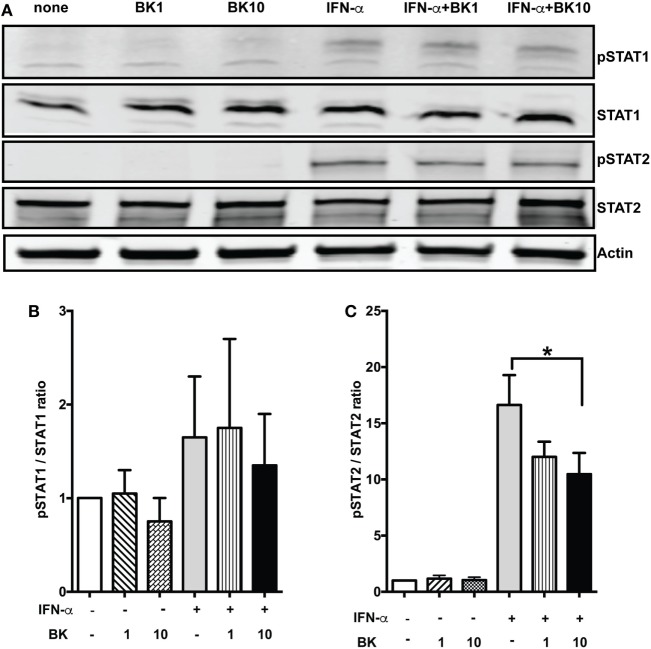
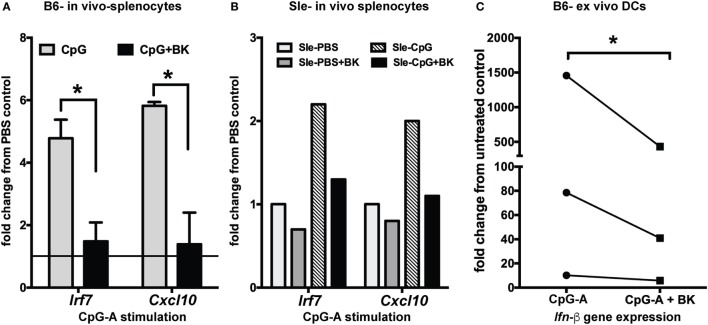
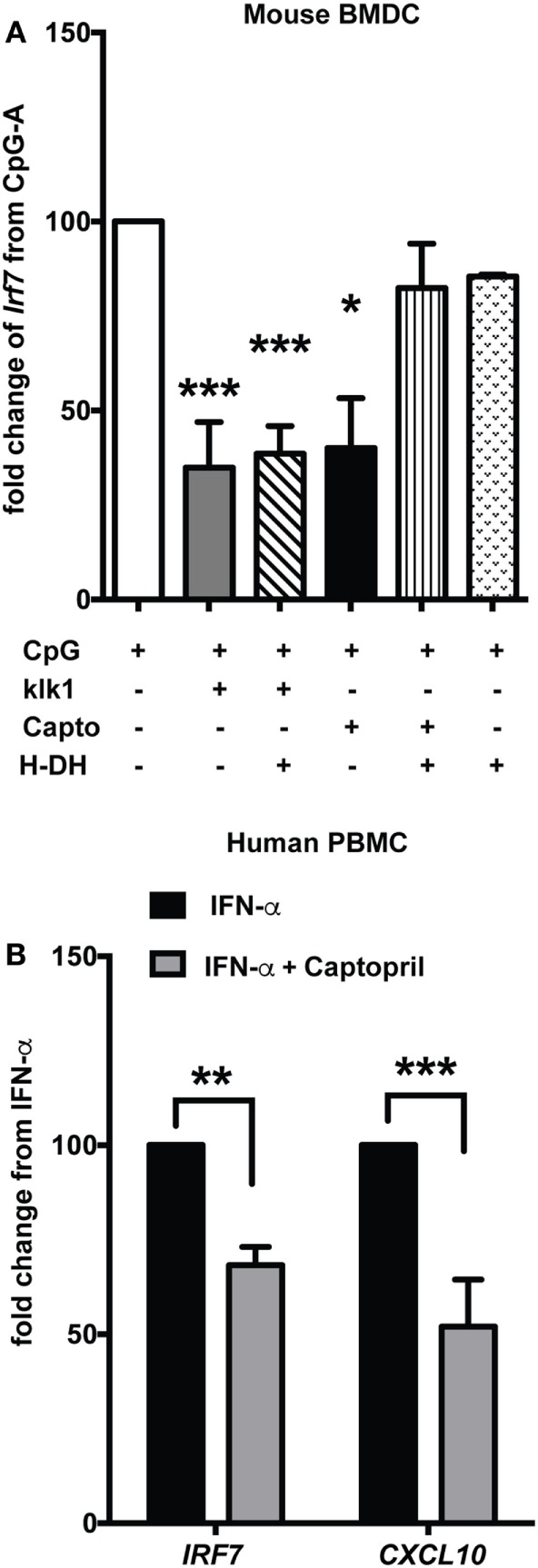
The Kallikrein-Kinin System (KKS), comprised of kallikreins (klks), bradykinins (BKs) angiotensin-converting enzyme (ACE), and many other molecules, regulates a number of physiological processes, including inflammation, coagulation, angiogenesis, and control of blood pressure. In this report, we show that KKS regulates Type I IFN responses, thought to be important in lupus pathogenesis. We used CpG (TLR9 ligand), R848 (TLR7 ligand), or recombinant IFN-α to induce interferon-stimulated genes (ISGs) and proteins, and observed that this response was markedly diminished by BKs, klk1 (tissue kallikrein), or captopril (an ACE inhibitor). BKs significantly decreased the ISGs induced by TLRs and (in normal and lupus-prone mice), and in human PBMCs, especially the induction of gene ( < 0.05), the master regulator of Type I IFNs. ISGs induced by IFN-α were also suppressed by the KKS. MHC Class I upregulation, a classic response to Type I IFNs, was reduced by BKs in murine dendritic cells (DCs). BKs decreased phosphorylation of STAT2 molecules that mediate IFN signaling. Among the secreted pro-inflammatory cytokines/chemokines analyzed (IL-6, IL12p70, and CXCL10), the strongest suppressive effect was on CXCL10, a highly Type I IFN-dependent cytokine, upon CpG stimulation, both in normal and lupus-prone DCs. klks that break down into BKs, also suppressed CpG-induced ISGs in murine DCs. Captopril, a drug that inhibits ACE and increases BK, suppressed ISGs, both in mouse DCs and human PBMCs. The effects of BK were reversed with indomethacin (compound that inhibits production of PGE2), suggesting that BK suppression of IFN responses may be mediated prostaglandins. These results highlight a novel regulatory mechanism in which members of the KKS control the Type I IFN response and suggest a role for modulators of IFNs in the pathogenesis of lupus and interferonopathies.
激肽释放酶-激肽系统(KKS)由激肽释放酶(klks)、缓激肽(BKs)、血管紧张素转换酶(ACE)和许多其他分子组成,调节许多生理过程,包括炎症、凝血、血管生成和血压控制。在本报告中,我们表明 KKS 调节 I 型干扰素反应,这被认为在狼疮发病机制中很重要。我们使用 CpG(TLR9 配体)、R848(TLR7 配体)或重组 IFN-α诱导干扰素刺激基因(ISGs)和蛋白,观察到 BKs、klk1(组织激肽释放酶)或卡托普利(ACE 抑制剂)显著减弱了这一反应。BKs 显著降低了 TLRs 和 (在正常和狼疮易感小鼠中)诱导的 ISGs,并在人 PBMC 中,特别是诱导 基因( < 0.05),即 I 型 IFNs 的主调控因子。IFN-α诱导的 ISGs 也被 KKS 抑制。MHC 类 I 上调是 I 型 IFNs 的经典反应,在鼠树突状细胞(DCs)中被 BKs 降低。BKs 降低了介导 IFN 信号的 STAT2 分子的磷酸化。在分析的分泌性促炎细胞因子/趋化因子(IL-6、IL12p70 和 CXCL10)中,对 CpG 刺激下正常和狼疮易感 DCs 中高度依赖 I 型 IFN 的 CXCL10 的抑制作用最强。分解为 BKs 的 klks 也抑制了 CpG 诱导的鼠 DCs 中的 ISGs。抑制 ACE 并增加 BK 的卡托普利在鼠 DCs 和人 PBMC 中均抑制 ISGs。BK 的作用被吲哚美辛(抑制 PGE2 产生的化合物)逆转,表明 BK 对 IFN 反应的抑制可能是通过 前列腺素介导的。这些结果突出了 KKS 成员控制 I 型 IFN 反应的新调节机制,并表明 IFN 调节剂在狼疮和干扰素病发病机制中的作用。