Department of Pediatrics, Washington University School of Medicine, Campus Box 8208, 660 South Euclid Ave, St Louis, MO, 63110, USA.
Center for Cell and Gene Therapy, Baylor College of Medicine, Houston, TX, USA.
Acta Neuropathol Commun. 2018 Feb 20;6(1):12. doi: 10.1186/s40478-018-0513-5.
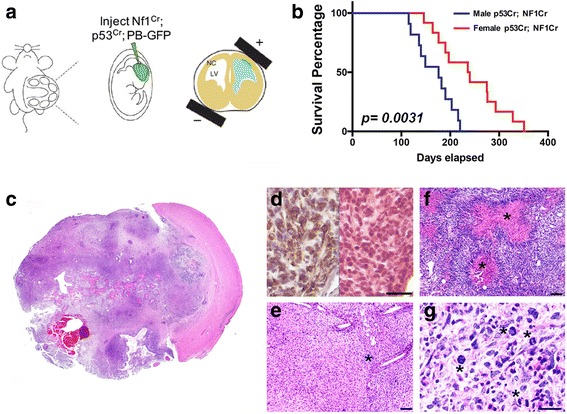
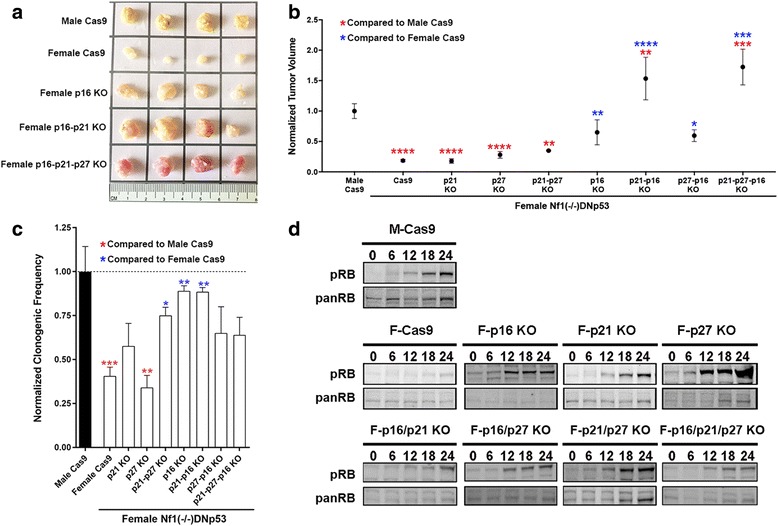
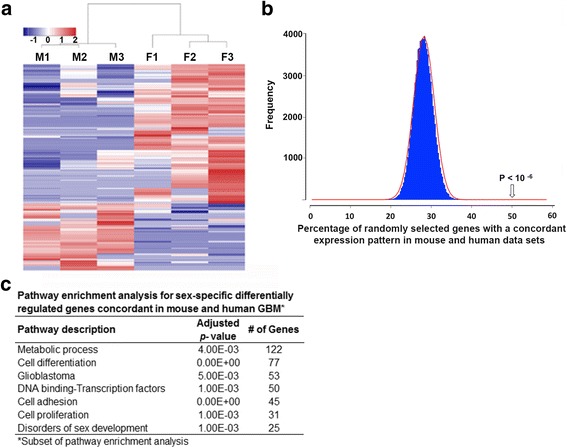
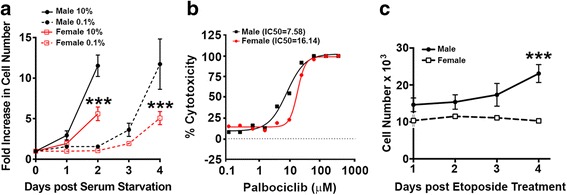
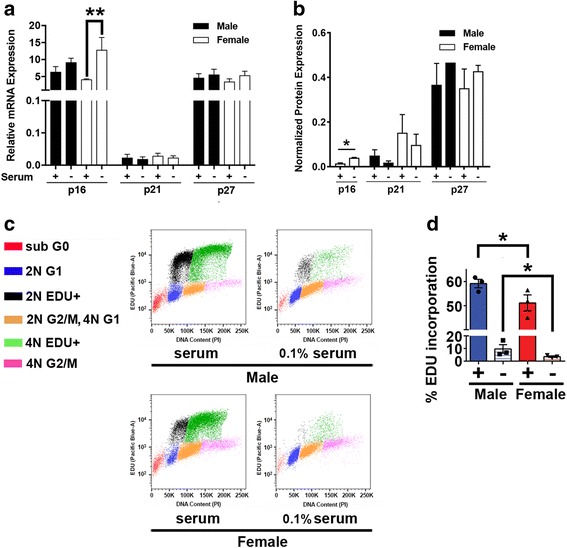
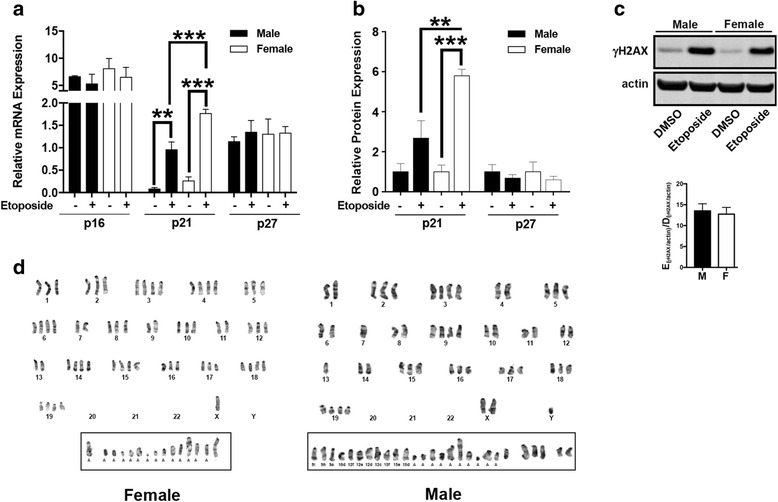
Mechanisms underlying sex differences in cancer incidence are not defined but likely involve dimorphism (s) in tumor suppressor function at the cellular and organismal levels. As an example, sexual dimorphism in retinoblastoma protein (Rb) activity was shown to block transformation of female, but not male, murine astrocytes in which neurofibromin and p53 function was abrogated (GBM astrocytes). Correlated sex differences in gene expression in the murine GBM astrocytes were found to be highly concordant with sex differences in gene expression in male and female GBM patients, including in the expression of components of the Rb and p53 pathways. To define the basis of this phenomenon, we examined the functions of the cyclin dependent kinase (CDK) inhibitors, p16, p21 and p27 in murine GBM astrocytes under conditions that promote Rb-dependent growth arrest. We found that upon serum deprivation or etoposide-induced DNA damage, female, but not male GBM astrocytes, respond with increased p16 and p21 activity, and cell cycle arrest. In contrast, male GBM astrocytes continue to proliferate, accumulate chromosomal aberrations, exhibit enhanced clonogenic cell activity and in vivo tumorigenesis; all manifestations of broad sex differences in cell cycle regulation and DNA repair. Differences in tumorigenesis disappeared when female GBM astrocytes are also rendered null for p16 and p21. These data elucidate mechanisms underlying sex differences in cancer incidence and demonstrate sex-specific effects of cytotoxic and targeted therapeutics. This has critical implications for lab and clinical research.
癌症发病率存在性别差异的机制尚不清楚,但可能涉及细胞和机体水平上肿瘤抑制功能的二态性。例如,视网膜母细胞瘤蛋白(Rb)活性的性别二态性被证明可以阻止神经纤维瘤和 p53 功能缺失的雌性(而不是雄性)鼠星形胶质细胞的转化(GBM 星形胶质细胞)。在 GBM 星形胶质细胞中发现的基因表达的相关性别差异与男性和女性 GBM 患者中基因表达的性别差异高度一致,包括 Rb 和 p53 途径的组成部分的表达。为了定义这种现象的基础,我们研究了细胞周期蛋白依赖性激酶(CDK)抑制剂 p16、p21 和 p27 在促进 Rb 依赖性生长停滞的条件下在鼠 GBM 星形胶质细胞中的功能。我们发现,在血清剥夺或依托泊苷诱导的 DNA 损伤下,雌性而非雄性 GBM 星形胶质细胞会响应增加的 p16 和 p21 活性和细胞周期停滞。相比之下,雄性 GBM 星形胶质细胞继续增殖、积累染色体畸变、表现出增强的克隆形成细胞活性和体内致瘤性;所有这些都是细胞周期调控和 DNA 修复中广泛性别差异的表现。当雌性 GBM 星形胶质细胞也缺失 p16 和 p21 时,肿瘤发生的差异就消失了。这些数据阐明了癌症发病率性别差异的机制,并证明了细胞毒性和靶向治疗的性别特异性效应。这对实验室和临床研究都具有重要意义。