Department of Joint Bone Disease Surgery, Changhai Hospital, Second Military Medical University, 168 Changhai Road, Shanghai, 200433, China.
Department of Endocrinology, Drum Tower Hospital Affiliated to Nanjing University Medical School, No 321 Zhongshan Road, Nanjing, China.
Sci Rep. 2018 Feb 19;8(1):3241. doi: 10.1038/s41598-018-21674-6.
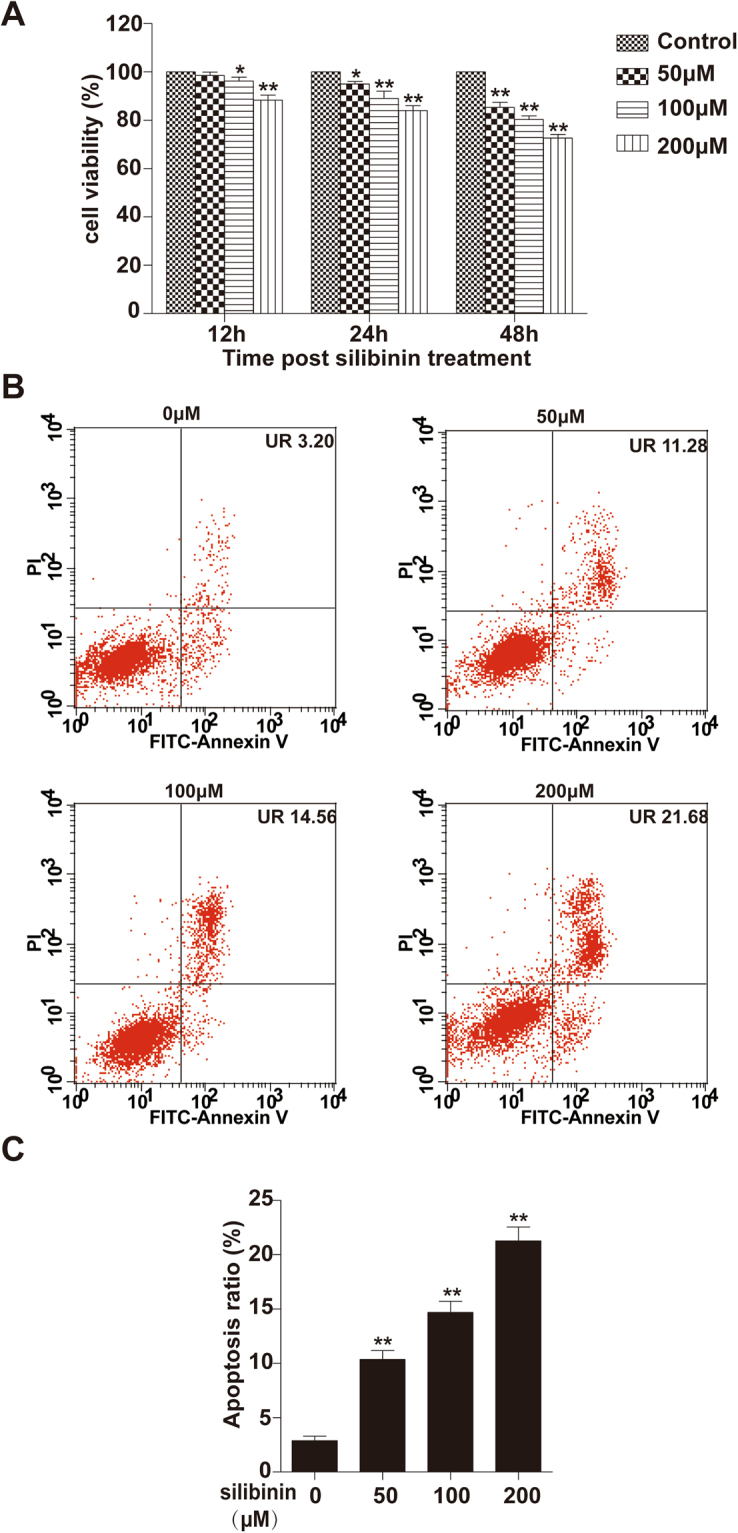
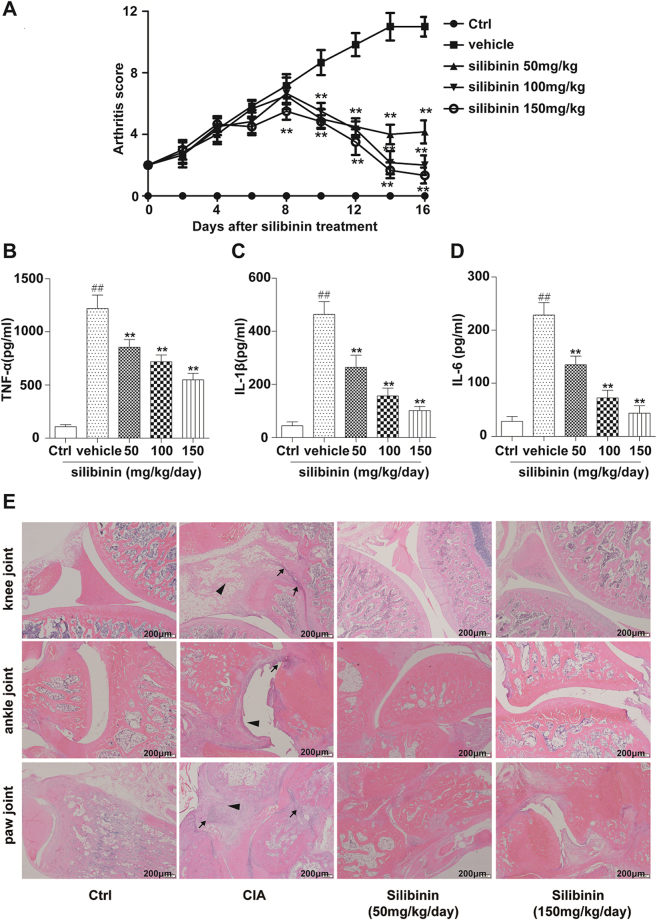
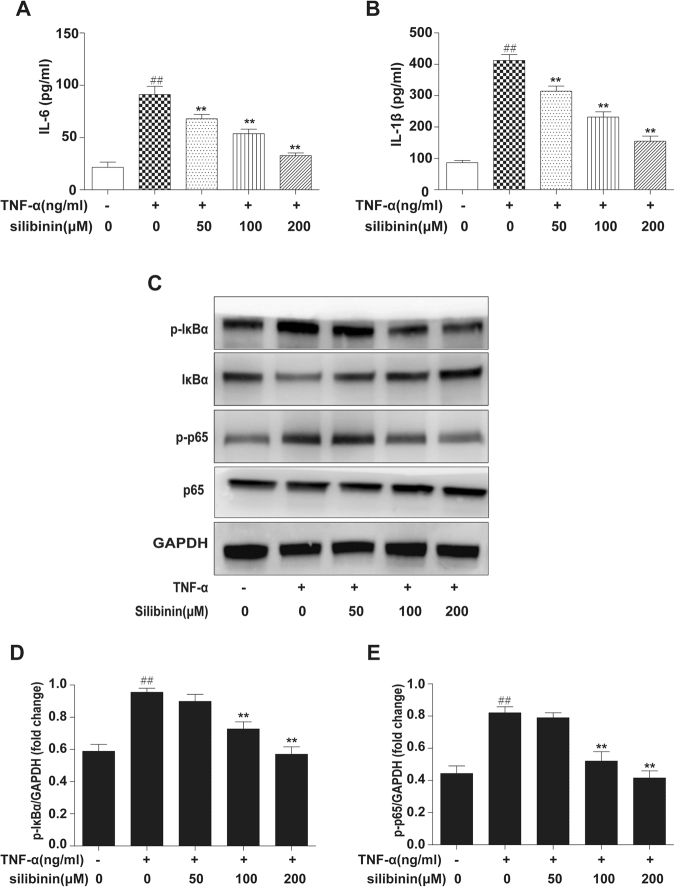
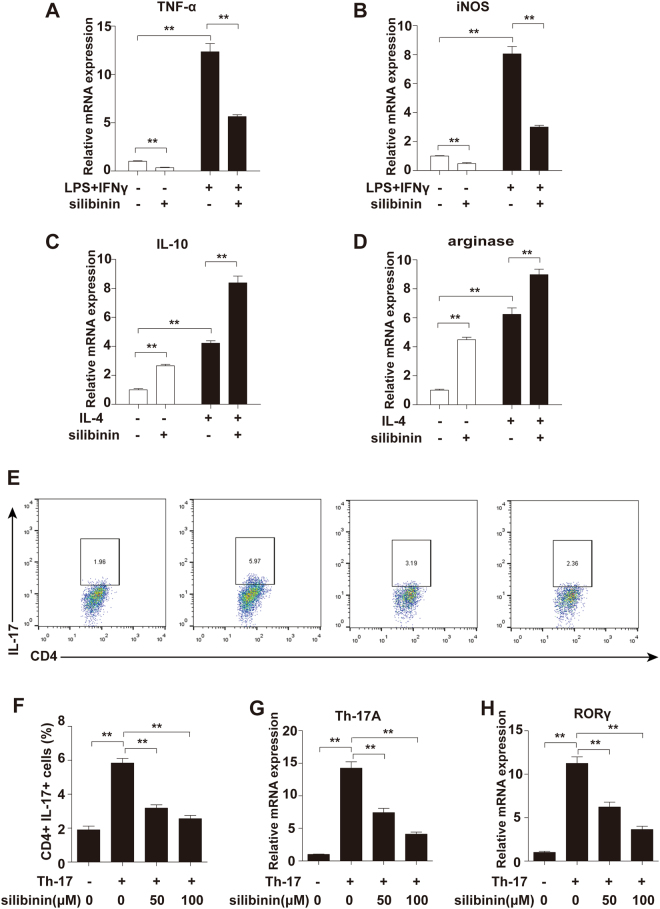
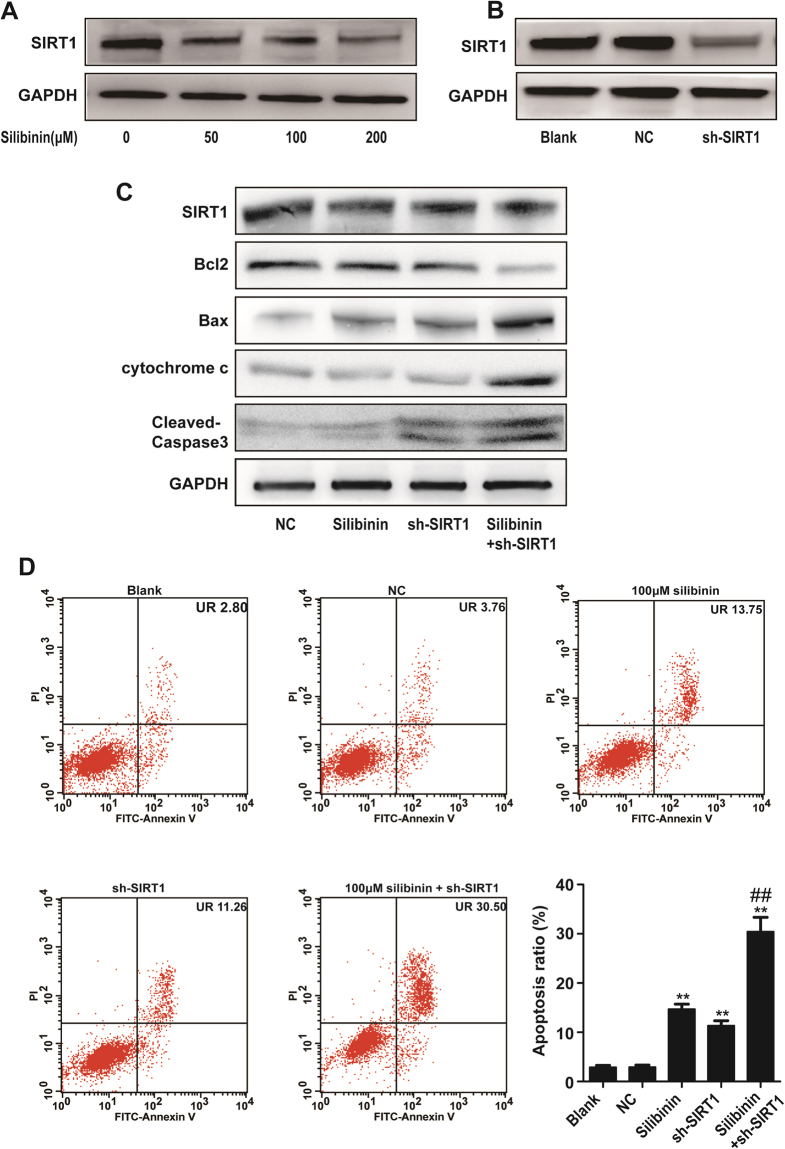
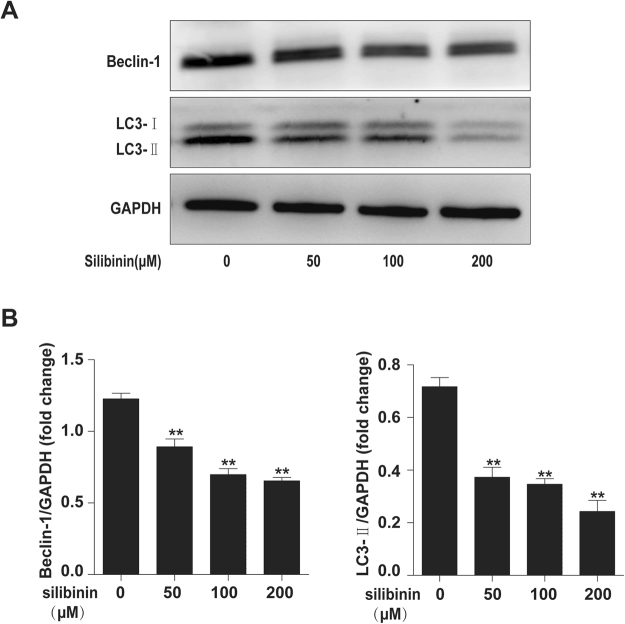
Silibinin, a natural polyphenolic flavonoid, possesses anti-oxidant, anti-inflammation and anti-cancer properties. The present study was designed to investigate the effects of silibinin on rheumatoid arthritis (RA) pathogenesis-related cells and collagen-induced arthritis (CIA) and further explore the potential underlying mechanisms. Our results showed that silibinin suppressed cell viability and increased the percentage of apoptotic RA-fibroblast-like synoviocytes (FLS). Furthermore, the production of inflammatory cytokines in RA-FLS and a CIA rat model was effectively inhibited by silibinin. Silibinin also induced macrophage M2 polarization in RAW264.7 cells. We further demonstrated that silibinin inhibits Th17 cell differentiation in vitro. The nuclear factor kappa B (NF-κB) pathway was suppressed in RA-FLS. In addition, Sirtuin1 (SIRT1) was decreased after silibinin treatment, and RA-FLS transfection with a short hairpin RNA (shRNA) of SIRT1 enhanced silibinin-induced apoptosis. Autophagy was markedly decreased in a dose-dependent manner following silibinin treatment. These findings indicate that silibinin inhibited inflammation by inhibiting the NF-κB pathway, and SIRT1 may participate in silibinin-induced apoptosis. Silibinin also inhibited autophagy in RA-FLS. Thus, silibinin may be a potential therapeutic agent for the treatment of RA.
水飞蓟宾是一种天然多酚类黄酮,具有抗氧化、抗炎和抗癌特性。本研究旨在探讨水飞蓟宾对类风湿关节炎(RA)发病相关细胞及胶原诱导性关节炎(CIA)的作用,并进一步探讨其潜在的作用机制。研究结果表明,水飞蓟宾可抑制 RA 成纤维样滑膜细胞(FLS)的活力并增加其凋亡率。此外,水飞蓟宾可有效抑制 RA-FLS 和 CIA 大鼠模型中炎症细胞因子的产生。水飞蓟宾还可诱导 RAW264.7 细胞中巨噬细胞 M2 极化。我们进一步证明,水飞蓟宾可抑制体外 Th17 细胞分化。水飞蓟宾可抑制 RA-FLS 中的核因子 kappa B(NF-κB)通路。此外,水飞蓟宾处理后 Sirtuin1(SIRT1)减少,RA-FLS 转染 SIRT1 的短发夹 RNA(shRNA)可增强水飞蓟宾诱导的细胞凋亡。水飞蓟宾处理后自噬明显呈剂量依赖性下降。这些发现表明,水飞蓟宾通过抑制 NF-κB 通路抑制炎症,而 SIRT1 可能参与水飞蓟宾诱导的细胞凋亡。水飞蓟宾还可抑制 RA-FLS 中的自噬。因此,水飞蓟宾可能是治疗 RA 的一种潜在治疗药物。