Keshavarz Mohsen, Ghorbani Mohsen, Shamsizadeh Forough, Namdari Haideh, Salimi Vahid, Rezaei Farhad
The Persian Gulf Tropical Medicine Research Center, The Persian Gulf Biomedical Sciences Research Institute, Bushehr University of Medical Sciences, Bushehr, Iran.
Department of Virology, School of Public Health, Tehran University of Medical Sciences, Tehran, Iran.
J Trop Med. 2025 Jan 16;2025:6618423. doi: 10.1155/jotm/6618423. eCollection 2025.
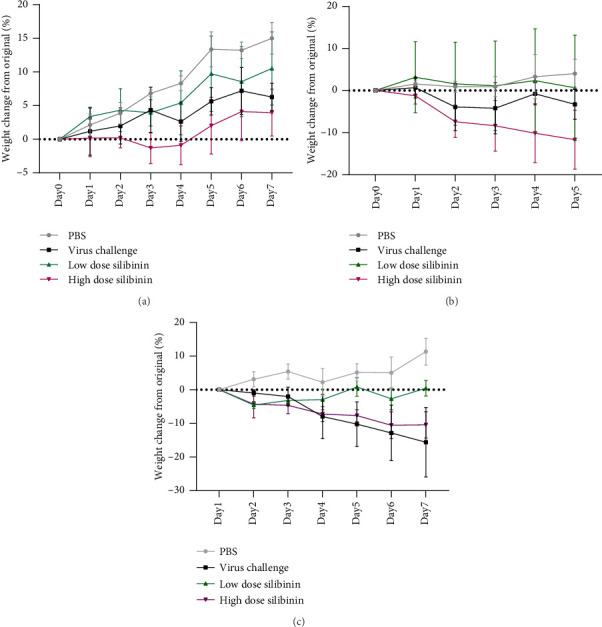
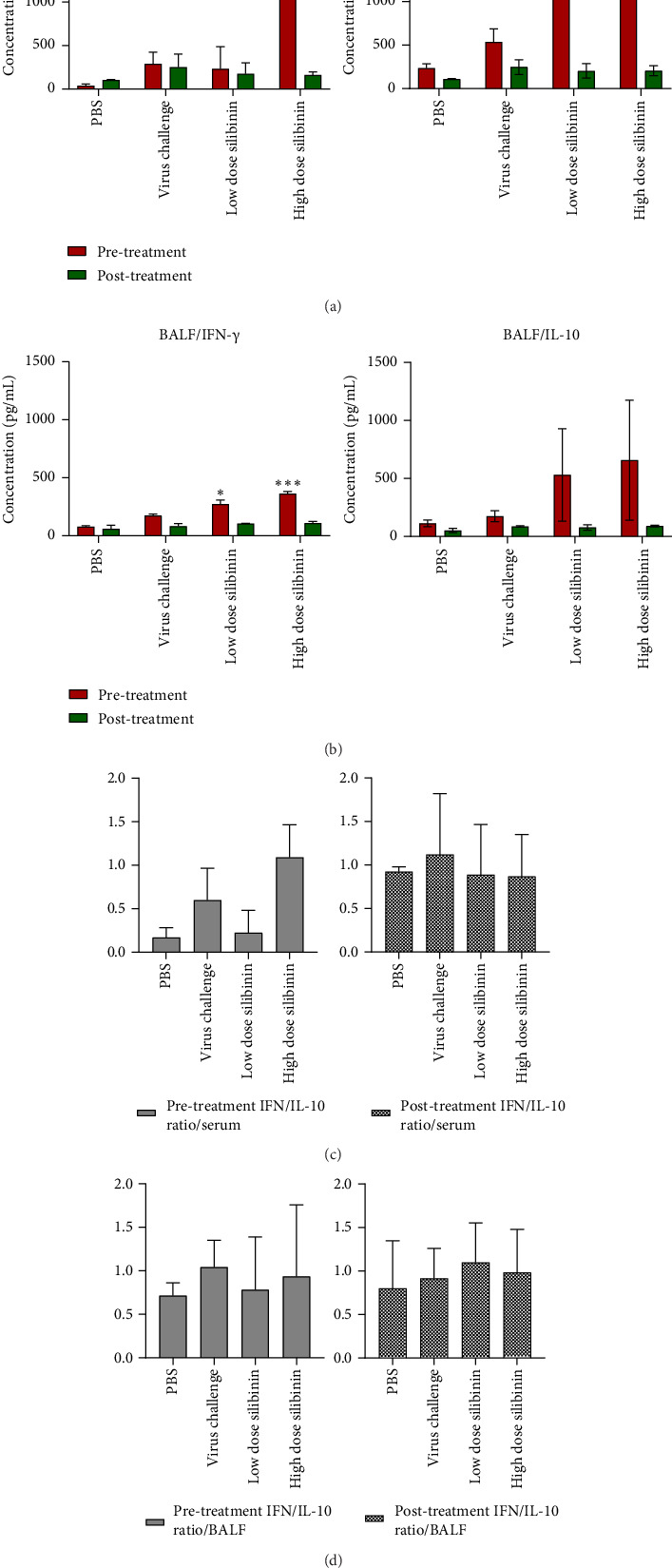
Silymarin is a polyphenolic flavonoid extracted from milk thistle. It has potent immunomodulatory effects and can inhibit the replication of influenza A virus (IAV). The present study aimed to determine the inflammatory and anti-inflammatory cytokine secretion patterns in mice before and after silibinin treatment. For this, bronchoalveolar lavage (BAL) fluids were collected from the thoracic cavity 5 days after the intervention, and viral quantification was performed using TaqMan Real-time PCR. Enzyme-linked immunosorbent assay (ELISA) was used to evaluate IFN-γ and IL-10 levels in serum and BAL samples. Finally, pathological damage to lung tissue was assessed by pathologists. The results reveal that silibinin pretreatment exhibits a dose-dependent immunomodulatory effect on IFN-γ and IL-10 levels. After the virus challenge, silibinin reduced immune cell infiltration in mouse BAL fluid. These data similarly suggest a remarkable immunomodulatory effect of silibinin. Silibinin also decreased lung damage following the virus challenge in the post-treatment group, but its lung protective properties seem to be due to a different mechanism than when it was administered before infection. Finally, high doses of silibinin (post-treatment) significantly reduced viral load in BAL fluid compared to the virus challenge group. These results support the idea that therapies aimed at moderating immune and inflammatory responses are essential to decrease the mortality rate caused by IAV infection. Silibinin has strong immunomodulatory properties, can inhibit IAV infection, and reduces lung tissue damage in a dose-dependent manner.
水飞蓟素是从水飞蓟中提取的一种多酚类黄酮。它具有强大的免疫调节作用,能够抑制甲型流感病毒(IAV)的复制。本研究旨在确定水飞蓟宾治疗前后小鼠体内炎症和抗炎细胞因子的分泌模式。为此,在干预5天后从胸腔收集支气管肺泡灌洗(BAL)液,并使用TaqMan实时PCR进行病毒定量。采用酶联免疫吸附测定(ELISA)评估血清和BAL样本中的IFN-γ和IL-10水平。最后,由病理学家评估肺组织的病理损伤。结果显示,水飞蓟宾预处理对IFN-γ和IL-10水平呈现剂量依赖性免疫调节作用。病毒攻击后,水飞蓟宾减少了小鼠BAL液中的免疫细胞浸润。这些数据同样表明水飞蓟宾具有显著的免疫调节作用。水飞蓟宾还降低了治疗后组病毒攻击后的肺损伤,但其肺保护特性似乎与感染前给药时的机制不同。最后,与病毒攻击组相比,高剂量水飞蓟宾(治疗后)显著降低了BAL液中的病毒载量。这些结果支持了这样一种观点,即旨在调节免疫和炎症反应的疗法对于降低IAV感染导致的死亡率至关重要。水飞蓟宾具有强大的免疫调节特性,能够抑制IAV感染,并以剂量依赖性方式减少肺组织损伤。