Lecamwasam Ashani, Sexton-Oates Alexandra, Carmody Jake, Ekinci Elif I, Dwyer Karen M, Saffery Richard
Clinical and Disease Epigenetics Group, Murdoch Childrens Research Institute, Victoria, Australia.
Department of Endocrinology, Austin Health, Victoria, Australia.
PLoS One. 2018 Feb 20;13(2):e0190280. doi: 10.1371/journal.pone.0190280. eCollection 2018.
To characterise the genomic DNA (gDNA) yield from urine and quality of derived methylation data generated from the widely used Illuminia Infinium MethylationEPIC (HM850K) platform and compare this with buffy coat samples.
DNA methylation is the most widely studied epigenetic mark and variations in DNA methylation profile have been implicated in diabetes which affects approximately 415 million people worldwide.
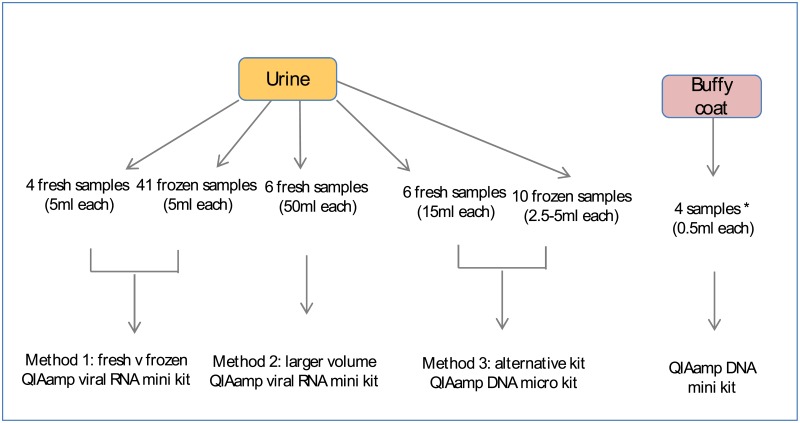
QIAamp Viral RNA Mini Kit and QIAamp DNA micro kit were used to extract DNA from frozen and fresh urine samples as well as increasing volumes of fresh urine. Matched buffy coats to the frozen urine were also obtained and DNA was extracted from the buffy coats using the QIAamp DNA Mini Kit. Genomic DNA of greater concentration than 20μg/ml were used for methylation analysis using the HM850K array.
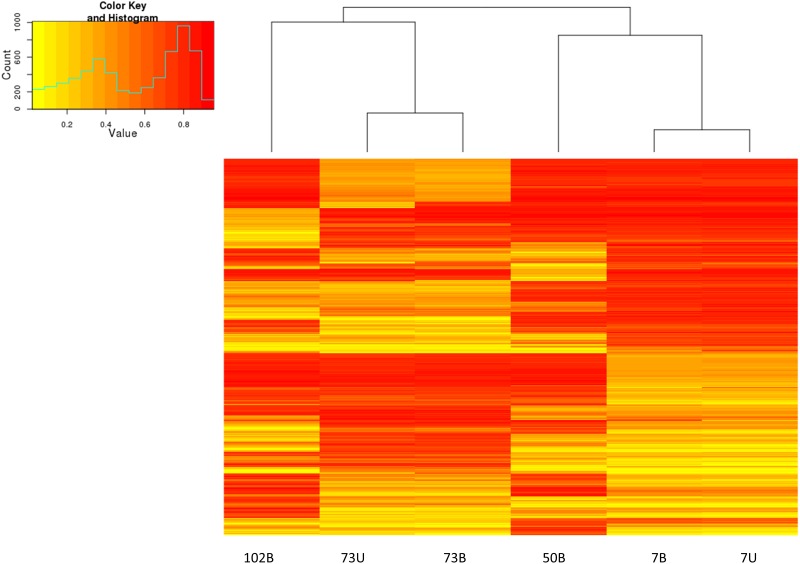
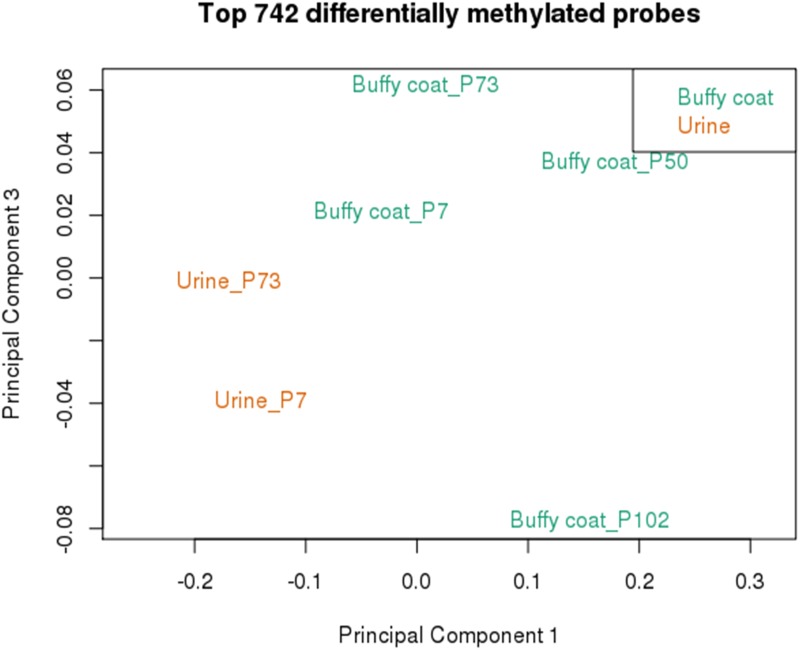
Irrespective of extraction technique or the use of fresh versus frozen urine samples, limited genomic DNA was obtained using a starting sample volume of 5ml (0-0.86μg/mL). In order to optimize the yield, we increased starting volumes to 50ml fresh urine, which yielded only 0-9.66μg/mL A different kit, QIAamp DNA Micro Kit, was trialled in six fresh urine samples and ten frozen urine samples with inadequate DNA yields from 0-17.7μg/mL and 0-1.6μg/mL respectively. Sufficient genomic DNA was obtained from only 4 of the initial 41 frozen urine samples (10%) for DNA methylation profiling. In comparison, all four buffy coat samples (100%) provided sufficient genomic DNA.
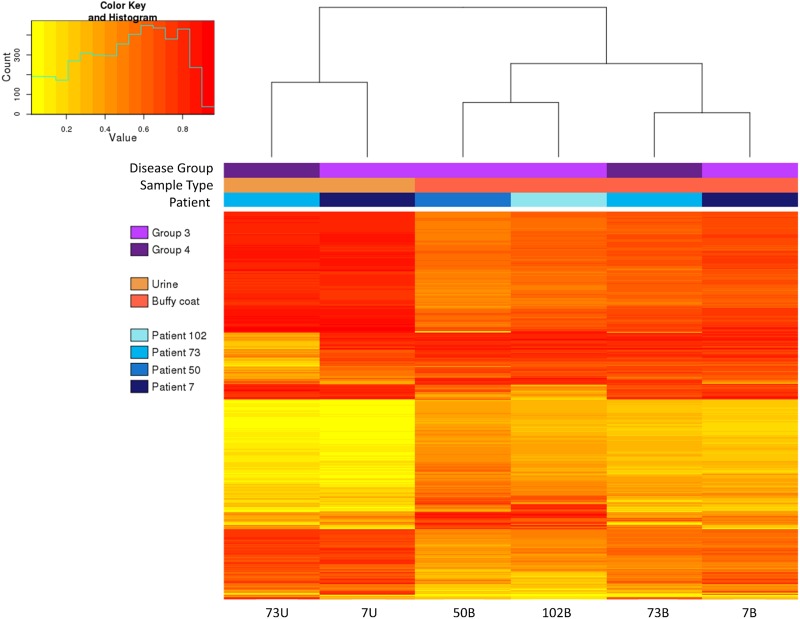
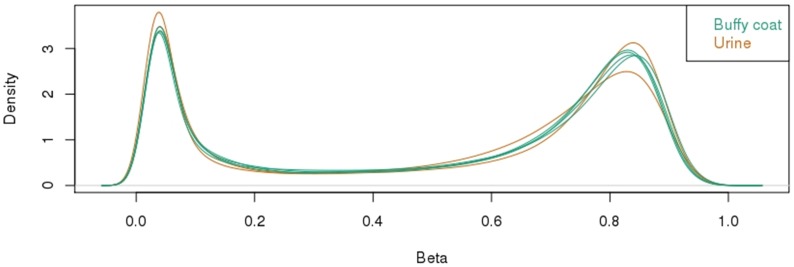
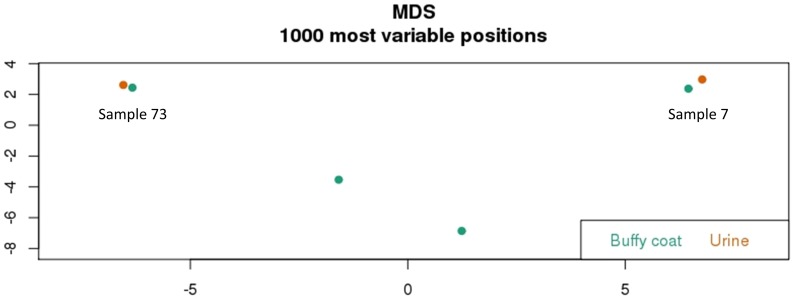
High quality data can be obtained provided a sufficient yield of genomic DNA is isolated. Despite optimizing various extraction methodologies, the modest amount of genomic DNA derived from urine, may limit the generalisability of this approach for the identification of DNA methylation biomarkers of chronic diabetic kidney disease.
表征尿液中基因组DNA(gDNA)的产量以及从广泛使用的Illumina Infinium MethylationEPIC(HM850K)平台生成的衍生甲基化数据的质量,并将其与血沉棕黄层样本进行比较。
DNA甲基化是研究最广泛的表观遗传标记,DNA甲基化谱的变化与糖尿病有关,全球约有4.15亿人受糖尿病影响。
使用QIAamp Viral RNA Mini试剂盒和QIAamp DNA微量试剂盒从冷冻和新鲜尿液样本以及不断增加体积的新鲜尿液中提取DNA。还获取了与冷冻尿液匹配的血沉棕黄层,并使用QIAamp DNA Mini试剂盒从血沉棕黄层中提取DNA。浓度大于20μg/ml的基因组DNA用于使用HM850K阵列进行甲基化分析。
无论采用何种提取技术或使用新鲜尿液样本还是冷冻尿液样本,使用5ml起始样本量获得的基因组DNA有限(0 - 0.86μg/mL)。为了优化产量,我们将起始体积增加到50ml新鲜尿液,其产量仅为0 - 9.66μg/mL。对六个新鲜尿液样本和十个冷冻尿液样本试用了不同的试剂盒QIAamp DNA微量试剂盒,DNA产量不足,分别为0 - 17.7μg/mL和0 - 1.6μg/mL。在最初的41个冷冻尿液样本中,只有4个(10%)获得了足够的基因组DNA用于DNA甲基化分析。相比之下,所有四个血沉棕黄层样本(100%)都提供了足够的基因组DNA。
只要分离出足够产量的基因组DNA,就能获得高质量的数据。尽管优化了各种提取方法,但从尿液中获得的基因组DNA量有限,这可能会限制这种方法在鉴定慢性糖尿病肾病DNA甲基化生物标志物方面的通用性。