Rahman Safikur, Archana Ayyagari, Jan Arif Tasleem, Minakshi Rinki
Department of Medical Biotechnology, Yeungnam University, Gyeongsan, South Korea.
Department of Microbiology, Swami Shraddhanand College, University of Delhi, New Delhi, India.
Front Aging Neurosci. 2018 Feb 6;10:30. doi: 10.3389/fnagi.2018.00030. eCollection 2018.
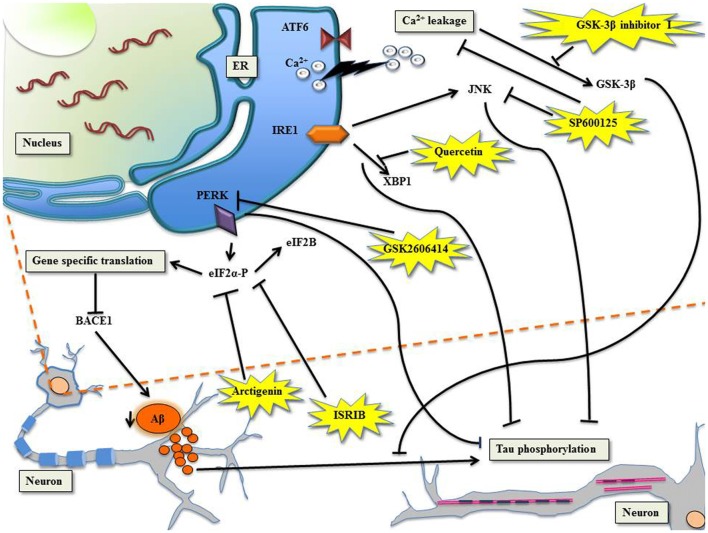
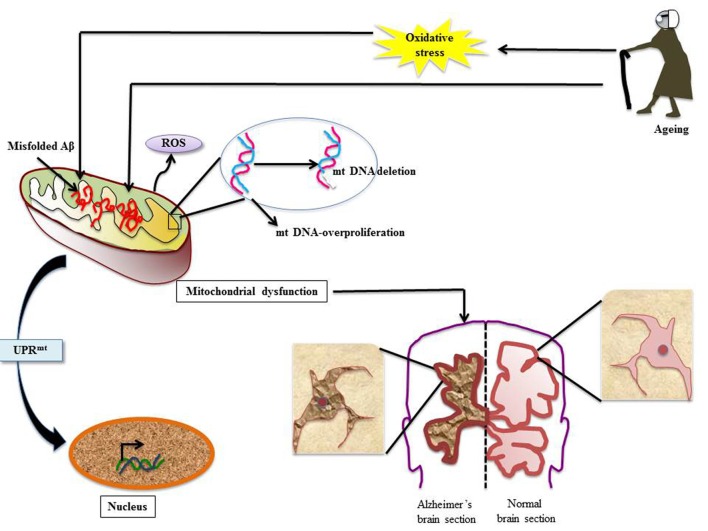
Alzheimer's disease (AD), a neurodegenerative disorder, is most common cause of dementia witnessed among aged people. The pathophysiology of AD develops as a consequence of neurofibrillary tangle formation which consists of hyperphosphorylated microtubule associated tau protein and senile plaques of amyloid-β (Aβ) peptide in specific brain regions that result in synaptic loss and neuronal death. The feeble buffering capacity of endoplasmic reticulum (ER) proteostasis in AD is evident through alteration in unfolded protein response (UPR), where UPR markers express invariably in AD patient's brain samples. Aging weakens UPR causing neuropathology and memory loss in AD. This review highlights molecular signatures of UPR and its key molecular alliance that are affected in aging leading to the development of intriguing neuropathologies in AD. We present a summary of recent studies reporting usage of small molecules as inhibitors or activators of UPR sensors/effectors in AD that showcase avenues for therapeutic interventions.
阿尔茨海默病(AD)是一种神经退行性疾病,是老年人中最常见的痴呆病因。AD的病理生理学是由神经原纤维缠结形成所致,神经原纤维缠结由过度磷酸化的微管相关tau蛋白和特定脑区的淀粉样β(Aβ)肽老年斑组成,导致突触丧失和神经元死亡。通过未折叠蛋白反应(UPR)的改变,AD内质网(ER)蛋白质稳态的缓冲能力减弱,UPR标志物在AD患者脑样本中总是表达。衰老会削弱UPR,导致AD中的神经病理学和记忆丧失。本综述重点介绍了UPR的分子特征及其关键分子联盟,这些在衰老过程中受到影响,导致AD中出现有趣的神经病理学。我们总结了最近的研究,这些研究报道了小分子作为AD中UPR传感器/效应器的抑制剂或激活剂的用途,展示了治疗干预的途径。