Chu Wei, Jin Weiwei, Liu Daihong, Wang Jian, Geng Chengjun, Chen Lihua, Huang Xuequan
Department of Radiology, Wuxi Huishan District People's Hospital, Jiangsu Province, 214187, China.
Department of Radiology, Wuxi Second Traditional Chinese Medicine Hospital, Jiangsu Province, 214121, China.
Oncotarget. 2017 Dec 11;9(6):7088-7100. doi: 10.18632/oncotarget.23195. eCollection 2018 Jan 23.
Diffusion-weighted imaging (DWI) is increasingly used to identify pathological complete responses (pCRs) to neoadjuvant chemotherapy (NAC) in breast cancer. The aim of the present study was to assess the utility of DWI using a pooled analysis.
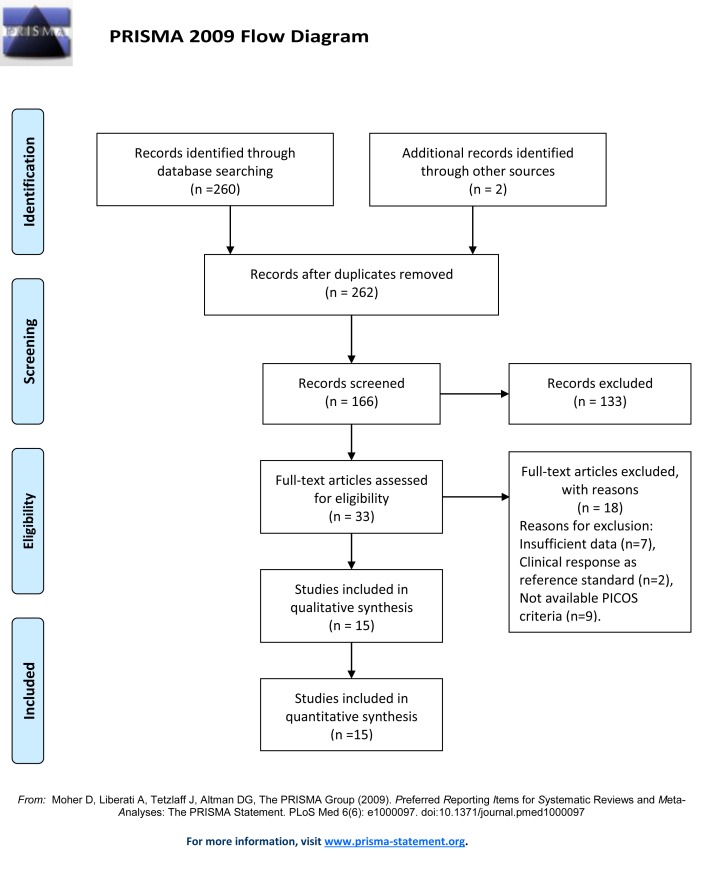
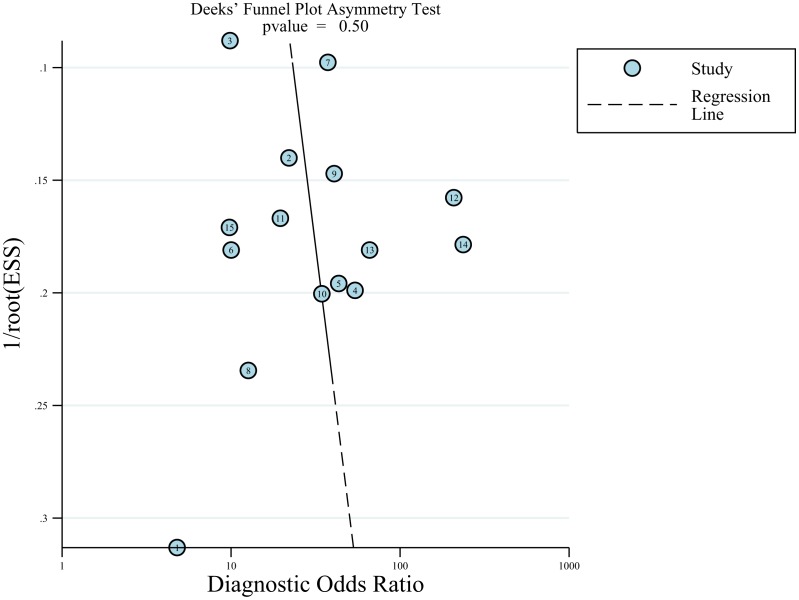
Literature databases were searched prior to July 2017. Fifteen studies with a total of 1181 patients were included. The data were extracted to perform pooled analysis, heterogeneity testing, threshold effect testing, sensitivity analysis, publication bias analysis and subgroup analyses.
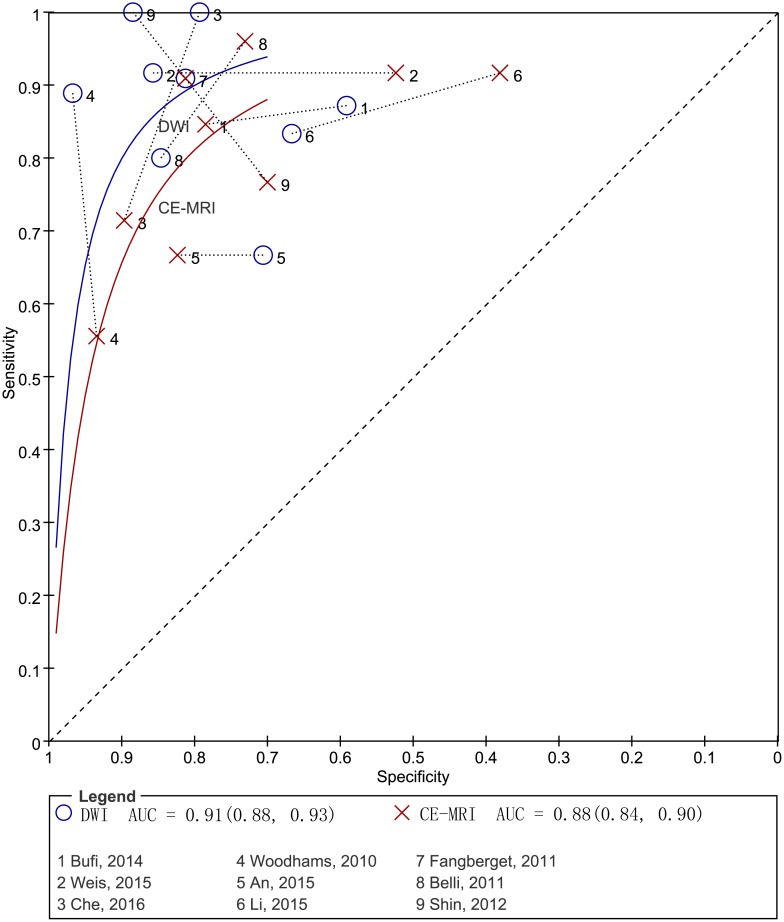
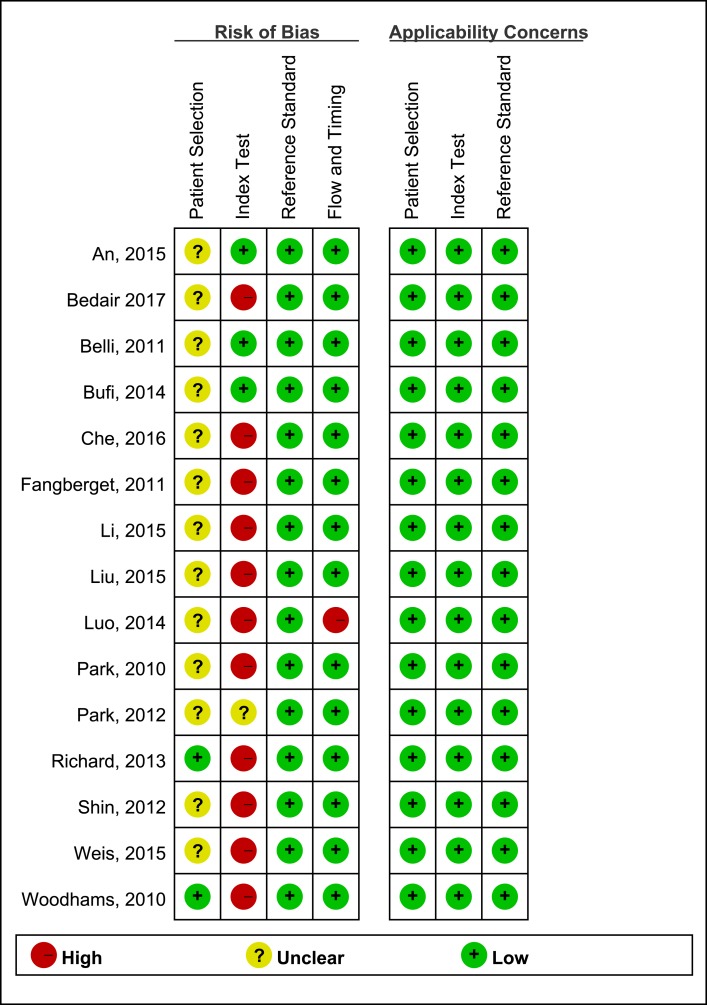
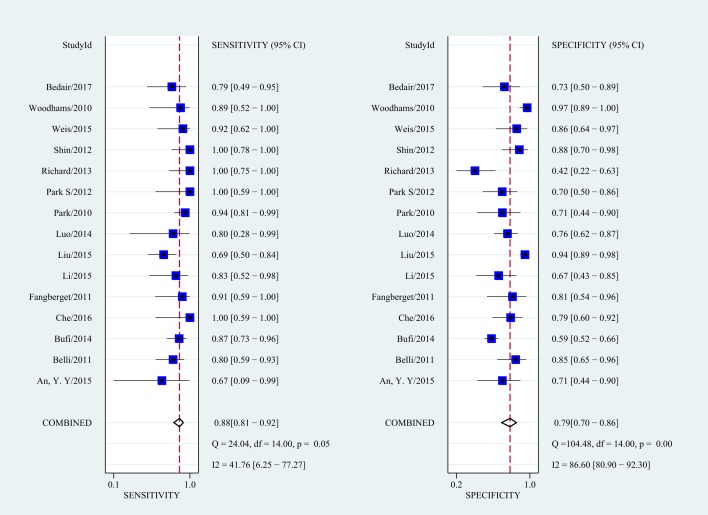
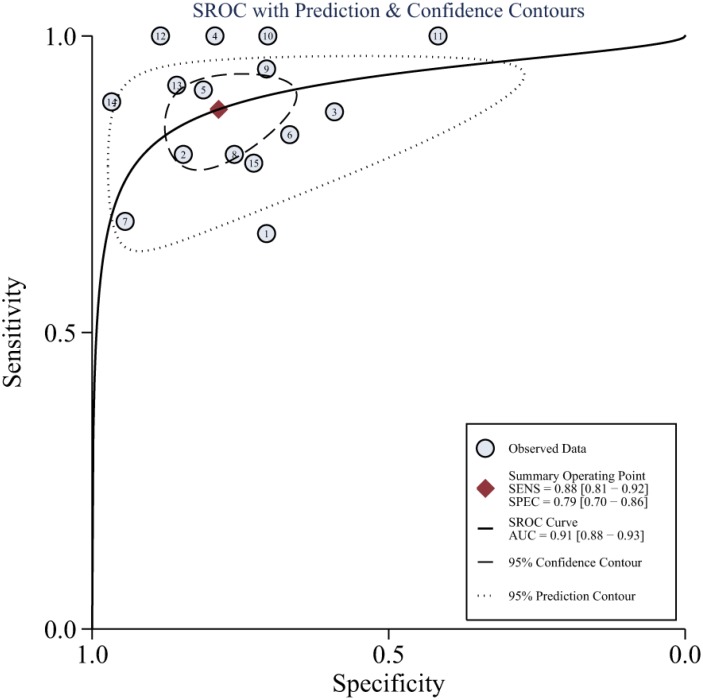
The methodological quality was moderate. Remarkable heterogeneity was detected, primarily due to a threshold effect. The pooled weighted values were a sensitivity of 0.88 (95% confidence interval (CI): 0.81, 0.92), a specificity of 0.79 (95% CI: 0.70, 0.86), a positive likelihood ratio of 4.1 (95% CI: 2.9, 5.9), a negative likelihood ratio of 0.16 (95% CI: 0.10, 0.24), and a diagnostic odds ratio of 26 (95% CI: 15, 46). The area under the receiver operator characteristic curve was 0.91 (95% CI: 0.88, 0.93). In the subgroup analysis, the pooled specificity of change in the apparent diffusion coefficient (ADC) subgroup was higher than that in the pre-treatment ADC subgroup (0.80 [95% CI: 0.71, 087] vs. 0.63 [95% CI: 0.52, 0.73], = 0.027).
DWI may be an accurate and nonradioactive imaging technique for identifying pCRs to NAC in breast cancer. Nonetheless, there are a variety of issues when assessing DWI techniques for estimating breast cancer responses to NAC, and large scale and well-designed clinical trials are needed to assess the technique's diagnostic value.
弥散加权成像(DWI)越来越多地用于识别乳腺癌新辅助化疗(NAC)后的病理完全缓解(pCR)。本研究的目的是通过汇总分析评估DWI的效用。
检索2017年7月之前的文献数据库。纳入15项研究,共1181例患者。提取数据进行汇总分析、异质性检验、阈值效应检验、敏感性分析、发表偏倚分析和亚组分析。
方法学质量中等。检测到显著的异质性,主要归因于阈值效应。汇总加权值为灵敏度0.88(95%置信区间(CI):0.81,0.92),特异度0.79(95%CI:0.70,0.86),阳性似然比4.1(95%CI:2.9,5.9),阴性似然比0.16(95%CI:0.10,0.24),诊断比值比26(95%CI:15,46)。受试者工作特征曲线下面积为0.91(95%CI:0.88,0.93)。在亚组分析中,表观扩散系数(ADC)变化亚组的汇总特异度高于治疗前ADC亚组(0.80[95%CI:0.71,0.87]对0.63[95%CI:0.52,0.73],P = 0.027)。
DWI可能是一种准确且无辐射的成像技术,用于识别乳腺癌对NAC的pCR。尽管如此,在评估DWI技术以估计乳腺癌对NAC的反应时存在各种问题,需要大规模且设计良好的临床试验来评估该技术的诊断价值。