State Key Laboratory of Medicinal Chemical Biology, Department of Biochemistry, College of Life Sciences, Nankai University, Tianjin, 300071, People's Republic of China.
J Hematol Oncol. 2018 Feb 23;11(1):26. doi: 10.1186/s13045-018-0577-5.
Resistance to tamoxifen (TAM) frequently occurs in the treatment of estrogen receptor positive (ER+) breast cancer. Accumulating evidences indicate that transcription factor HOXB13 is of great significance in TAM resistance. However, the regulation of HOXB13 in TAM-resistant breast cancer remains largely unexplored. Here, we were interested in the potential effect of HBXIP, an oncoprotein involved in the acceleration of cancer progression, on the modulation of HOXB13 in TAM resistance of breast cancer.
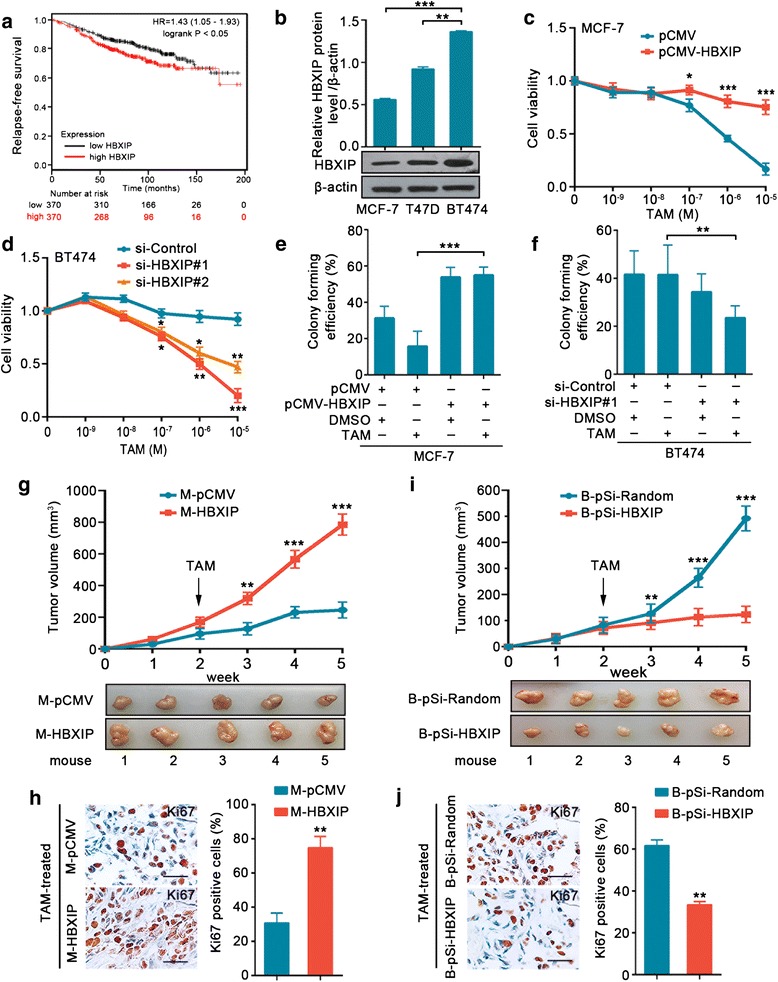
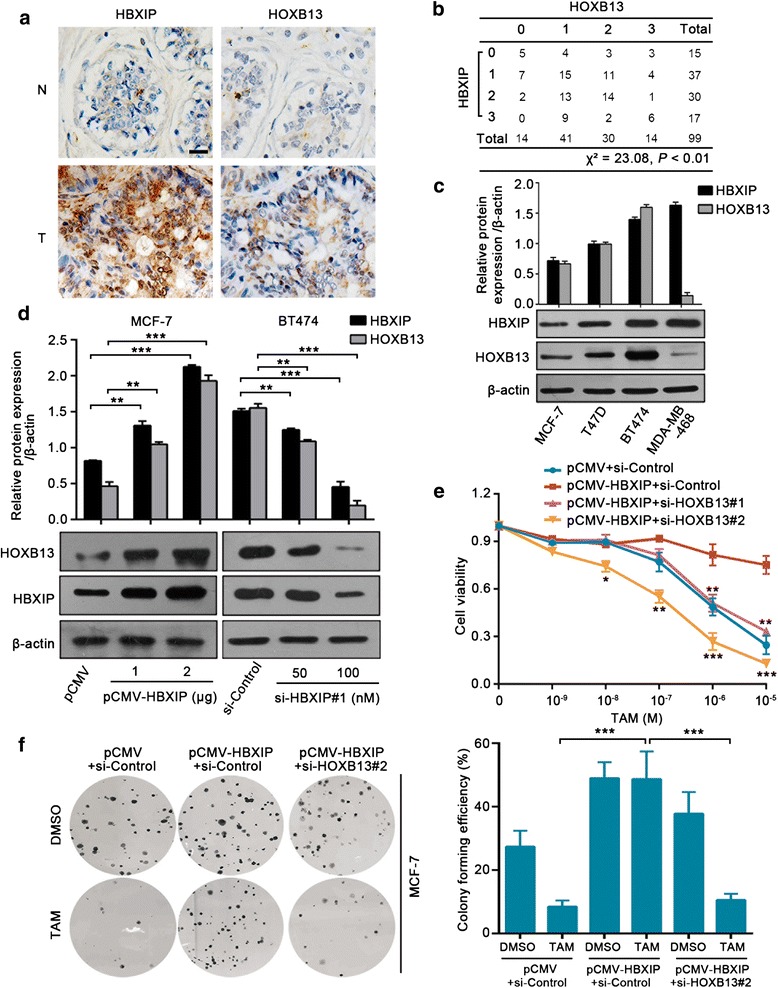
The Kaplan-Meier plotter cancer database and GEO dataset were used to analyze the association between HBXIP expression and relapse-free survival. The correlation of HBXIP and HOXB13 in ER+ breast cancer was assessed by human tissue microarray. Immunoblotting analysis, qRT-PCR assay, immunofluorescence staining, Co-IP assay, ChIP assay, luciferase reporter gene assay, cell viability assay, and colony formation assay were performed to explore the possible molecular mechanism by which HBXIP modulates HOXB13. Cell viability assay, xenograft assay, and immunohistochemistry staining analysis were utilized to evaluate the effect of the HBXIP/HOXB13 axis on the facilitation of TAM resistance in vitro and in vivo.
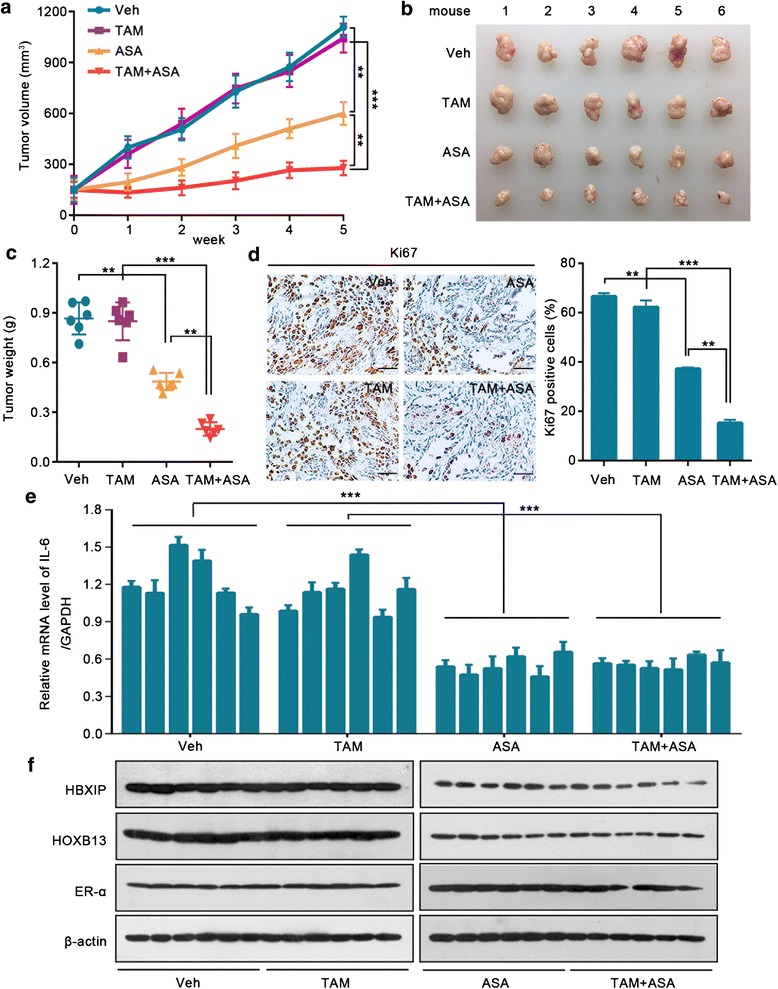
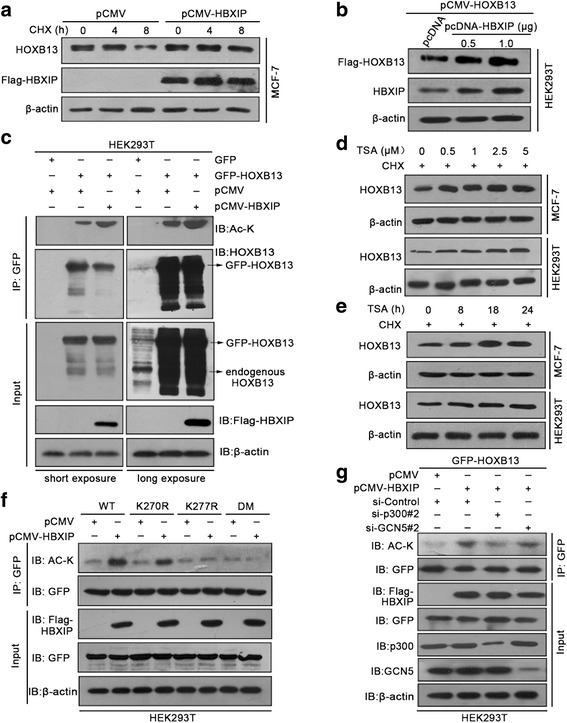
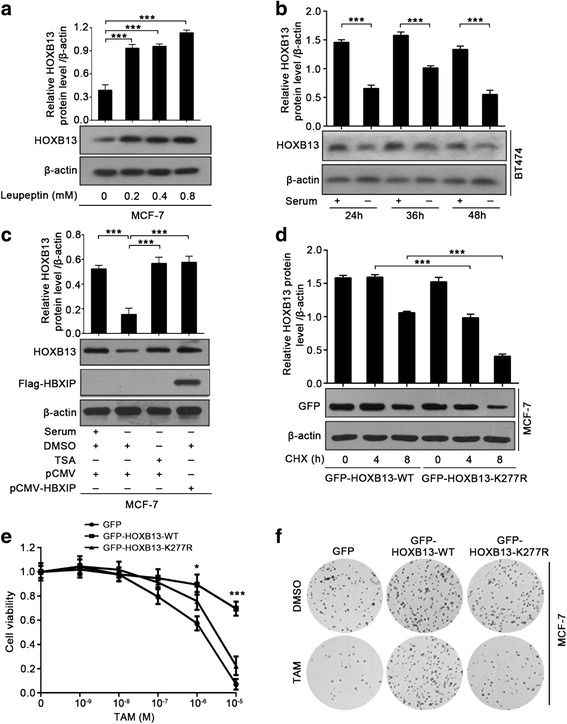
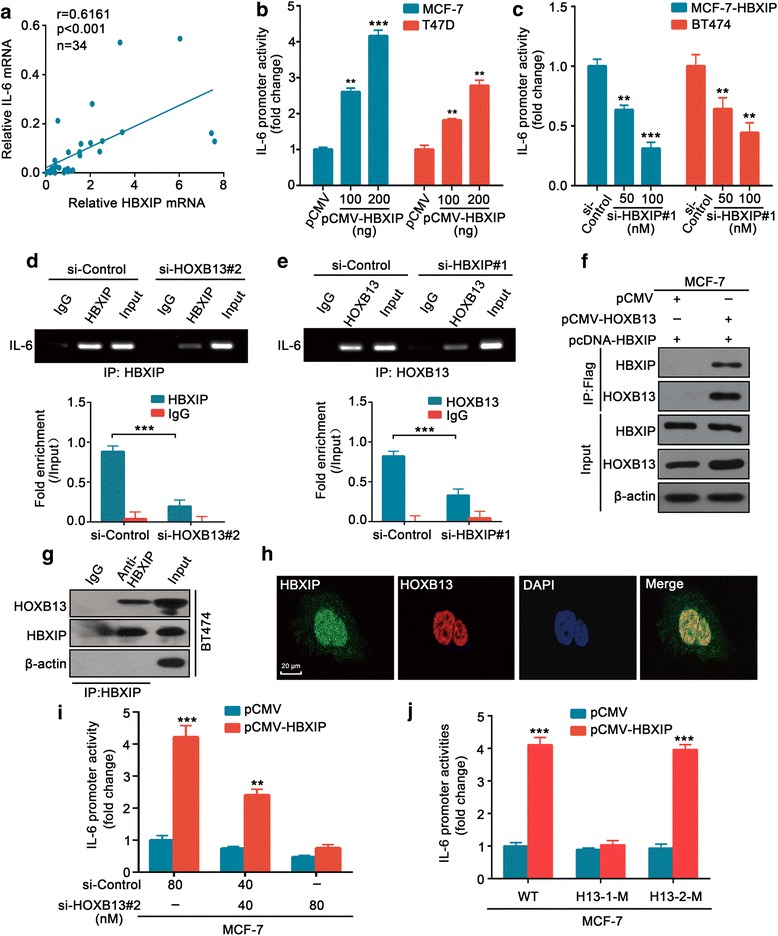
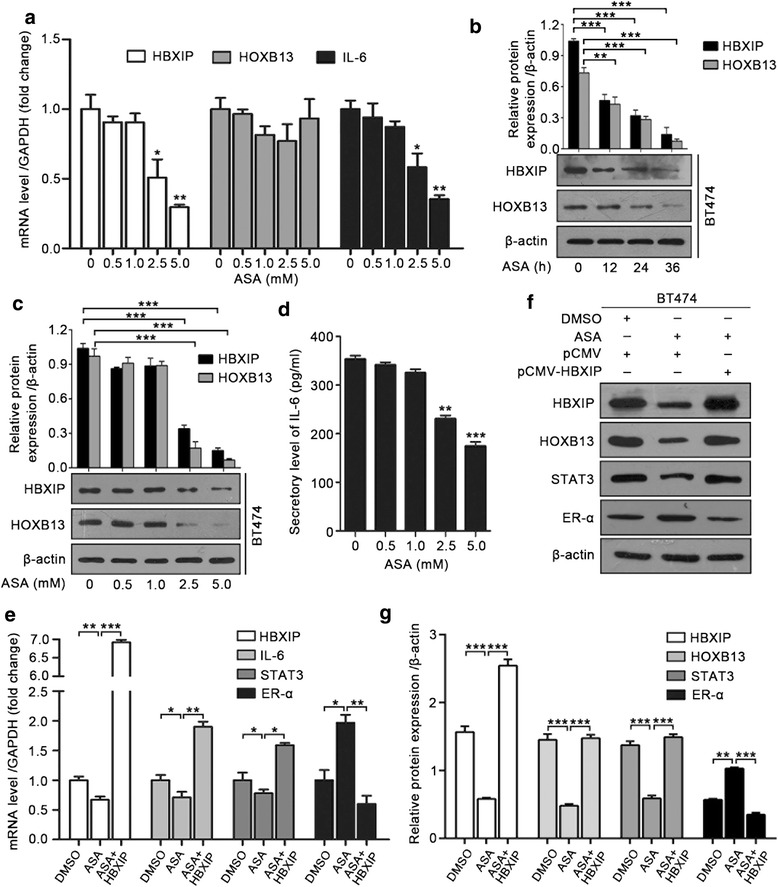
The analysis of the Kaplan-Meier plotter and the GEO dataset showed that mono-TAM-treated breast cancer patients with higher HBXIP expression levels had shorter relapse-free survivals than patients with lower HBXIP expression levels. Overexpression of HBXIP induced TAM resistance in ER+ breast cancer cells. The tissue microarray analysis revealed a positive association between the expression levels of HBXIP and HOXB13 in ER+ breast cancer patients. HBXIP elevated HOXB13 protein level in breast cancer cells. Mechanistically, HBXIP prevented chaperone-mediated autophagy (CMA)-dependent degradation of HOXB13 via enhancement of HOXB13 acetylation at the lysine 277 residue, causing the accumulation of HOXB13. Moreover, HBXIP was able to act as a co-activator of HOXB13 to stimulate interleukin (IL)-6 transcription in the promotion of TAM resistance. Interestingly, aspirin (ASA) suppressed the HBXIP/HOXB13 axis by decreasing HBXIP expression, overcoming TAM resistance in vitro and in vivo.
Our study highlights that HBXIP enhances HOXB13 acetylation to prevent HOXB13 degradation and co-activates HOXB13 in the promotion of TAM resistance of breast cancer. Therapeutically, ASA can serve as a potential candidate for reversing TAM resistance by inhibiting HBXIP expression.
在治疗雌激素受体阳性(ER+)乳腺癌时,经常会出现对他莫昔芬(TAM)的耐药性。越来越多的证据表明,转录因子 HOXB13 在 TAM 耐药中具有重要意义。然而,HBXIP 对 TAM 耐药乳腺癌的调节仍在很大程度上未被探索。在这里,我们对涉及加速癌症进展的癌蛋白 HBXIP 对乳腺癌 TAM 耐药性中 HOXB13 的调节作用感兴趣。
使用 Kaplan-Meier plotter 癌症数据库和 GEO 数据集分析 HBXIP 表达与无复发生存之间的关联。通过人组织微阵列评估 ER+乳腺癌中 HBXIP 和 HOXB13 的相关性。通过免疫印迹分析、qRT-PCR 测定、免疫荧光染色、Co-IP 测定、ChIP 测定、荧光素酶报告基因测定、细胞活力测定和集落形成测定来探讨 HBXIP 调节 HOXB13 的可能分子机制。细胞活力测定、异种移植测定和免疫组织化学染色分析用于评估 HBXIP/HOXB13 轴对体外和体内促进 TAM 耐药的影响。
Kaplan-Meier plotter 和 GEO 数据集的分析表明,接受单药 TAM 治疗的乳腺癌患者中,HBXIP 表达水平较高的患者无复发生存期短于 HBXIP 表达水平较低的患者。HBXIP 的过表达诱导 ER+乳腺癌细胞对 TAM 产生耐药性。组织微阵列分析显示 ER+乳腺癌患者中 HBXIP 和 HOXB13 的表达水平呈正相关。HBXIP 提高了乳腺癌细胞中 HOXB13 的蛋白水平。在机制上,HBXIP 通过增强 HOXB13 赖氨酸 277 残基的乙酰化来阻止伴侣介导的自噬(CMA)依赖性降解,从而导致 HOXB13 的积累。此外,HBXIP 能够作为 HOXB13 的共激活因子,通过刺激白细胞介素(IL)-6 转录来促进 TAM 耐药。有趣的是,阿司匹林(ASA)通过降低 HBXIP 的表达来抑制 HBXIP/HOXB13 轴,从而在体外和体内克服 TAM 耐药性。
我们的研究强调,HBXIP 通过增强 HOXB13 乙酰化来防止 HOXB13 降解,并在促进乳腺癌 TAM 耐药性中作为 HOXB13 的共激活因子。在治疗上,ASA 可以通过抑制 HBXIP 的表达作为逆转 TAM 耐药的潜在候选药物。