Lörz Anne-Nina, Tandberg Anne Helene S, Willassen Endre, Driskell Amy
University of Hamburg, CeNak, Centre of Natural History, Zoological Museum, Martin-Luther-King-Platz 3, 20146 Hamburg, Germany.
University of Bergen, University Museum, Department of Natural History, PO Box 7800, 5020 Bergen, Norway.
Zookeys. 2018 Jan 23(731):75-101. doi: 10.3897/zookeys.731.19814. eCollection 2018.
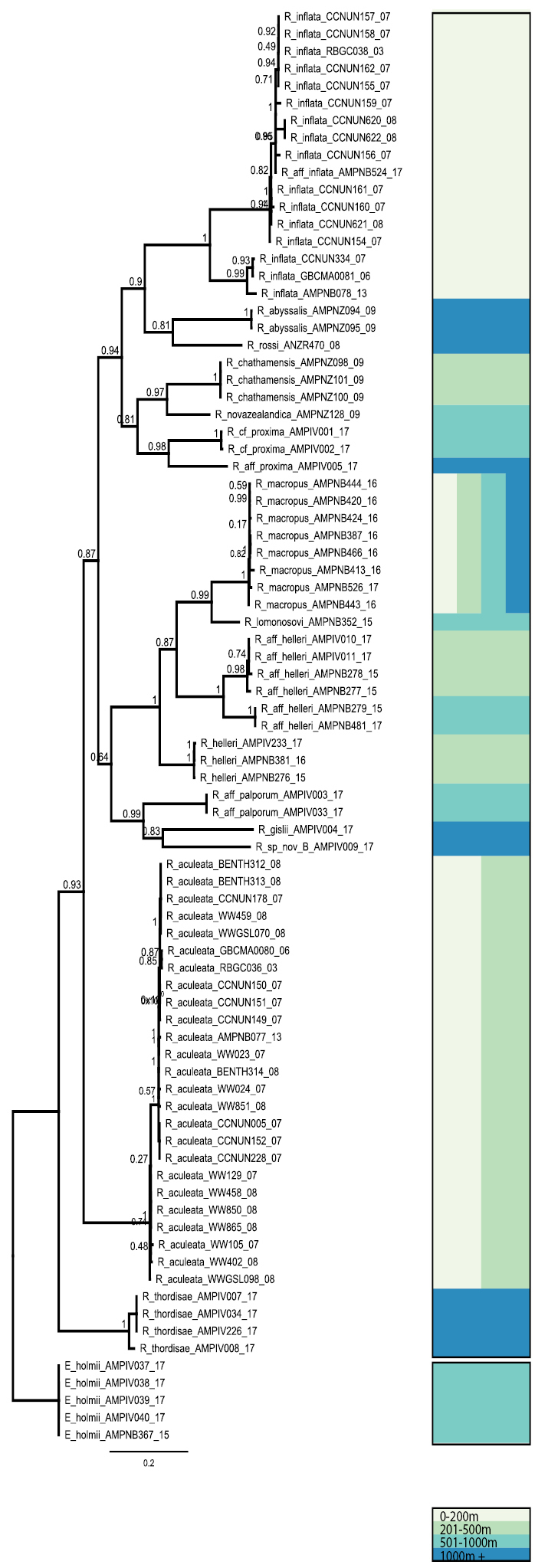
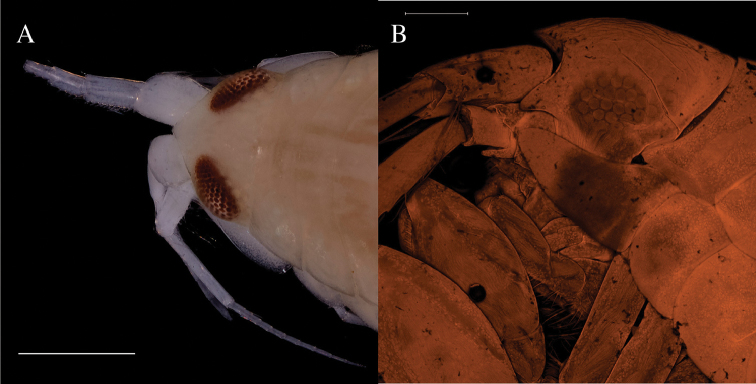
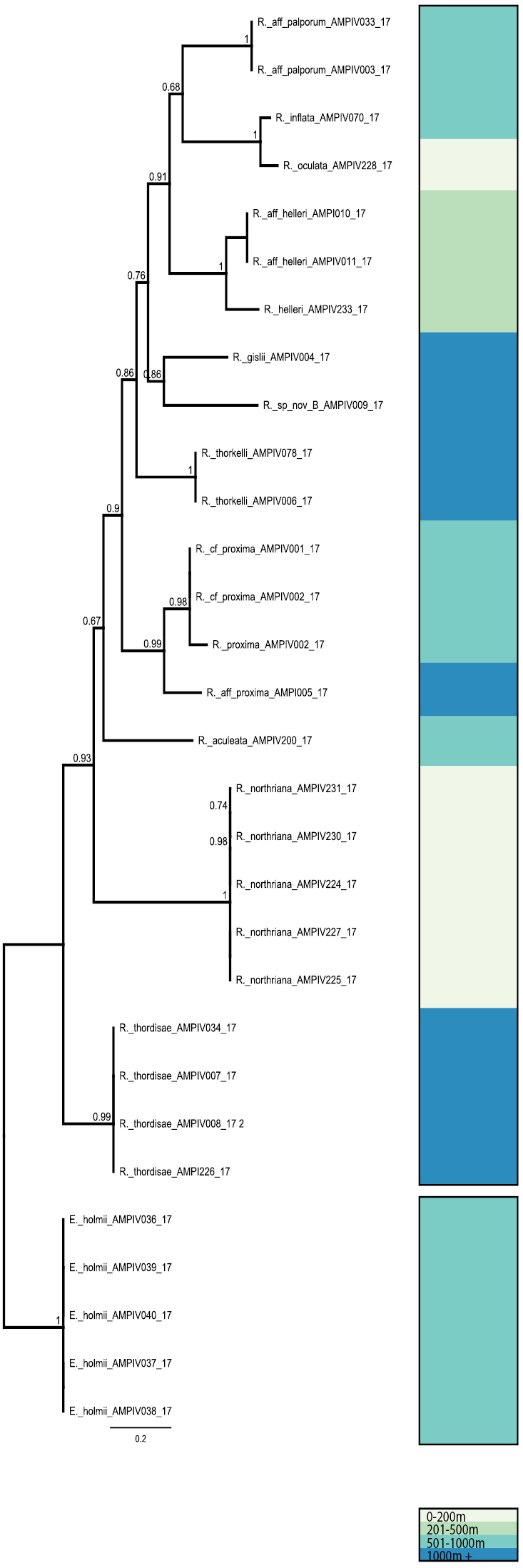
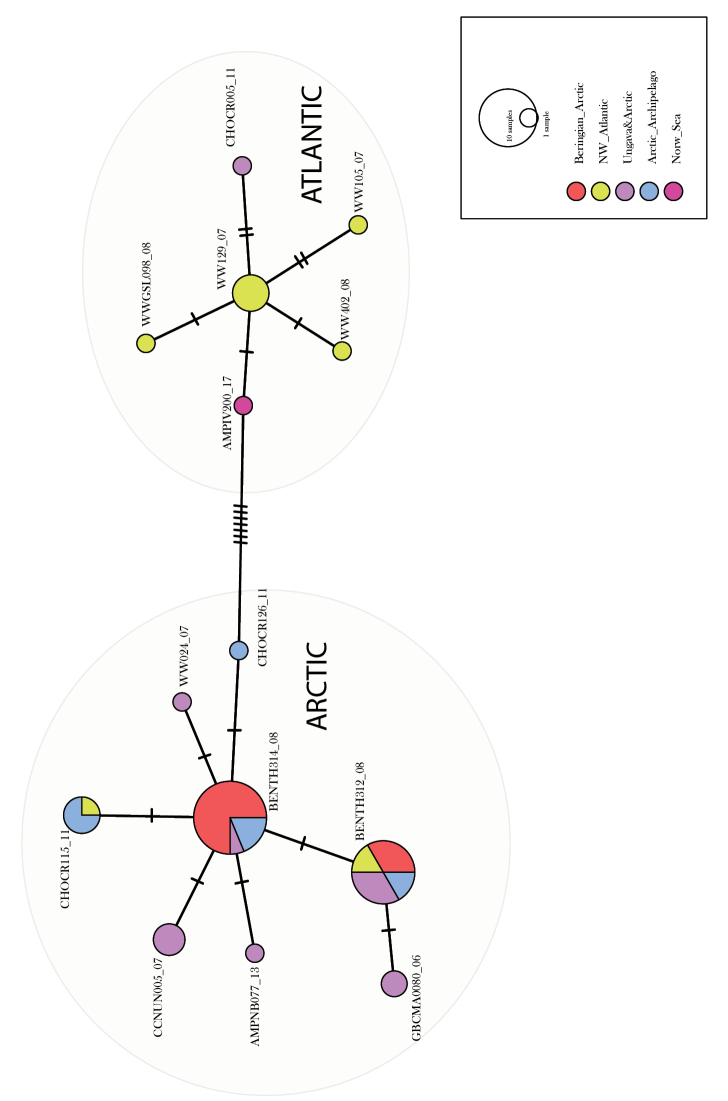
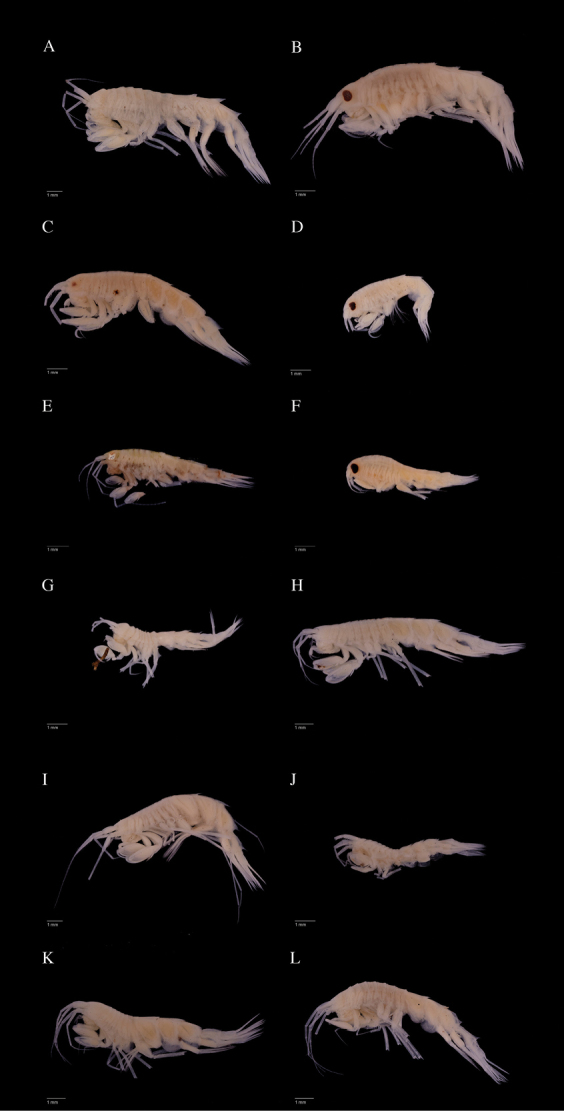
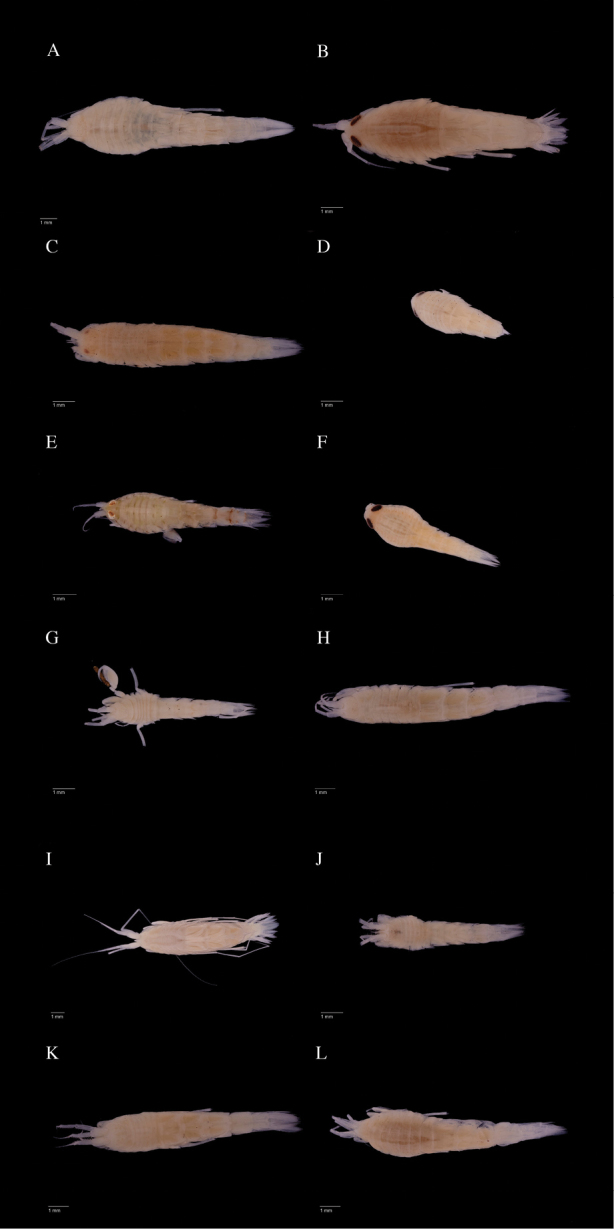
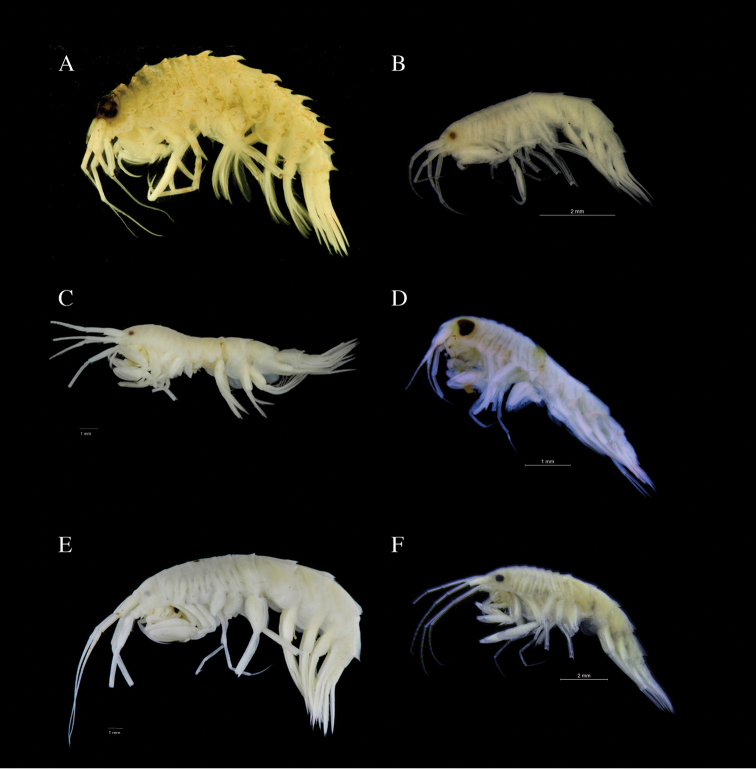
The genus has the widest geographic and bathymetric distribution of all amphipod genera worldwide. Molecular and morphological investigations of specimens sampled around Iceland and off the Norwegian coast allow the first insights into the relationships of North East Atlantic . The 31 cytochrome oxidase subunit I (COI) sequences generated for this study were assigned 13 Barcode Index Numbers (BINs) in the Barcode of Life database (BOLD), of which 12 are new to the database. Molecular analyses of COI and 16S sequences could not confirm a theory that depth has a greater influence on the phylogeny of than geographic distance. Although the North East Atlantic is a well-studied area, our molecular investigations revealed the genus may contain cryptic species, which indicates a higher biodiversity than currently known. For example, the specimens which key to is a complex of three COI clades, two of which cannot be identified with morphological traits. One specimen of each of the clades in the cladogram was documented by high definition photographs. A special focus was on the visual morphology of the eyes, as this character shows interspecific differences within the genus in response to fixation in ethanol. Detailed morphological investigation showed that some clades thought to be indistinguishable can be separated by minute but consistent morphological characters. Datamining Genbank to examine all registered COI-sequences of , the only previously known BIN in the North Atlantic and sub-Arctic, showed to be subdivided by an Arctic and a North Atlantic population.
该属在全球所有端足目属中具有最广泛的地理和深度分布。对冰岛周边和挪威海岸外采集的标本进行的分子和形态学研究,首次揭示了东北大西洋[该属物种]之间的关系。本研究生成的31个细胞色素氧化酶亚基I(COI)序列在生命条形码数据库(BOLD)中被分配了13个条形码索引号(BINs),其中12个对该数据库来说是新的。对COI和16S序列的分子分析无法证实深度对[该属物种]系统发育的影响大于地理距离这一理论。尽管东北大西洋是一个研究充分的区域,但我们的分子研究表明该属可能包含隐存种,这意味着生物多样性高于目前已知的情况。例如,鉴定为[该属某物种]的标本是三个COI分支的复合体,其中两个无法通过形态特征来识别。系统发育树中每个分支的一个标本都有高清照片记录。特别关注了眼睛的视觉形态,因为这个特征在该属内不同物种间因用乙醇固定而表现出差异。详细的形态学研究表明,一些原本被认为无法区分的分支可以通过微小但一致的形态特征区分开来。在Genbank数据库中进行数据挖掘,以检查[该属物种]所有已登记的COI序列,结果显示在北大西洋和亚北极地区唯一已知的[该属某物种]BIN被北极种群和北大西洋种群细分。