Department of Chemistry , University of Cambridge , Lensfield Road , Cambridge , U.K.
Instituto de Medicina Molecular, Faculdade de Medicina, Universidade de Lisboa , Avenida Professor Egas Moniz , Lisboa , Portugal.
J Am Chem Soc. 2018 Mar 21;140(11):4004-4017. doi: 10.1021/jacs.7b12874. Epub 2018 Mar 8.
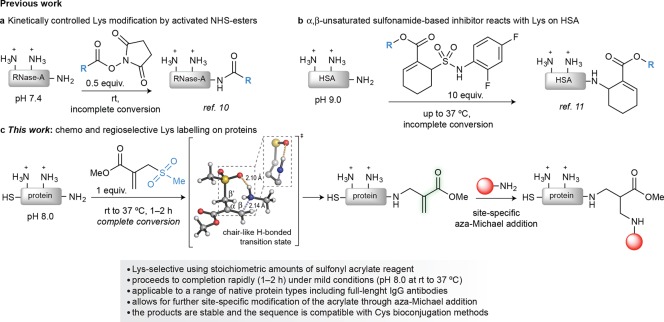
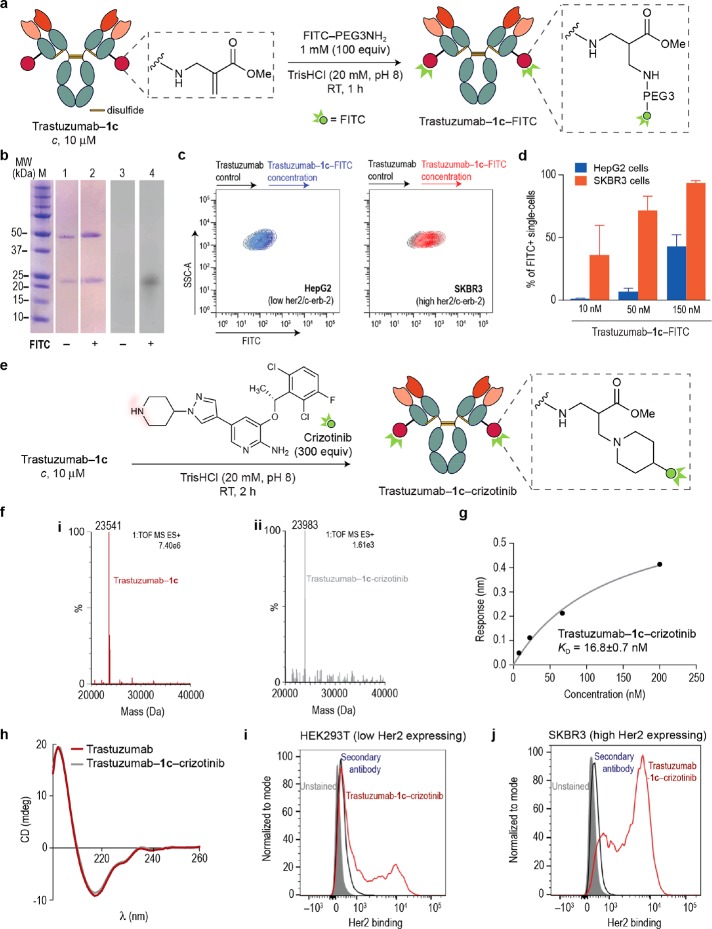
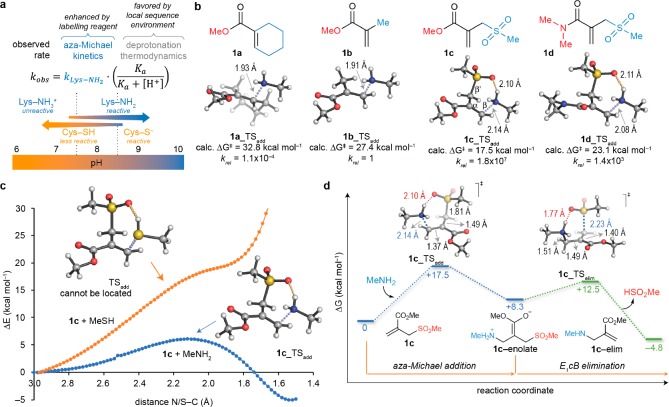
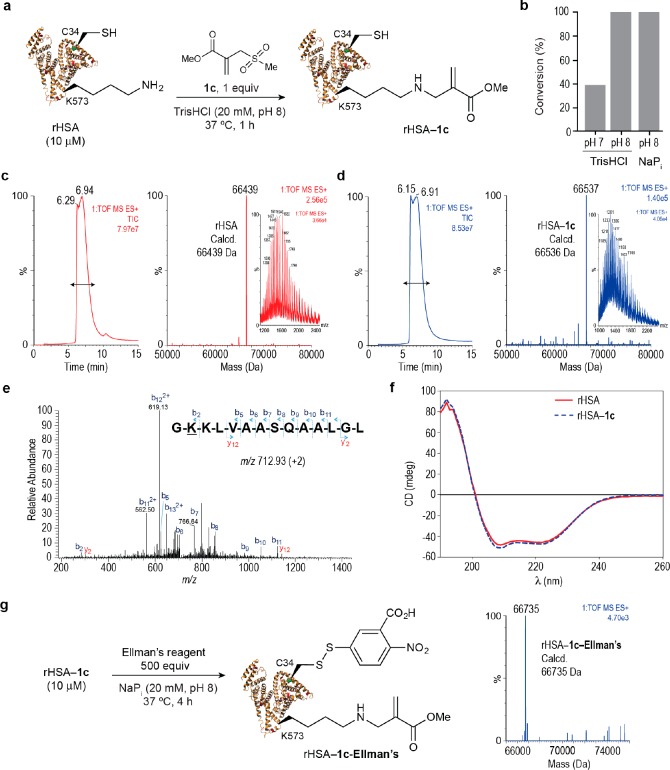
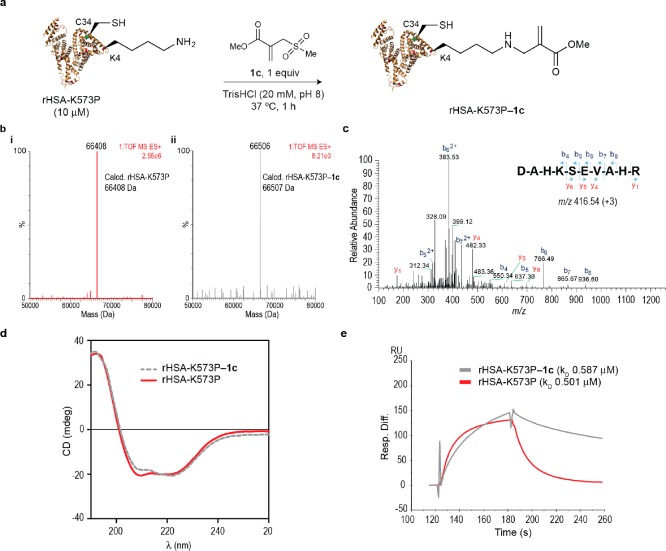
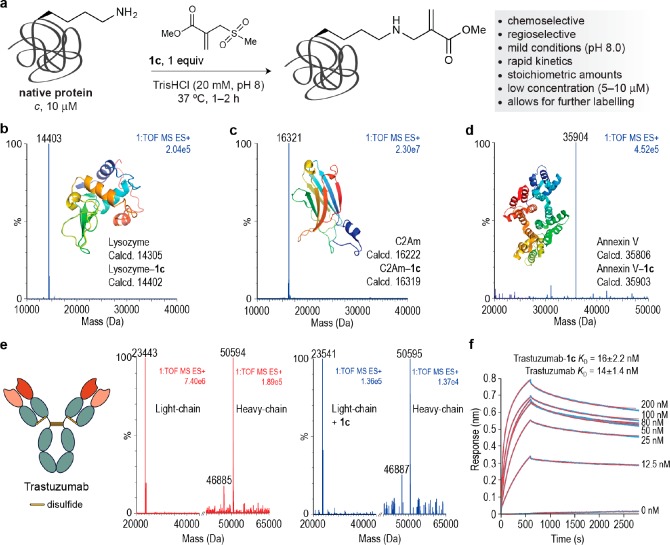
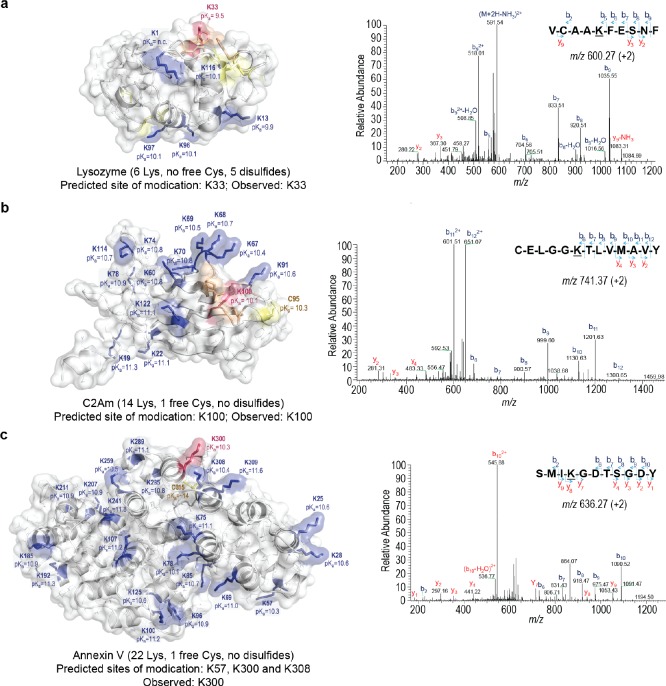
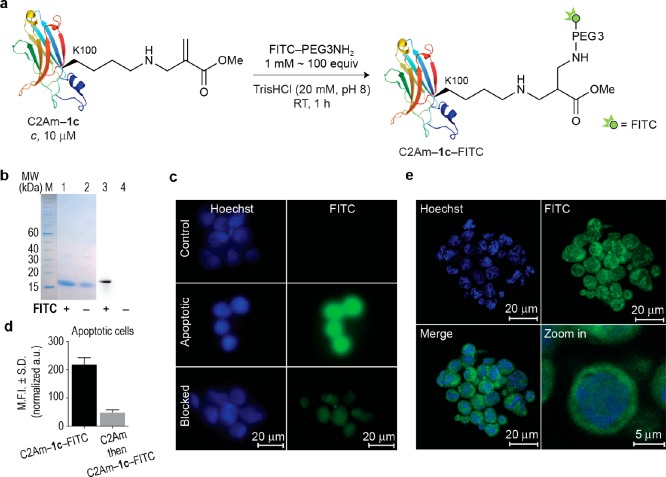
Site-selective chemical conjugation of synthetic molecules to proteins expands their functional and therapeutic capacity. Current protein modification methods, based on synthetic and biochemical technologies, can achieve site selectivity, but these techniques often require extensive sequence engineering or are restricted to the N- or C-terminus. Here we show the computer-assisted design of sulfonyl acrylate reagents for the modification of a single lysine residue on native protein sequences. This feature of the designed sulfonyl acrylates, together with the innate and subtle reactivity differences conferred by the unique local microenvironment surrounding each lysine, contribute to the observed regioselectivity of the reaction. Moreover, this site selectivity was predicted computationally, where the lysine with the lowest p K was the kinetically favored residue at slightly basic pH. Chemoselectivity was also observed as the reagent reacted preferentially at lysine, even in those cases when other nucleophilic residues such as cysteine were present. The reaction is fast and proceeds using a single molar equivalent of the sulfonyl acrylate reagent under biocompatible conditions (37 °C, pH 8.0). This technology was demonstrated by the quantitative and irreversible modification of five different proteins including the clinically used therapeutic antibody Trastuzumab without prior sequence engineering. Importantly, their native secondary structure and functionality is retained after the modification. This regioselective lysine modification method allows for further bioconjugation through aza-Michael addition to the acrylate electrophile that is generated by spontaneous elimination of methanesulfinic acid upon lysine labeling. We showed that a protein-antibody conjugate bearing a site-specifically installed fluorophore at lysine could be used for selective imaging of apoptotic cells and detection of Her2+ cells, respectively. This simple, robust method does not require genetic engineering and may be generally used for accessing diverse, well-defined protein conjugates for basic biology and therapeutic studies.
通过将合成分子选择性地化学偶联到蛋白质上,可以扩展它们的功能和治疗能力。目前基于合成和生化技术的蛋白质修饰方法可以实现位点选择性,但这些技术通常需要广泛的序列工程,或者仅限于 N-或 C-末端。在这里,我们展示了用于修饰天然蛋白质序列上单个赖氨酸残基的磺酰基丙烯酰胺试剂的计算机辅助设计。所设计的磺酰基丙烯酰胺的这一特性,以及围绕每个赖氨酸的独特局部微环境赋予的固有和细微的反应性差异,促成了反应的观察到的区域选择性。此外,这种位点选择性可以通过计算进行预测,其中具有最低 pK 的赖氨酸是在略微碱性 pH 下动力学上有利的残基。还观察到化学选择性,因为即使在存在其他亲核残基(如半胱氨酸)的情况下,试剂也优先与赖氨酸反应。该反应快速进行,在生物相容条件下(37°C,pH 8.0),仅使用磺酰基丙烯酰胺试剂的单摩尔当量即可进行。该技术通过对包括临床上使用的治疗性抗体曲妥珠单抗在内的五种不同蛋白质进行定量和不可逆修饰得到了证明,而无需进行序列工程。重要的是,在修饰后,它们的天然二级结构和功能得以保留。这种区域选择性赖氨酸修饰方法允许通过磺酰基丙烯酰胺的自发消除生成丙烯酰基亲电试剂后,通过氮杂迈克尔加成进一步进行生物偶联。我们表明,在赖氨酸处带有特异性安装的荧光团的蛋白质-抗体缀合物可以分别用于凋亡细胞的选择性成像和 Her2+细胞的检测。这种简单、稳健的方法不需要基因工程,并且可以普遍用于获得用于基础生物学和治疗研究的各种定义明确的蛋白质缀合物。