Department of Surgery, Faculty of Medicine, University of British Columbia, Vancouver, BC, Canada.
PLoS One. 2018 Feb 23;13(2):e0193184. doi: 10.1371/journal.pone.0193184. eCollection 2018.
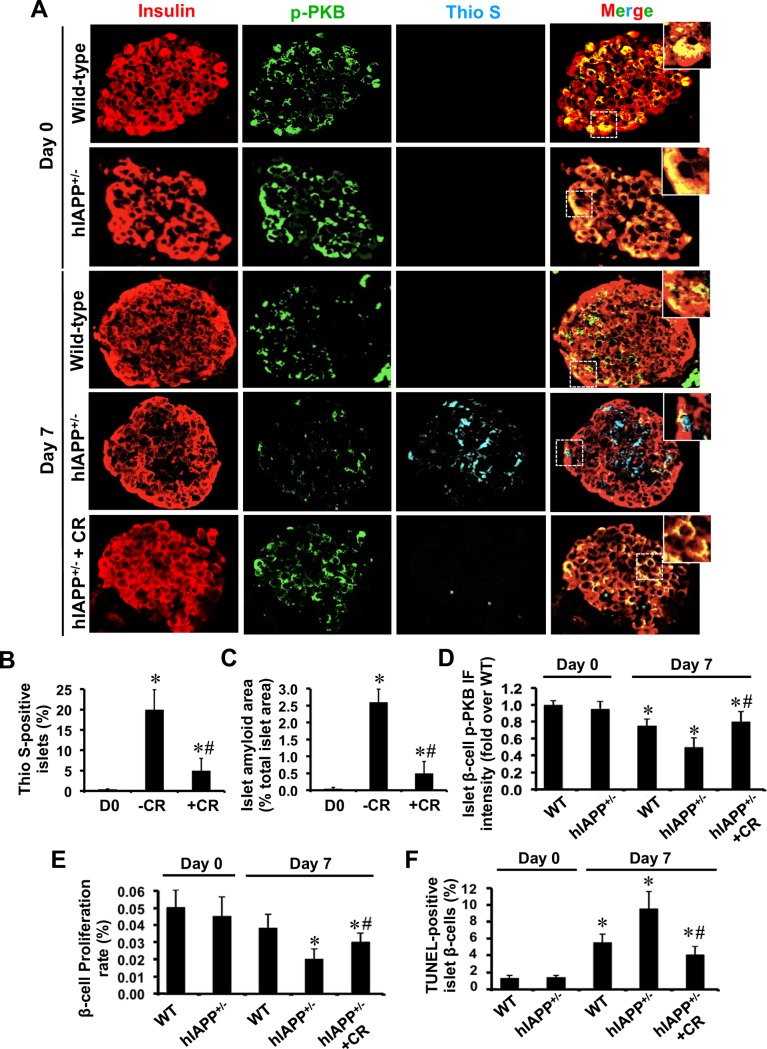
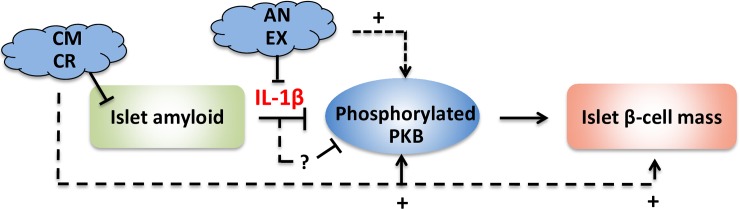
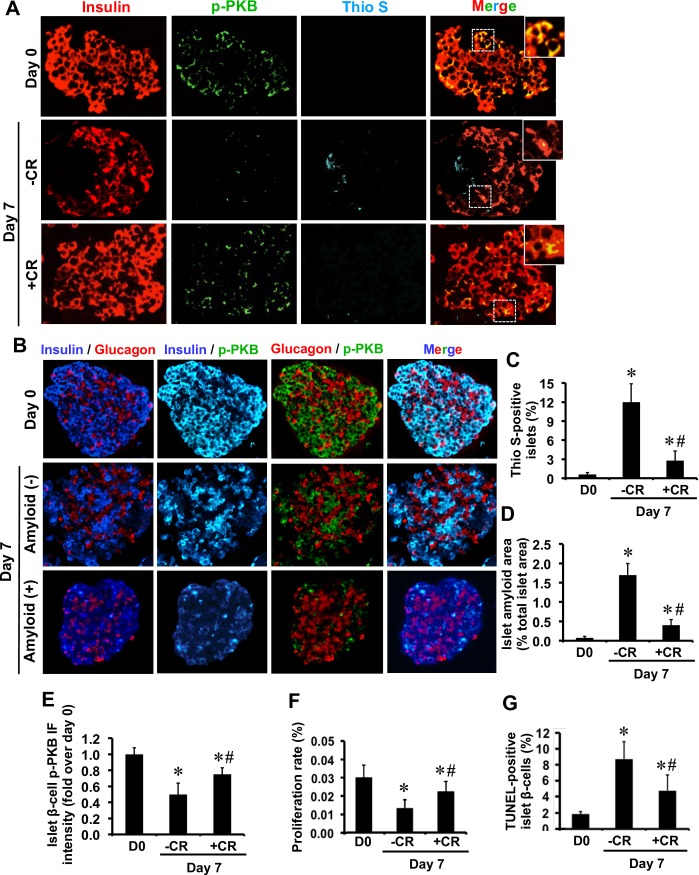
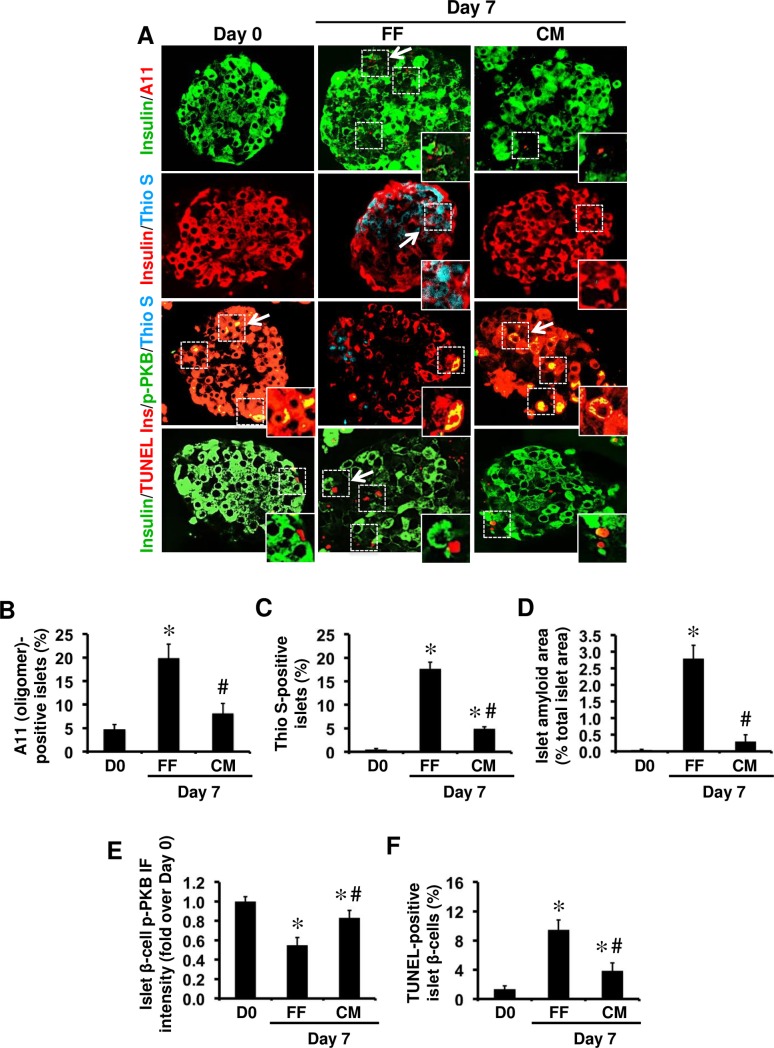
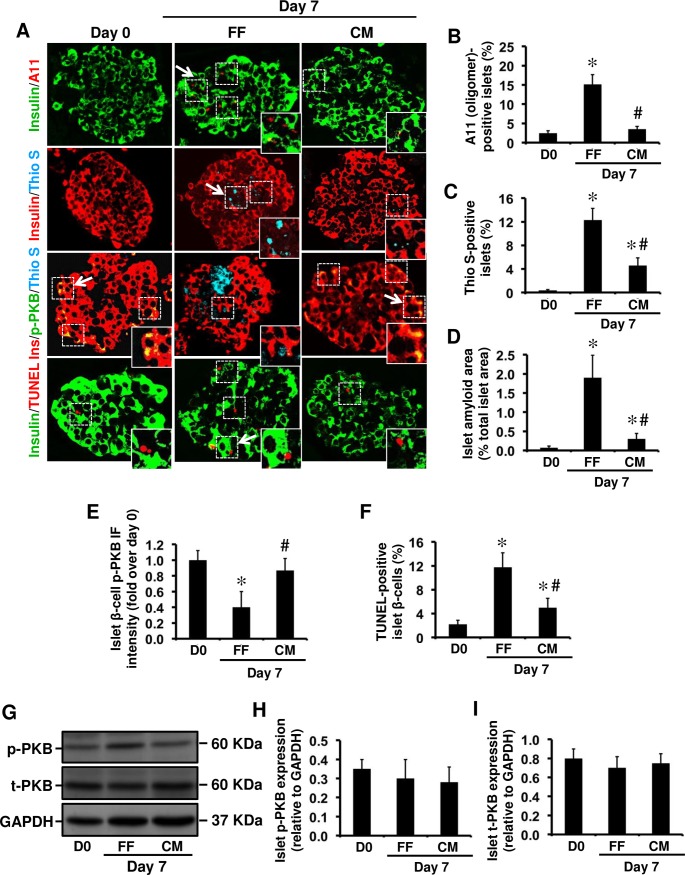
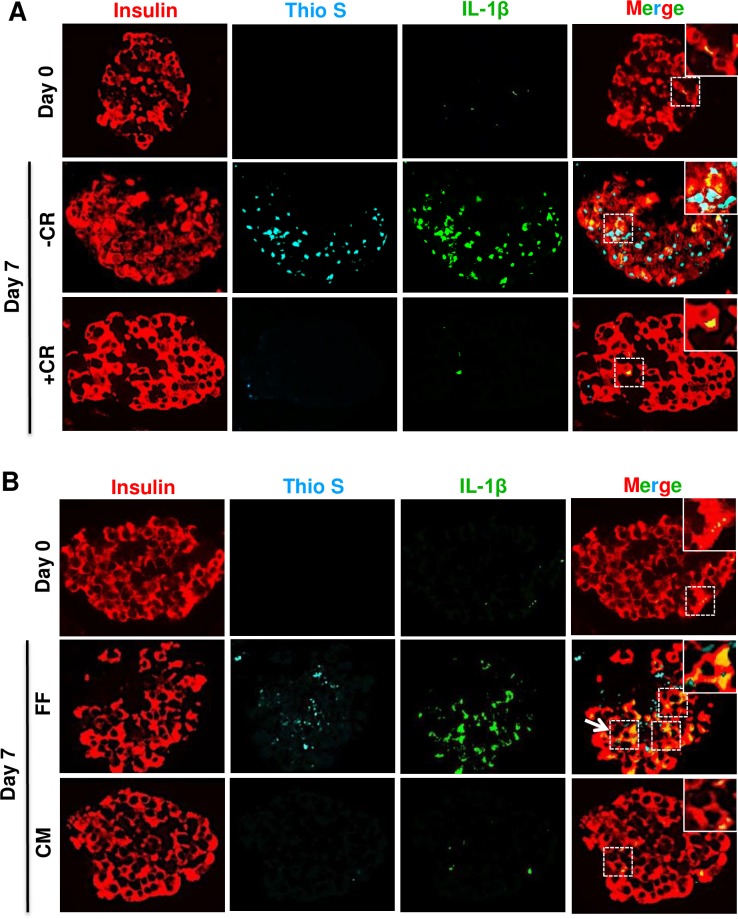
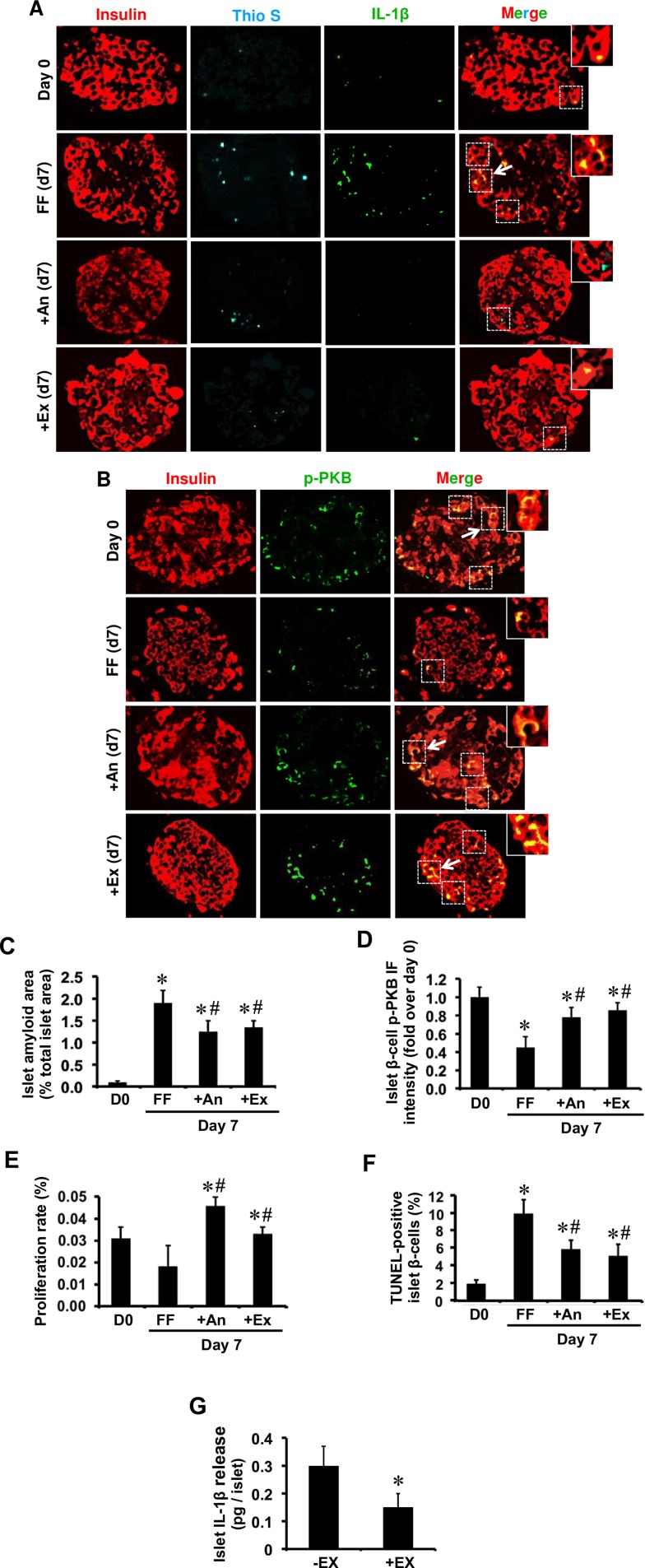
Amyloid formation in the pancreatic islets due to aggregation of human islet amyloid polypeptide (hIAPP) contributes to reduced β-cell mass and function in type 2 diabetes (T2D) and islet transplantation. Protein kinase B (PKB) signaling plays a key role in the regulation of β-cell survival, function and proliferation. In this study, we used human and hIAPP-expressing transgenic mouse islets in culture as two ex vivo models of human islet amyloid formation to: 1. Investigate the effects of amyloid formation on PKB phosphorylation in primary islet β-cells; 2. Test if inhibition of amyloid formation and/or interleukin-1β (IL-1β) signaling in islets can restore the changes in β-cell phospho-PKB levels mediated by amyloid formation. Human and hIAPP-expressing mouse islets were cultured in elevated glucose with an amyloid inhibitor (Congo red) or embedded within collagen matrix to prevent amyloid formation. To block the IL-1β signaling, human islets were treated with an IL-1 receptor antagonist (anakinra) or a glucagon-like peptide-1 agonist (exenatide). β-cell phospho-PKB levels, proliferation, apoptosis, islet IL-1β levels and amyloid formation were assessed. Amyloid formation in both cultured human and hIAPP-expressing mouse islets reduced β-cell phospho-PKB levels and increased islet IL-1β levels, both of which were restored by prevention of amyloid formation either by the amyloid inhibitor or embedding islets in collagen matrix, resulting in improved β-cell survival. Furthermore, inhibition of IL-1β signaling by treatment with anakinra or exenatide increased β-cell phospho-PKB levels, enhanced proliferation and reduced apoptosis in amyloid forming human islets during 7-day culture. These data suggest that amyloid formation leads to reduced PKB phosphorylation in β-cells which is associated with elevated islet IL-1β levels. Inhibitors of amyloid or amyloid-induced IL-1β production may provide a new approach to restore phospho-PKB levels thereby enhance β-cell survival and proliferation in conditions associated with islet amyloid formation such as T2D and clinical islet transplantation.
由于人胰岛淀粉样多肽(hIAPP)的聚集导致胰岛中淀粉样蛋白的形成,这导致 2 型糖尿病(T2D)和胰岛移植中β细胞数量和功能减少。蛋白激酶 B(PKB)信号转导在β细胞存活、功能和增殖的调节中起着关键作用。在这项研究中,我们使用人胰岛和表达 hIAPP 的转基因鼠胰岛在培养中作为两种体外人胰岛淀粉样形成模型:1. 研究淀粉样形成对原代胰岛β细胞中 PKB 磷酸化的影响;2. 测试在胰岛中抑制淀粉样形成和/或白细胞介素-1β(IL-1β)信号是否可以恢复淀粉样形成介导的β细胞磷酸化 PKB 水平的变化。人胰岛和表达 hIAPP 的鼠胰岛在高葡萄糖中培养,并用淀粉样抑制剂(刚果红)或嵌入胶原基质中以防止淀粉样形成。为了阻断 IL-1β信号,用人 IL-1 受体拮抗剂(anakinra)或胰高血糖素样肽-1 激动剂(exenatide)处理人胰岛。评估β细胞磷酸化 PKB 水平、增殖、凋亡、胰岛 IL-1β水平和淀粉样形成。在培养的人胰岛和表达 hIAPP 的鼠胰岛中,淀粉样形成均降低了β细胞磷酸化 PKB 水平,并增加了胰岛 IL-1β水平,这两种水平均通过用淀粉样抑制剂或嵌入胶原基质防止淀粉样形成而得到恢复,导致β细胞存活得到改善。此外,用 anakinra 或 exenatide 抑制 IL-1β 信号通过增加β细胞磷酸化 PKB 水平,增强淀粉样形成的人胰岛在 7 天培养期间的增殖并减少凋亡。这些数据表明,淀粉样形成导致β细胞中 PKB 磷酸化减少,这与胰岛 IL-1β 水平升高有关。淀粉样物或淀粉样物诱导的 IL-1β 产生的抑制剂可能提供一种新的方法来恢复磷酸化 PKB 水平,从而在与胰岛淀粉样形成相关的条件下增强β细胞的存活和增殖,例如 T2D 和临床胰岛移植。