Department of Microbiology, Faculty of Biochemistry, Biophysics and Biotechnology, Jagiellonian University in Krakow, 30-387 Krakow, Poland.
Interdisciplinary Nanoscience Center, Aarhus University, 8000 Aarhus, Denmark.
J Immunol. 2018 Apr 1;200(7):2327-2340. doi: 10.4049/jimmunol.1701391. Epub 2018 Feb 23.
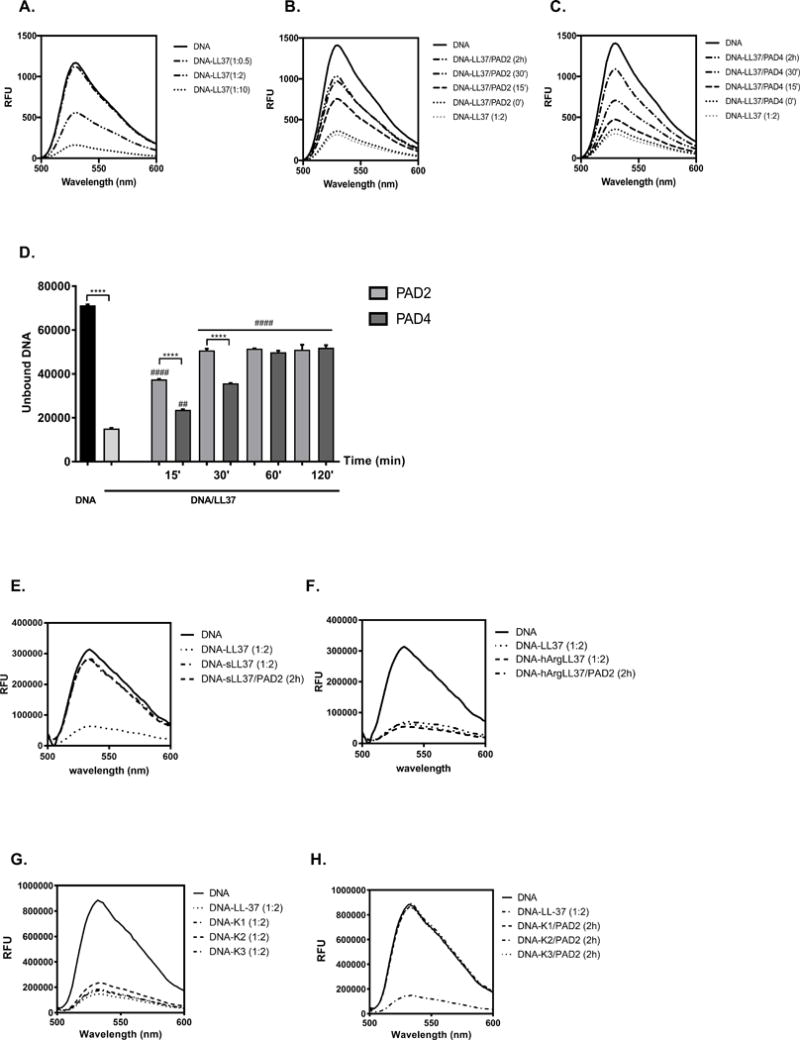
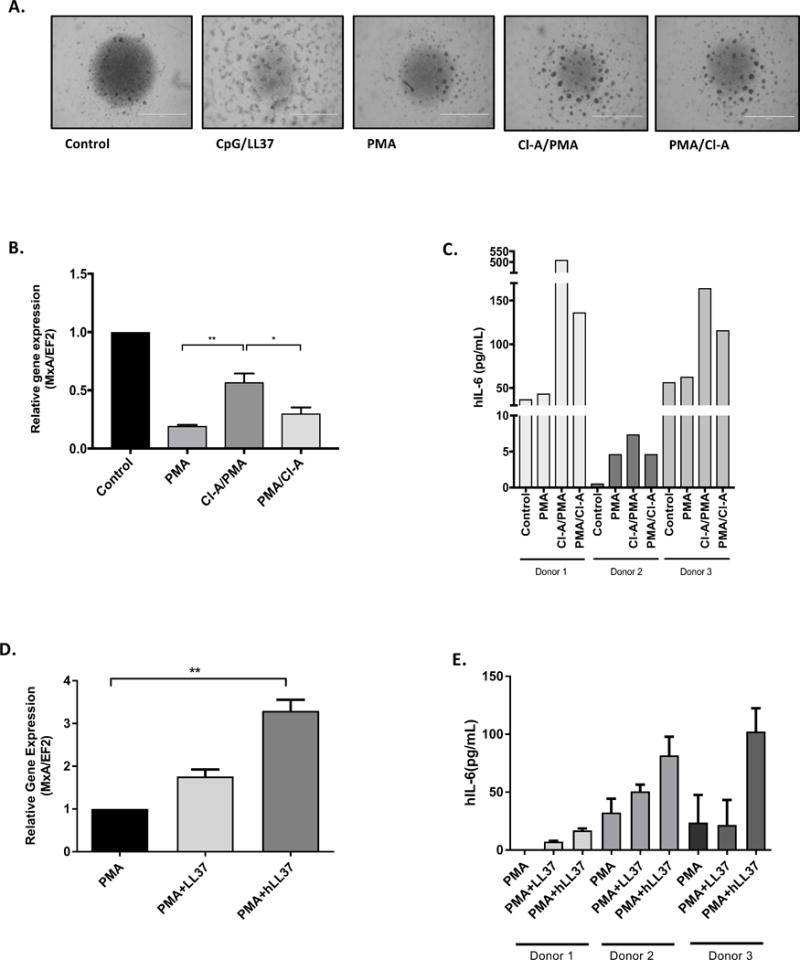
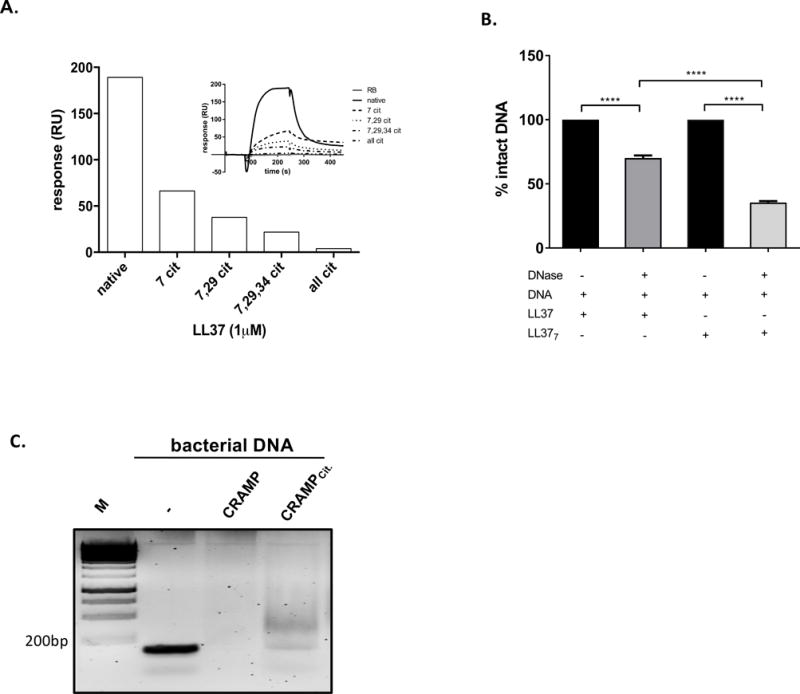
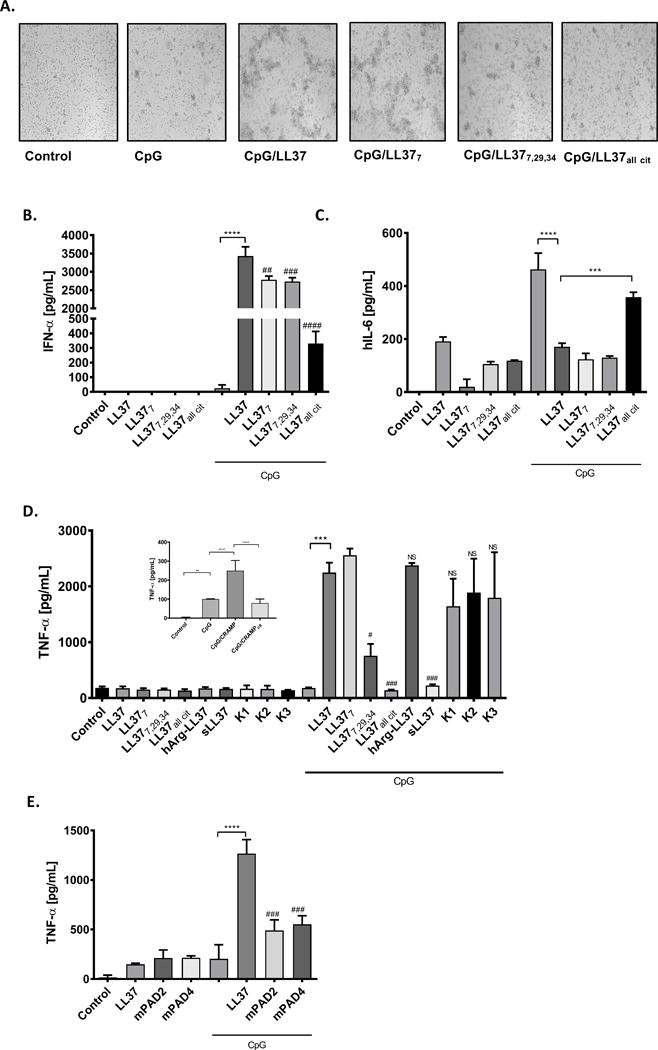
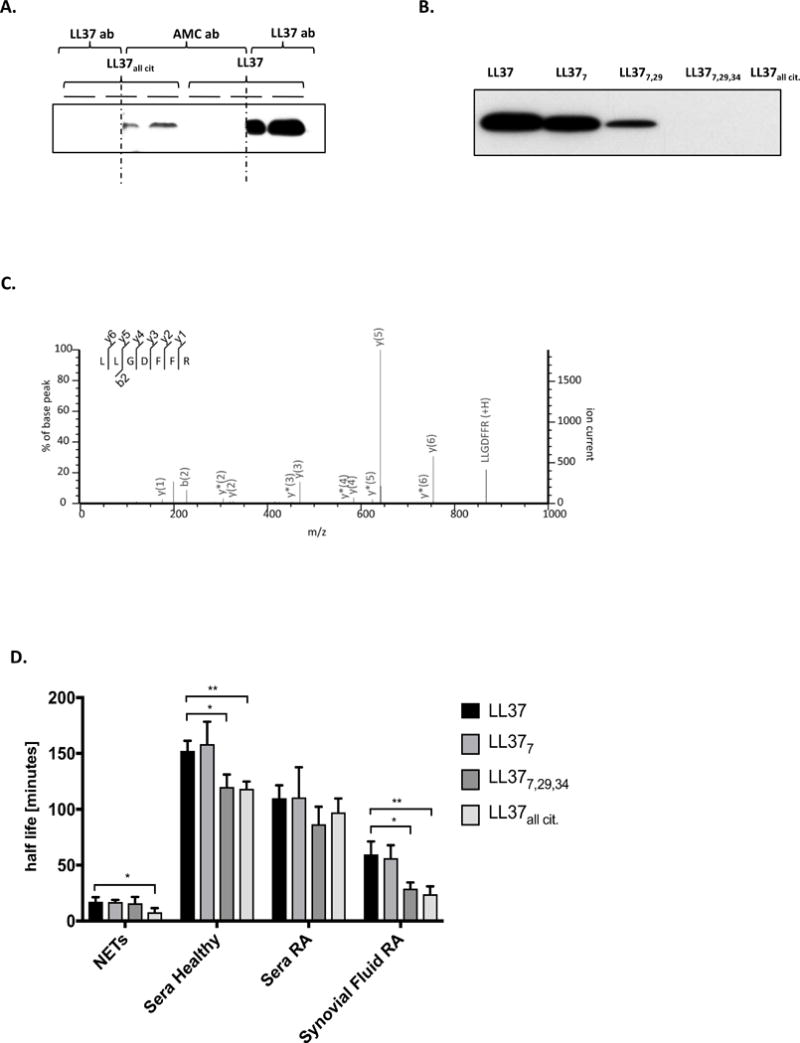
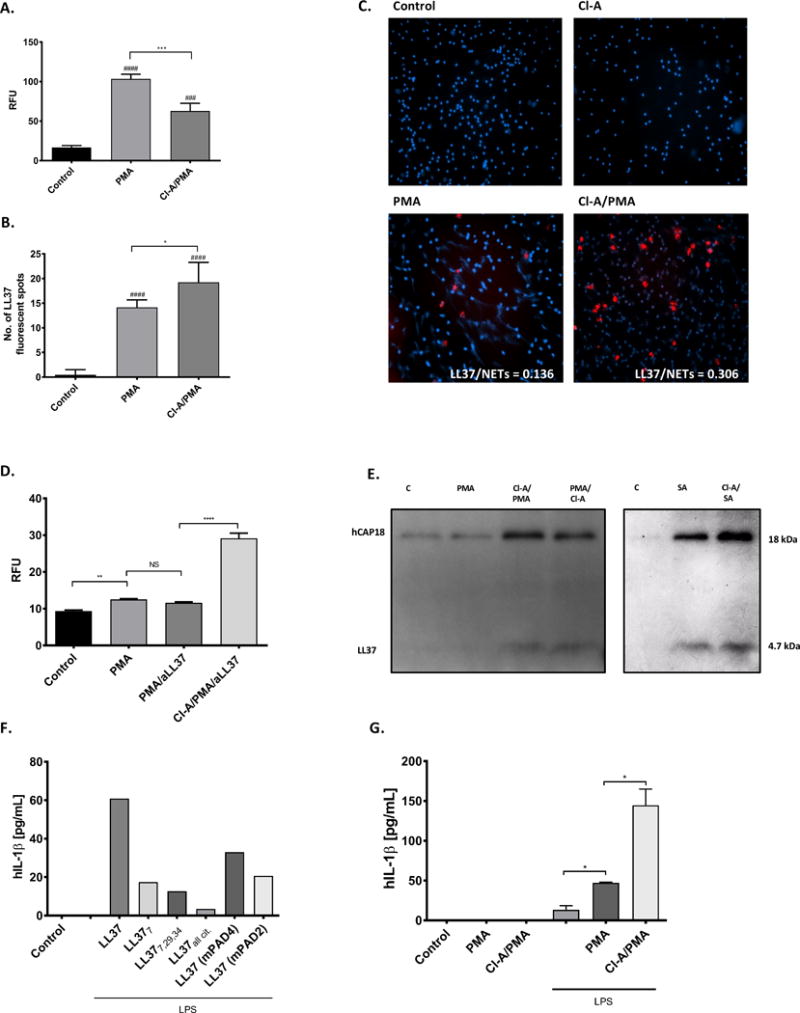
LL-37, the only human cathelicidin that is released during inflammation, is a potent regulator of immune responses by facilitating delivery of oligonucleotides to intracellular TLR-9, thereby enhancing the response of human plasmacytoid dendritic cells (pDCs) to extracellular DNA. Although important for pathogen recognition, this mechanism may facilitate development of autoimmune diseases. In this article, we show that citrullination of LL-37 by peptidyl-arginine deiminases (PADs) hindered peptide-dependent DNA uptake and sensing by pDCs. In contrast, carbamylation of the peptide (homocitrullination of Lys residues) had no effect. The efficiency of LL-37 binding to oligonucleotides and activation of pDCs was found to be inversely proportional to the number of citrullinated residues in the peptide. Similarly, preincubation of carbamylated LL-37 with PAD2 abrogated the peptide's ability to bind DNA. Conversely, LL-37 with Arg residues substituted by homoarginine, which cannot be deiminated, elicited full activity of native LL-37 regardless of PAD2 treatment. Taken together, the data showed that citrullination abolished LL-37 ability to bind DNA and altered the immunomodulatory function of the peptide. Both activities were dependent on the proper distribution of guanidinium side chains in the native peptide sequence. Moreover, our data suggest that cathelicidin/LL-37 is citrullinated by PADs during NET formation, thus affecting the inflammatory potential of NETs. Together this may represent a novel mechanism for preventing the breakdown of immunotolerance, which is dependent on the response of APCs to self-molecules (including cell-free DNA); overactivation may facilitate development of autoimmunity.
LL-37 是唯一在炎症期间释放的人类抗菌肽,通过促进寡核苷酸向细胞内 TLR-9 的传递,从而增强人类浆细胞样树突状细胞(pDC)对细胞外 DNA 的反应,是免疫反应的有力调节剂。虽然这对于病原体识别很重要,但该机制可能促进自身免疫疾病的发展。在本文中,我们表明,肽基精氨酸脱亚氨酶(PAD)对 LL-37 的瓜氨酸化阻碍了 pDC 对肽依赖性 DNA 的摄取和感应。相比之下,肽的氨甲酰化(赖氨酸残基的同型瓜氨酸化)没有影响。发现 LL-37 与寡核苷酸的结合效率和对 pDC 的激活与肽中的瓜氨酸化残基数量成反比。同样,预先用 PAD2 孵育氨甲酰化的 LL-37 会使肽结合 DNA 的能力丧失。相反,用同型精氨酸取代 Arg 残基的 LL-37,不能被脱亚氨酶,无论 PAD2 处理如何,都能发挥天然 LL-37 的全部活性。总之,数据表明瓜氨酸化会使 LL-37 结合 DNA 的能力丧失,并改变肽的免疫调节功能。这两种活性都依赖于天然肽序列中胍基侧链的正确分布。此外,我们的数据表明,抗菌肽/LL-37 在 NET 形成过程中被 PADs 瓜氨酸化,从而影响 NET 的炎症潜能。总的来说,这可能代表了一种防止免疫耐受破裂的新机制,该机制依赖于 APC 对自身分子(包括无细胞 DNA)的反应;过度激活可能会促进自身免疫的发展。