Portney Benjamin A, Khatri Raju, Meltzer W Alex, Mariano Jennifer M, Zalzman Michal
Department of Biochemistry and Molecular Biology, University of Maryland School of Medicine, Baltimore, MD 21201, USA.
Department of Biochemistry and Molecular Biology, University of Maryland School of Medicine, Baltimore, MD 21201, USA; Department of Otorhinolaryngology-Head and Neck Surgery, University of Maryland School of Medicine, Baltimore, MD 21201, USA; Marlene and Stewart Greenbaum Cancer Center, University of Maryland School of Medicine, Baltimore, MD 21201, USA; The Center for Stem Cell Biology and Regenerative Medicine, University of Maryland School of Medicine, Baltimore, MD 21201, USA.
Biochem Biophys Res Commun. 2018 Mar 25;498(1):72-78. doi: 10.1016/j.bbrc.2018.02.155. Epub 2018 Mar 2.
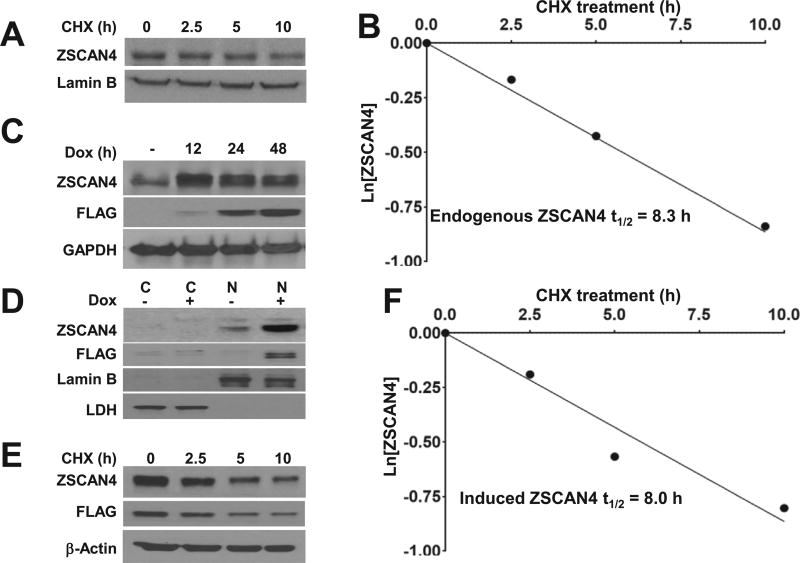
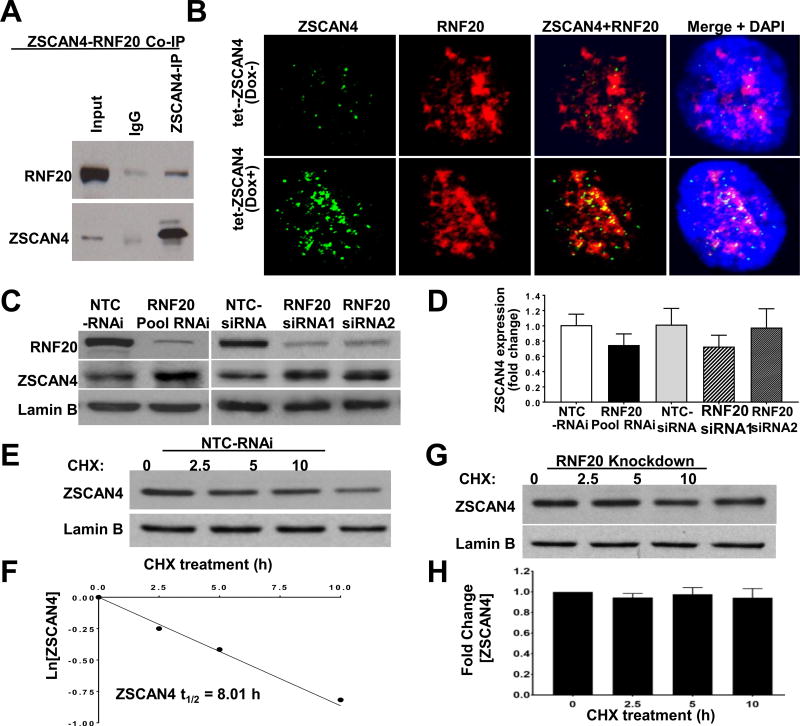
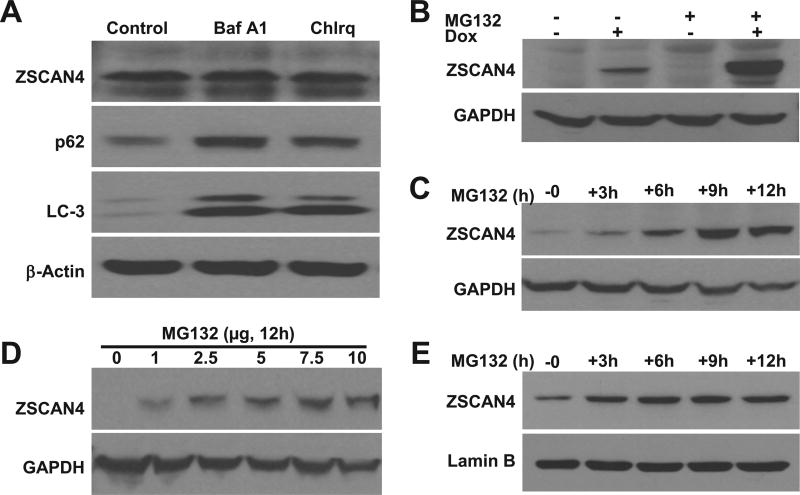
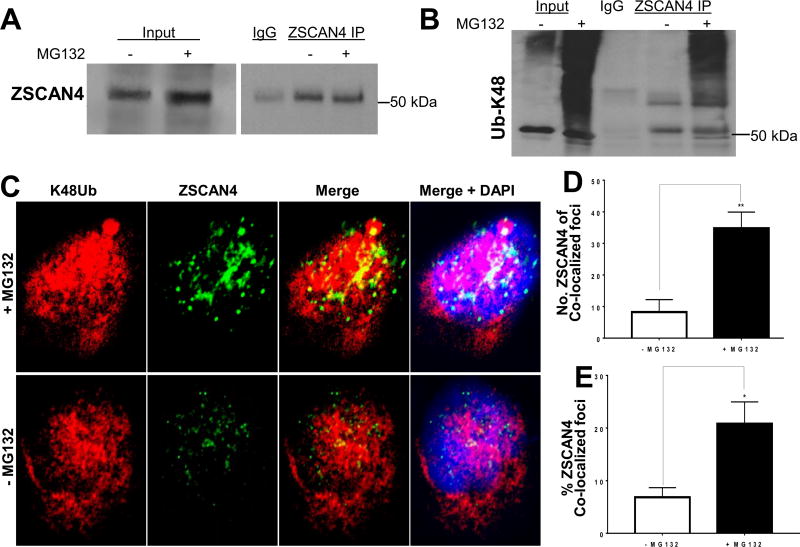
Zscan4 is an early embryonic gene cluster expressed in mouse embryonic stem and induced pluripotent stem cells where it plays critical roles in genomic stability, telomere maintenance, and pluripotency. Zscan4 expression is transient, and characterized by infrequent high expression peaks that are quickly down-regulated, suggesting its expression is tightly controlled. However, little is known about the protein degradation pathway responsible for regulating the human ZSCAN4 protein levels. In this study we determine for the first time the ZSCAN4 protein half-life and degradation pathway, including key factors involved in the process, responsible for the regulation of ZSCAN4 stability. We demonstrate lysine 48 specific polyubiquitination and subsequent proteasome dependent degradation of ZSCAN4, which may explain how this key factor is efficiently cleared from the cells. Importantly, our data indicate an interaction between ZSCAN4 and the E3 ubiquitin ligase RNF20. Moreover, our results show that RNF20 depletion by gene knockdown does not affect ZSCAN4 transcription levels, but instead results in increased ZSCAN4 protein levels. Further, RNF20 depletion stabilizes the ZSCAN4 protein half-life, suggesting that RNF20 negatively regulates ZSCAN4 stability. Due to the significant cellular functions of ZSCAN4, our results have important implications in telomere regulation, stem cell biology, and cancer.
Zscan4是一个早期胚胎基因簇,在小鼠胚胎干细胞和诱导多能干细胞中表达,在基因组稳定性、端粒维持和多能性方面发挥关键作用。Zscan4的表达是短暂的,其特征是偶尔出现高表达峰值,随后迅速下调,这表明其表达受到严格控制。然而,对于负责调节人类ZSCAN4蛋白水平的蛋白质降解途径知之甚少。在本研究中,我们首次确定了ZSCAN4蛋白的半衰期和降解途径,包括该过程中涉及的关键因子,这些因子负责调节ZSCAN4的稳定性。我们证明了ZSCAN4的赖氨酸48特异性多聚泛素化以及随后依赖蛋白酶体的降解,这可能解释了该关键因子如何从细胞中有效清除。重要的是,我们的数据表明ZSCAN4与E3泛素连接酶RNF20之间存在相互作用。此外,我们的结果表明,通过基因敲低使RNF20缺失并不影响ZSCAN4的转录水平,反而导致ZSCAN4蛋白水平升高。此外,RNF20缺失使ZSCAN4蛋白的半衰期延长,这表明RNF20对ZSCAN4的稳定性起负调节作用。由于ZSCAN4具有重要的细胞功能,我们的结果在端粒调节、干细胞生物学和癌症方面具有重要意义。