Wu Xiuquan, Luo Peng, Rao Wei, Dai Shuhui, Zhang Lei, Ma Wenke, Pu Jingnan, Yu Yang, Wang Jiu, Fei Zhou
Department of Neurosurgery, Xijing Hospital, Fourth Military Medical University, Xi'an, China.
Department of Neurosurgery, PLA Navy General Hospital, Beijing, China.
Front Neurosci. 2018 Feb 9;12:51. doi: 10.3389/fnins.2018.00051. eCollection 2018.
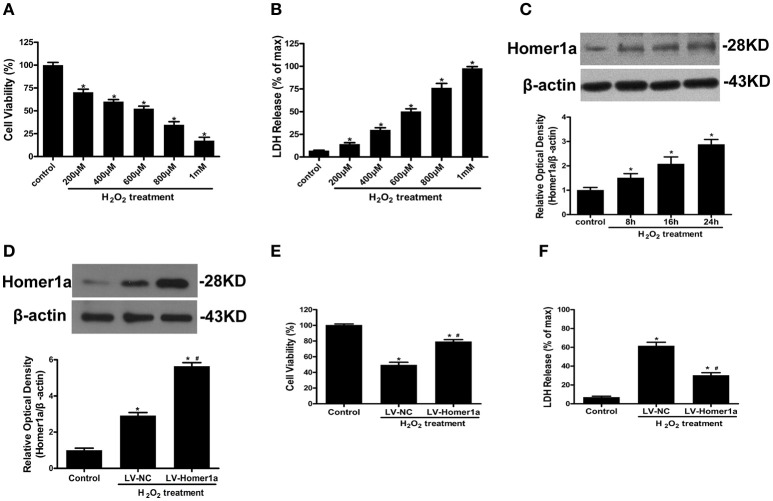
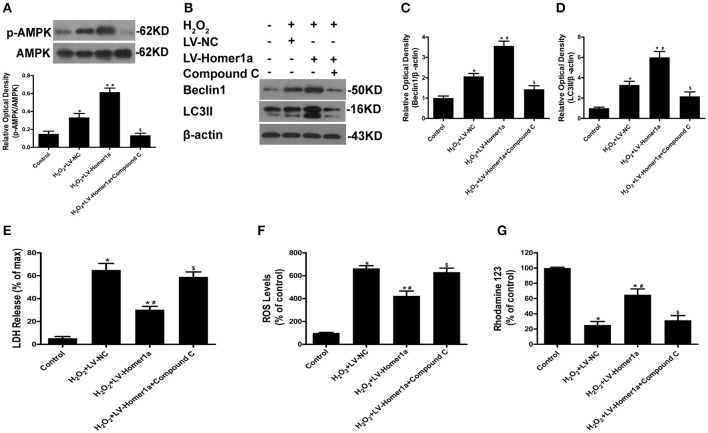
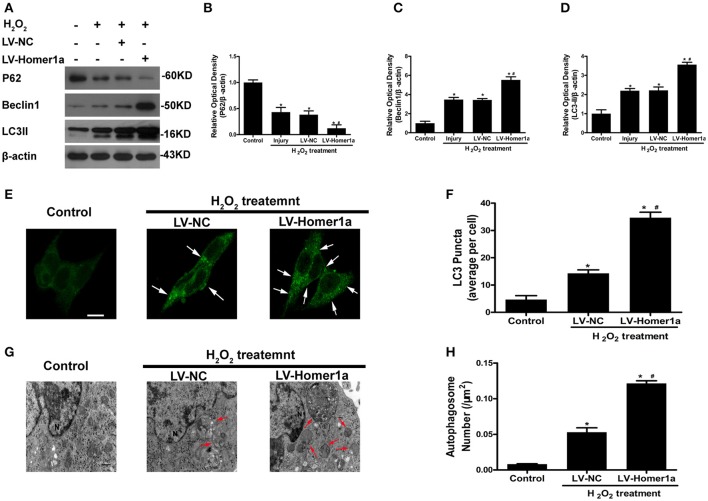
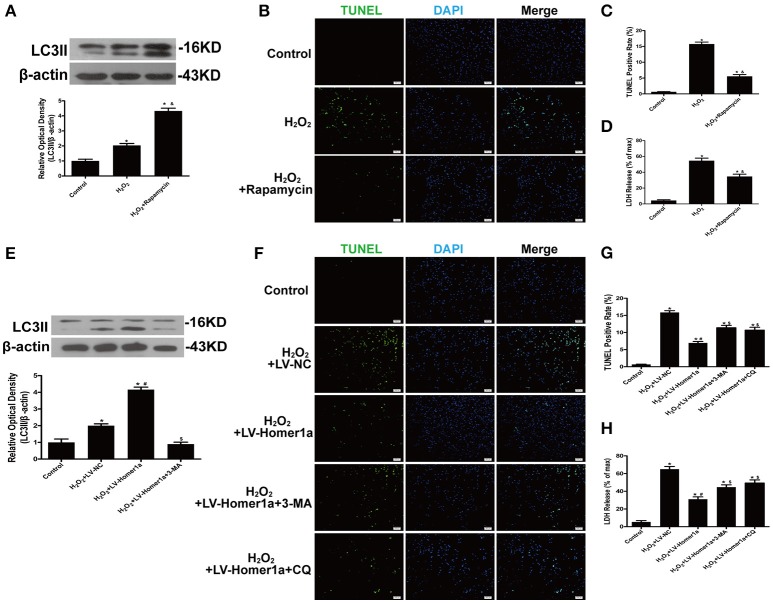
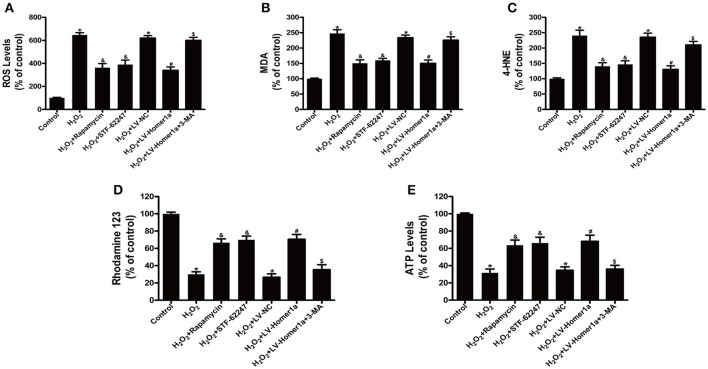
Neuronal oxidative stress is involved in diverse neurological disorders. Homer1a, as an important member of the Homer family and localized at the postsynaptic density, is known to protect cells against oxidative injury. However, the exact neuroprotective mechanism of Homer1a has not been fully elucidated. Here, we found that Homer1a promoted cell viability and reduced HO-induced LDH release. The overexpression of Homer1a enhanced autophagy after HO treatment, which was confirmed by increased expression of LC3II, Beclin-1, and greater autophagosome formation. In addition, we demonstrated that activating autophagy improved cell survival and reduced HO-induced oxidative stress and mitochondrial damage. Moreover, the autophagy inhibitor 3-MA partially prevented the protective effects of Homer1a against oxidative challenge. We also found that the upregulation of Homer1a after HO treatment increased the phosphorylation of AMPK. Furthermore, the AMPK inhibitor compound C inhibited Homer1a-induced autophagy and abolished Homer1a-mediated neuroprotection. All the above data suggests that Homer1a confers protection against HO-induced oxidative damage via AMPK-dependent autophagy.
神经元氧化应激参与多种神经疾病。Homer1a作为Homer家族的重要成员,定位于突触后致密区,已知其可保护细胞免受氧化损伤。然而,Homer1a确切的神经保护机制尚未完全阐明。在此,我们发现Homer1a可促进细胞活力并减少HO诱导的乳酸脱氢酶释放。HO处理后,Homer1a的过表达增强了自噬,这通过LC3II、Beclin-1表达增加以及自噬体形成增多得以证实。此外,我们证明激活自噬可提高细胞存活率并减少HO诱导的氧化应激和线粒体损伤。而且,自噬抑制剂3-MA部分阻断了Homer1a对氧化应激的保护作用。我们还发现HO处理后Homer1a的上调增加了AMPK的磷酸化。此外,AMPK抑制剂化合物C抑制了Homer1a诱导的自噬并消除了Homer1a介导的神经保护作用。上述所有数据表明,Homer1a通过AMPK依赖的自噬赋予对HO诱导的氧化损伤的保护作用。