Department of Pathology, Federal University of Minas Gerais (UFMG), Belo Horizonte, MG, Brazil.
Department of Life Science, National Institute of Technology, Rourkela, Odisha, India.
Cancer Med. 2018 Apr;7(4):1232-1239. doi: 10.1002/cam4.1375. Epub 2018 Feb 25.
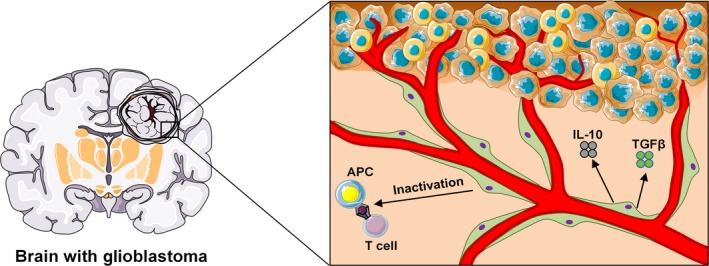
Glioblastoma multiforme is the most common and aggressive primary brain tumor, with an extremely poor prognosis. The lack of detailed knowledge about the cellular and molecular mechanisms involved in glioblastoma development restricts the design of efficient therapies. A recent study using state-of-art technologies explores the role of pericytes in the glioblastoma microenvironment. Glioblastoma-activated pericytes develop an immunosuppressive phenotype, reducing T-cell activation through the induction of an anti-inflammatory response. Strikingly, pericytes support glioblastoma growth in vitro and in vivo. Here, we describe succinctly the results and implications of the findings reported in pericytes' and glioblastomas' biology. The emerging knowledge from this study will be essential for the treatment of brain tumors.
多形性胶质母细胞瘤是最常见和侵袭性最强的原发性脑肿瘤,预后极差。由于对胶质母细胞瘤发生过程中涉及的细胞和分子机制缺乏详细了解,限制了有效治疗方法的设计。最近一项使用最先进技术的研究探索了周细胞在胶质母细胞瘤微环境中的作用。胶质母细胞瘤激活的周细胞表现出免疫抑制表型,通过诱导抗炎反应来减少 T 细胞的激活。引人注目的是,周细胞在体外和体内支持胶质母细胞瘤的生长。在这里,我们简要描述了周细胞和胶质母细胞瘤生物学中报告的发现的结果和意义。这项研究的新知识对于脑肿瘤的治疗至关重要。