Guo Junyuan, Liu Jianying, Yang Yijin, Zhou Yuling, Jiang Shilin, Chen Cheng
College of Resources and Environment, Chengdu University of Information Technology, Chengdu, Sichuan, 610225, China.
Sci Rep. 2018 Feb 26;8(1):3631. doi: 10.1038/s41598-018-21796-x.
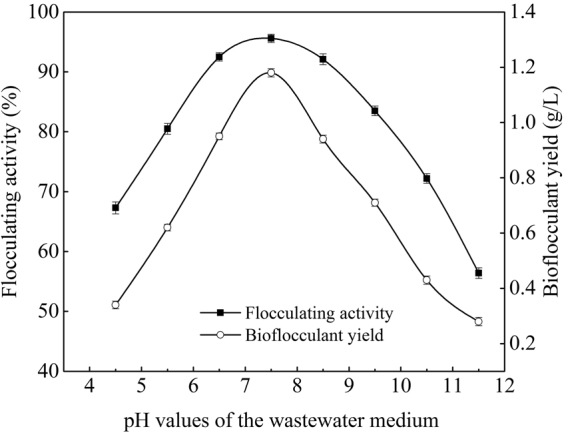
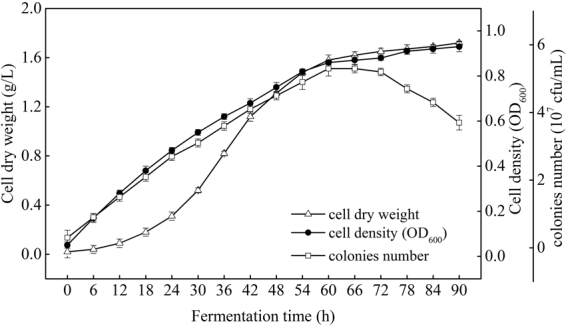
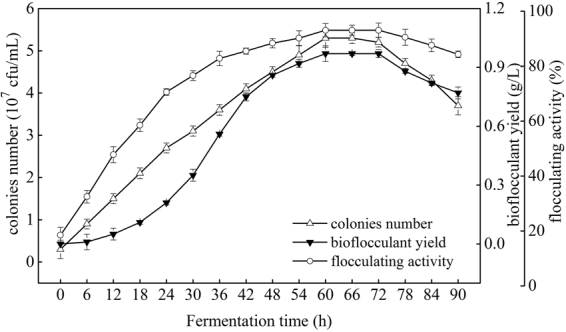
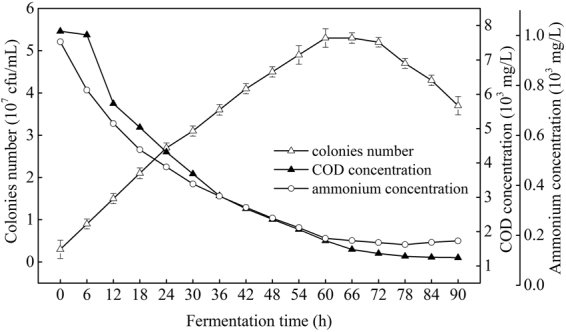
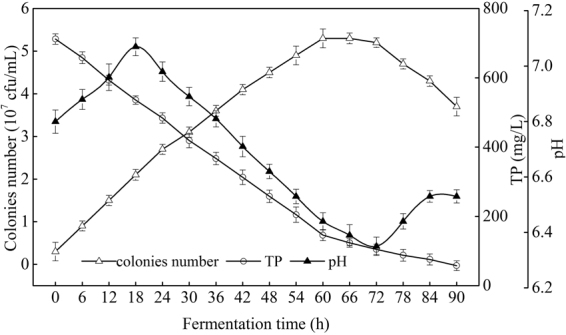
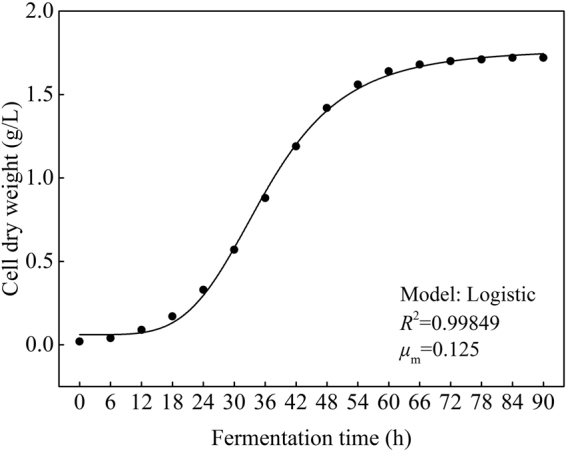
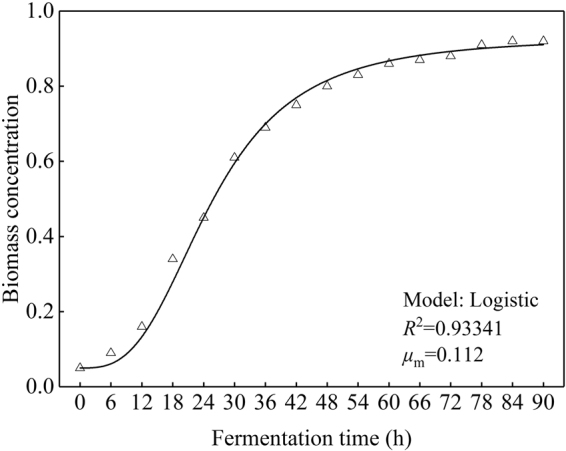
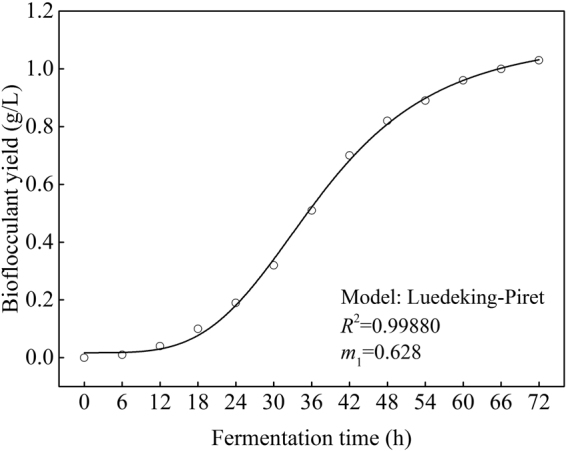
Potato starch wastewater was used as fermentation medium for Rhodococcus erythropolis to produce bioflocculant. Kinetics of cell growth and bioflocculant production were firstly constructed. After fermentation for 60 h, 0.97 g of bioflocculant with polysaccharides nature was extracted from 1 L of fermentation liquor. Kinetics characteristics showed that cell growth and bioflocculant production could be simulated well with Logistic and Luedeking-Piret equations, respectively. When R. erythropolis was in logarithm growth phase, COD, ammonium, and TP of the potato starch wastewater medium were rapidly down to 1736, 188, and 146 mg/L, respectively, from 7836, 975, and 712 mg/L, while the medium's exactly pH value was almost not changed. Furthermore, bioflocculant flocculation can be used as an effective pretreatment way for potato starch wastewater, and it was feasible in actual treatment projects in Ronghua Starch Co., Ltd., Sichuan Province.
以马铃薯淀粉废水作为红平红球菌生产生物絮凝剂的发酵培养基。首先构建了细胞生长和生物絮凝剂产生的动力学模型。发酵60小时后,从1升发酵液中提取出0.97克具有多糖性质的生物絮凝剂。动力学特征表明,细胞生长和生物絮凝剂产生分别可用Logistic方程和Luedeking-Piret方程很好地模拟。当红平红球菌处于对数生长期时,马铃薯淀粉废水培养基中的化学需氧量(COD)、铵和总磷(TP)分别从7836、975和712毫克/升迅速降至1736、188和146毫克/升,而培养基的准确pH值几乎没有变化。此外,生物絮凝剂絮凝可作为马铃薯淀粉废水的一种有效预处理方式,在四川省荣华淀粉有限公司的实际处理项目中是可行的。