Division of Developmental Cognitive Neuroscience, Institute of Development, Aging and Cancer, Tohoku University, Sendai, Japan.
Division of Medical Neuroimaging Analysis, Department of Community Medical Supports, Tohoku Medical Megabank Organization, Tohoku University, Sendai, Japan.
Sci Rep. 2018 Feb 27;8(1):3694. doi: 10.1038/s41598-018-21985-8.
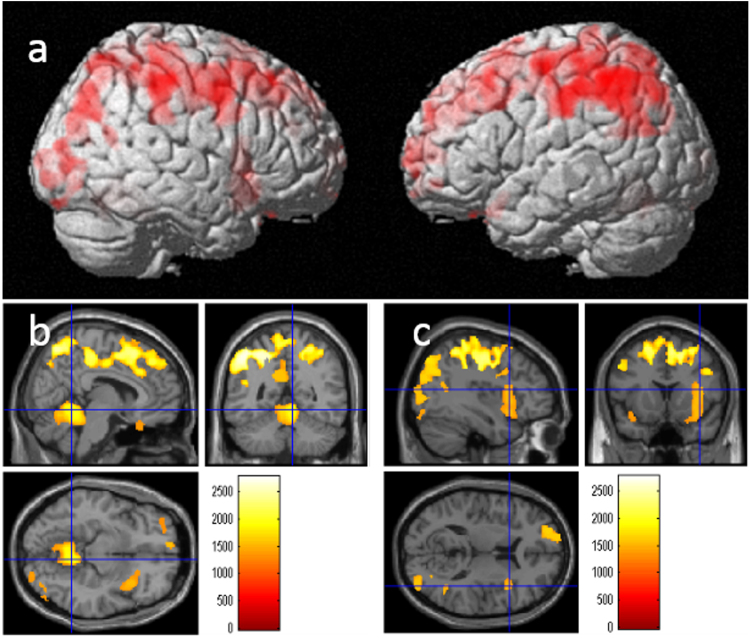
Allergic tendencies are associated with important cognitive and physiological factors, such as intelligence and mathematical abilities. Allergies are widely prevalent, especially in modern life, and the reason for its association with important cognitive variables is an intriguing scientific question. However, despite the unique characteristics of cognitive correlates of allergy, the anatomical correlates of allergy remain unknown. The aim of this study was to identify the associations between regional gray matter volume (rGMV) and allergic tendencies in young adults. In a study cohort of 1,219 healthy, educated young adults, we identified a positive correlation between total allergic tendency and rGMV in large anatomical clusters that mainly encompassed the dorsal part of the cerebral neocortex, right anterior insula, and cerebellum. Furthermore,both mean rGMV of the entire part of these clusters and total allergenic tendency showed a significant positive correlation with spatial ability. These results suggest the link among allergic tendencies, larger rGMV, and the better spatial ability in healthy, educated young adults.
过敏倾向与重要的认知和生理因素有关,例如智力和数学能力。过敏在现代生活中很普遍,其与重要认知变量相关的原因是一个有趣的科学问题。然而,尽管过敏的认知相关性具有独特的特征,但过敏的解剖学相关性仍不清楚。本研究的目的是确定年轻人过敏倾向与大脑灰质体积(rGMV)之间的关联。在一个由 1219 名健康、受过教育的年轻人组成的研究队列中,我们发现总过敏倾向与大脑新皮层背侧、右侧前岛叶和小脑等大的解剖簇的 rGMV 之间存在正相关。此外,这些簇的整个部分的 rGMV 平均值和总过敏倾向与空间能力呈显著正相关。这些结果表明,在健康、受过教育的年轻人中,过敏倾向、更大的 rGMV 和更好的空间能力之间存在联系。