Department of Biochemistry, College of Medicine, Konyang University, Daejeon, 302-718, Republic of Korea.
Department of Pathology, College of Medicine, Kyung Hee University, Seoul, 02447, Republic of Korea.
Mol Neurobiol. 2018 Oct;55(10):7886-7899. doi: 10.1007/s12035-018-0918-y. Epub 2018 Feb 27.
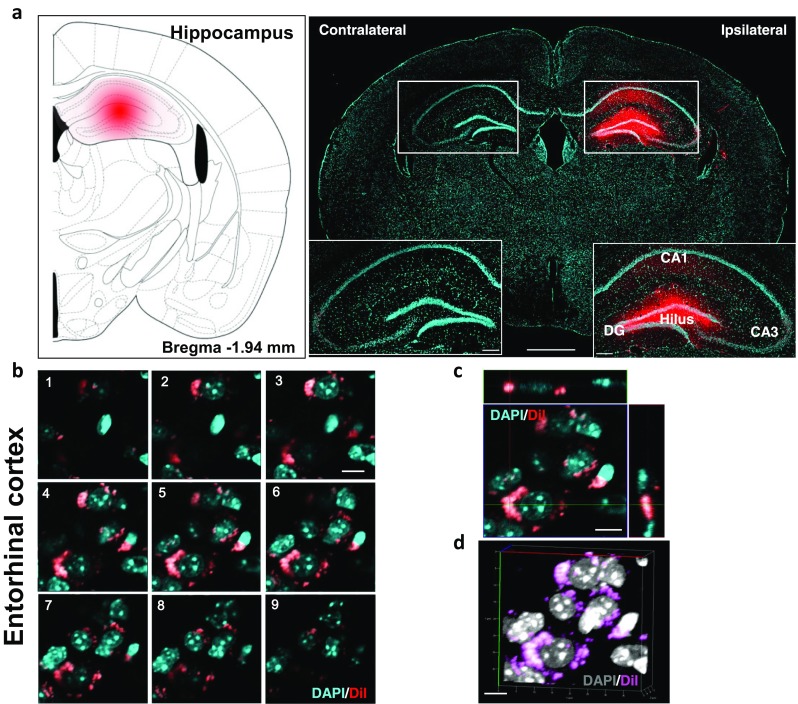
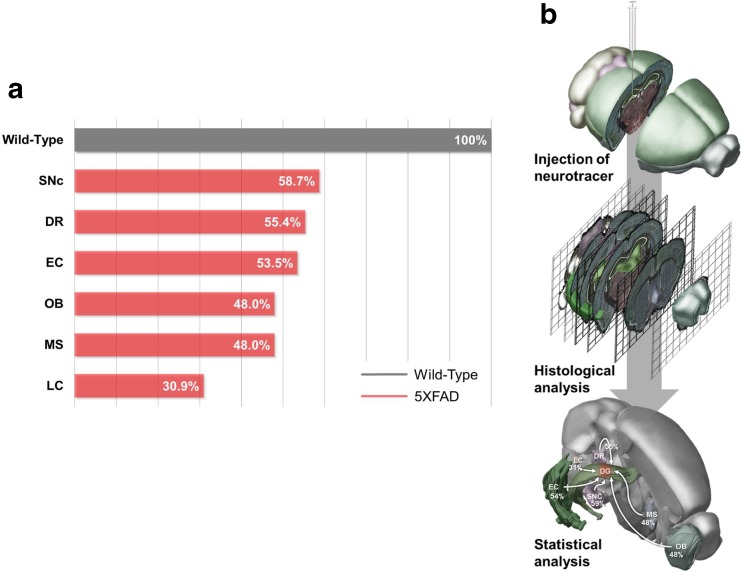
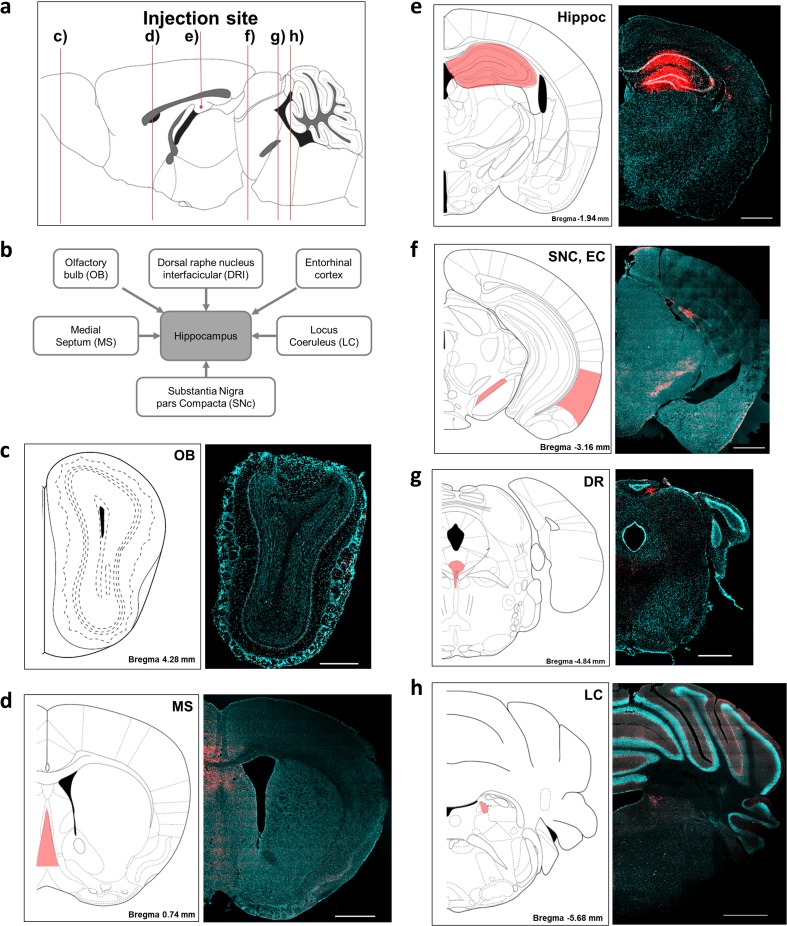
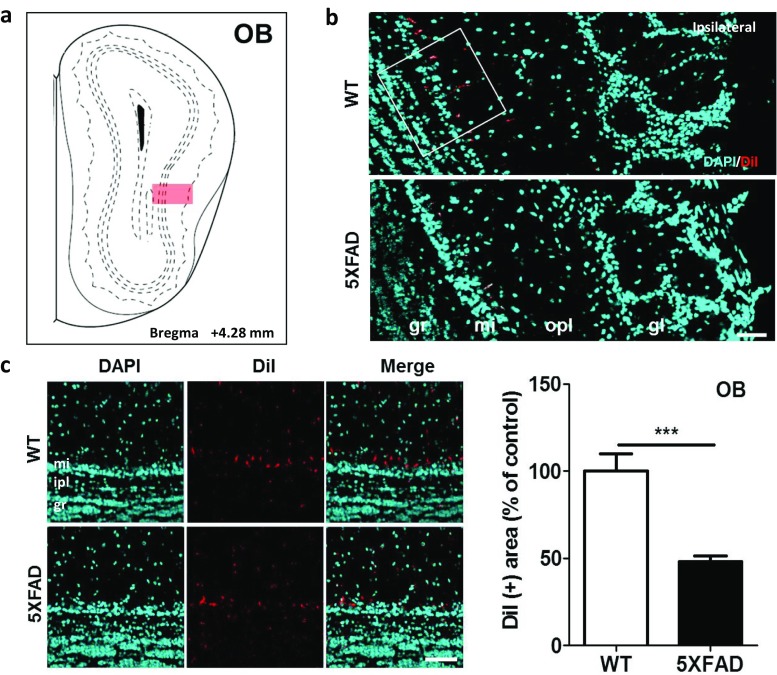
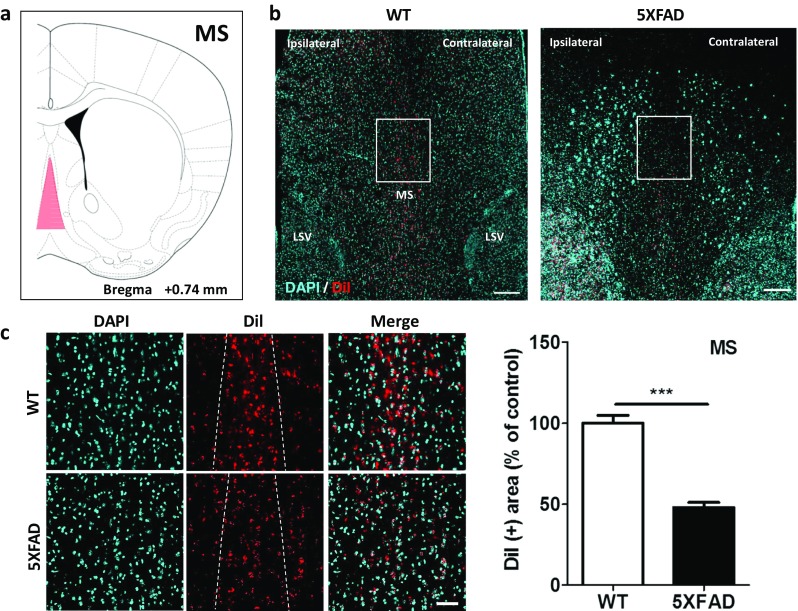
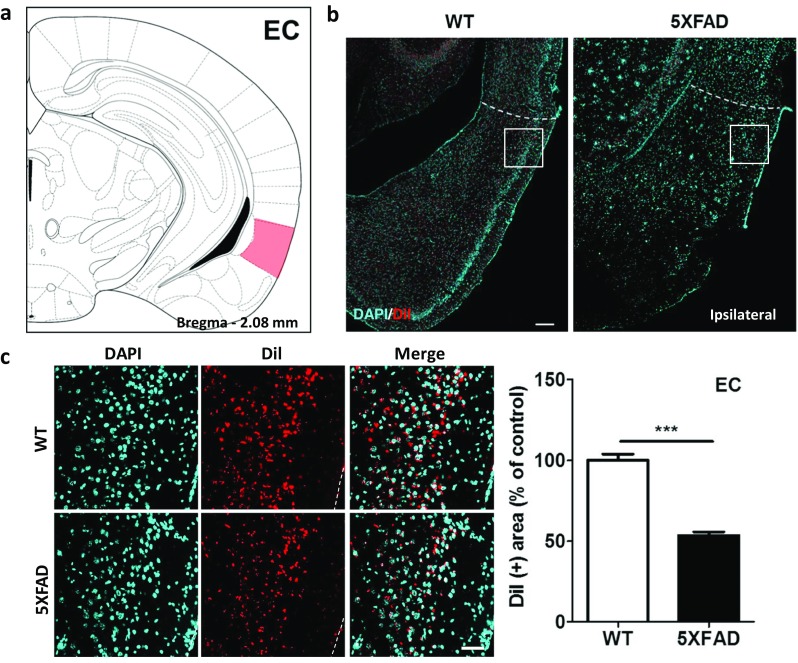
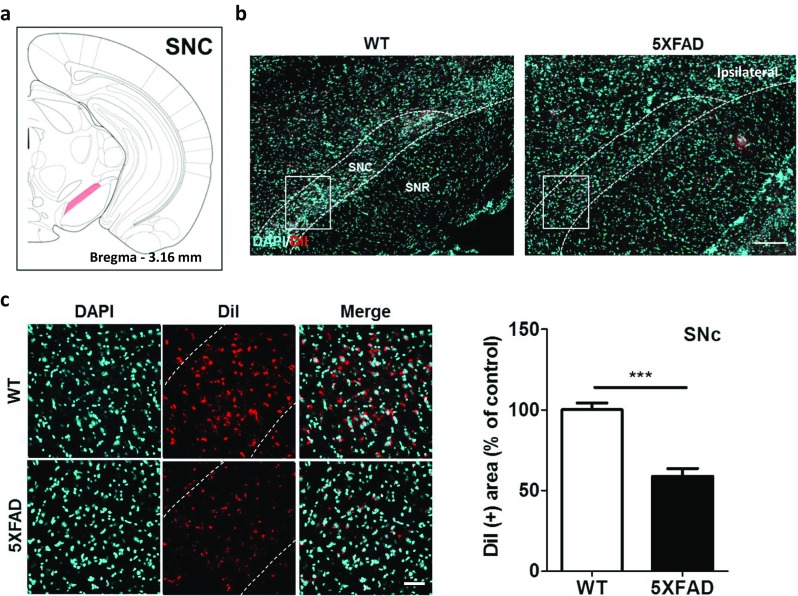
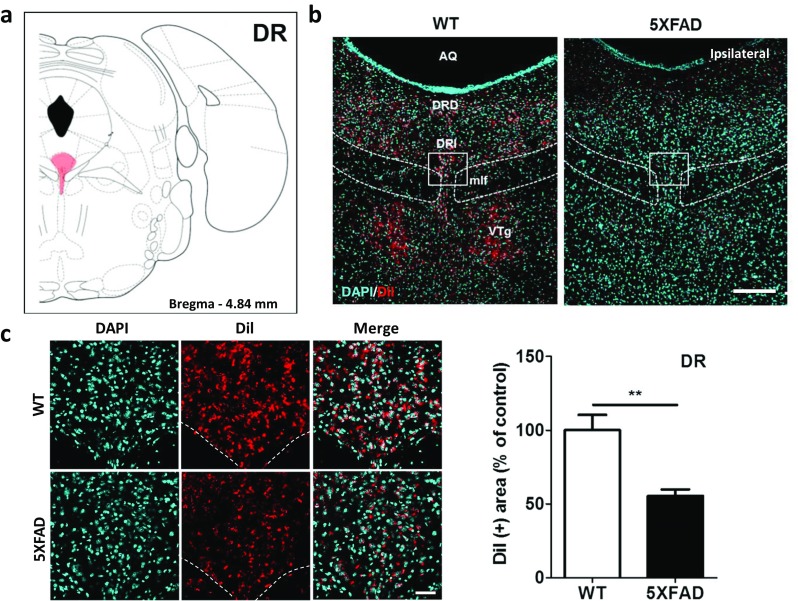
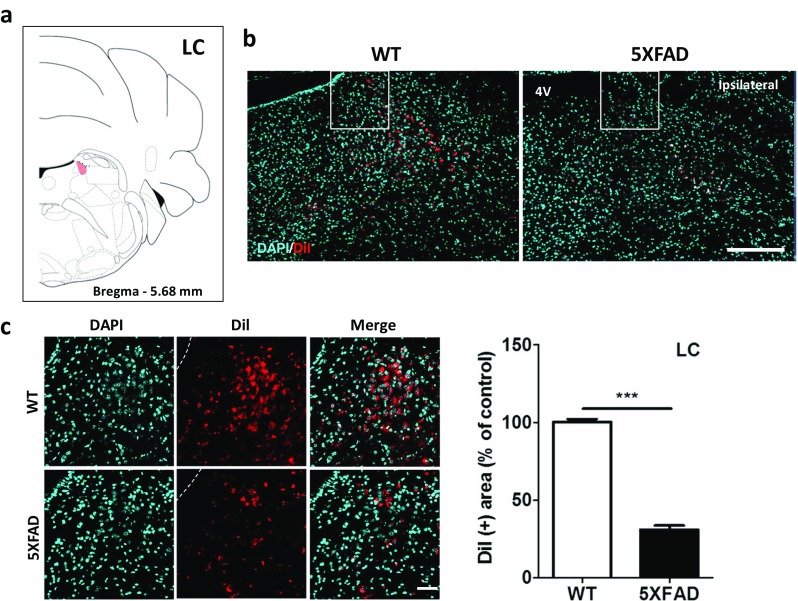
Alzheimer's disease (AD) is a neurodegenerative disorder characterized by cognitive decline and neurodegeneration in the hippocampus. Despite the pathological importance of the hippocampal degeneration in AD, little topographical evidence exists of impaired hippocampal connectivity in patients with AD. To investigate the anatomical connections of the hippocampus, we injected the neurotracer 1,1'-dioctadecyl-3,3,3'3,3'-tetramethyl-indocarbocyanine perchlorate (DiI) into the hippocampi of 5XFAD mice, which were used as an animal model of AD. In wild-type controls, DiI-containing cells were found in the entorhinal cortex, medial septum, locus coeruleus, dorsal raphe, substantia nigra pars compacta, and olfactory bulb. Hippocampal inputs were decreased in multiple brain regions in the 5XFAD mice compared to wild-type littermate mice. These results are the first to reveal alterations at the cellular level in hippocampal connectivity in the brains of 5XFAD mice. These results suggest that anatomical mapping of hippocampal connectivity will elucidate new pathogenic mechanisms and therapeutic targets for AD treatment.
阿尔茨海默病(AD)是一种神经退行性疾病,其特征是认知能力下降和海马体的神经退行性变。尽管海马体退化在 AD 中的病理重要性已经得到了证实,但在 AD 患者中,关于其海马体连接受损的局部证据却很少。为了研究海马体的解剖连接,我们将神经示踪剂 1,1'-二辛基-3,3,3'3,3'-四甲基吲哚羰花青高氯酸盐(DiI)注入 5XFAD 小鼠的海马体中,该动物模型用于 AD 的研究。在野生型对照中,DiI 标记的细胞存在于内嗅皮层、隔核、蓝斑、中缝背核、黑质致密部和嗅球中。与野生型同窝仔鼠相比,5XFAD 小鼠的多个脑区的海马体输入减少。这些结果首次揭示了 5XFAD 小鼠大脑中海马体连接的细胞水平改变。这些结果表明,对海马体连接的解剖图谱进行研究将阐明 AD 治疗的新发病机制和治疗靶点。