Martinez Shantel A, Godoy Jayfred, Huang Meng, Zhang Zhiwu, Carter Arron H, Garland Campbell Kimberly A, Steber Camille M
Molecular Plant Sciences, Washington State University, Pullman, WA, United States.
Department of Crop and Soil Sciences, Washington State University, Pullman, WA, United States.
Front Plant Sci. 2018 Feb 14;9:141. doi: 10.3389/fpls.2018.00141. eCollection 2018.
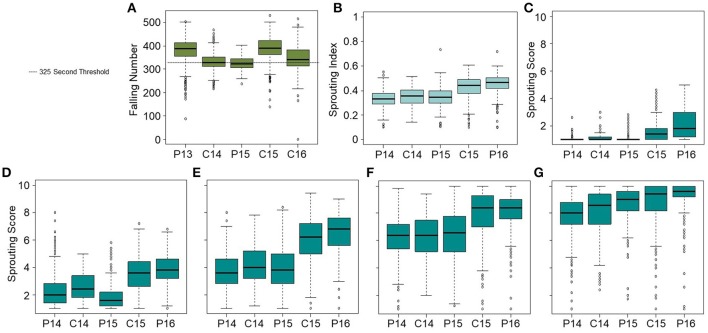
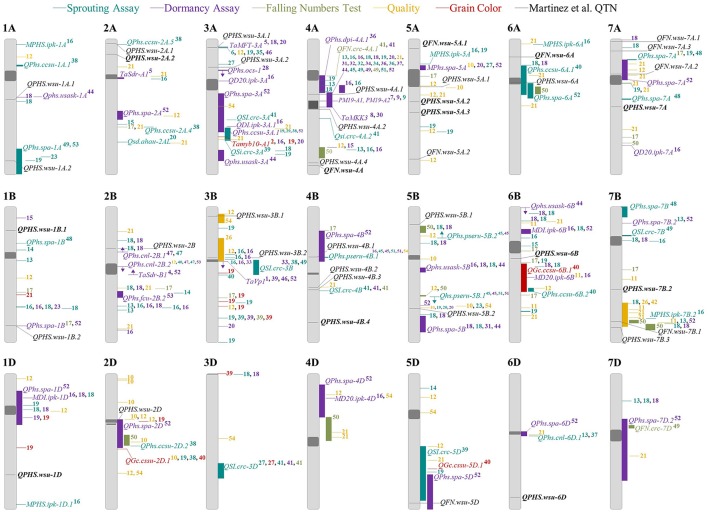
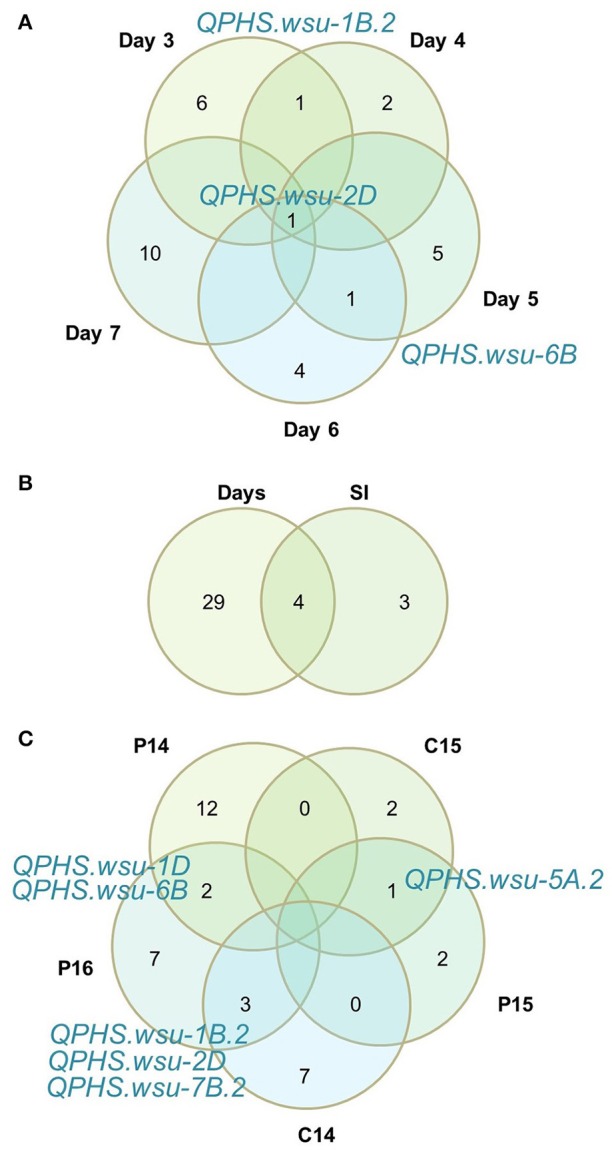
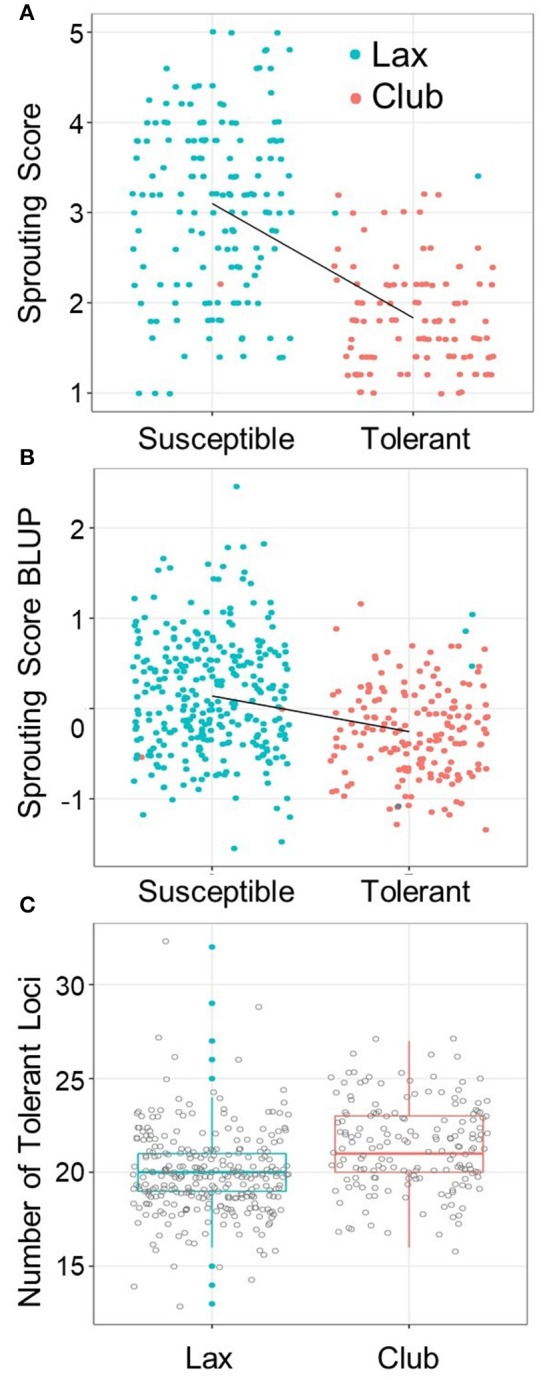
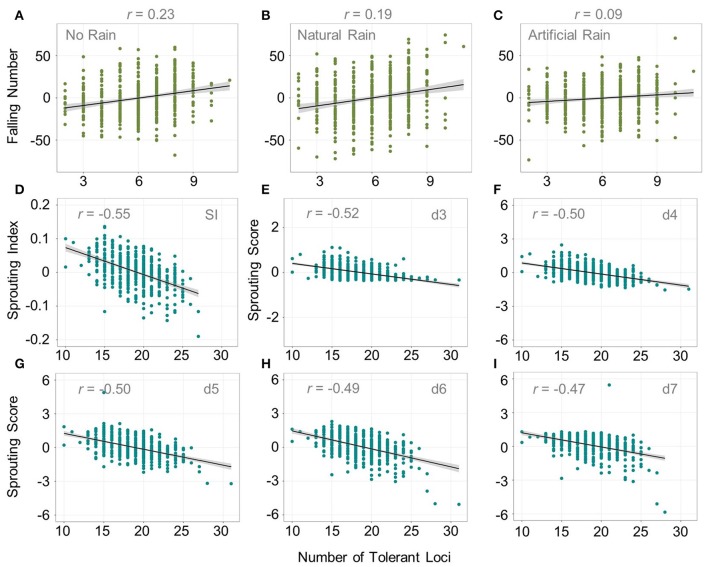
Preharvest sprouting (PHS), the germination of grain on the mother plant under cool and wet conditions, is a recurring problem for wheat farmers worldwide. α-amylase enzyme produced during PHS degrades starch resulting in baked good with poor end-use quality. The Hagberg-Perten Falling Number (FN) test is used to measure this problem in the wheat industry, and determines how much a farmer's wheat is discounted for PHS damage. PHS tolerance is associated with higher grain dormancy. Thus, breeding programs use germination-based assays such as the spike-wetting test to measure PHS susceptibility. Association mapping identified loci associated with PHS tolerance in U.S. Pacific Northwest germplasm based both on FN and on spike-wetting test data. The study was performed using a panel of 469 white winter wheat cultivars and elite breeding lines grown in six Washington state environments, and genotyped for 15,229 polymorphic markers using the 90k SNP Illumina iSelect array. Marker-trait associations were identified using the FarmCPU R package. Principal component analysis was directly and a kinship matrix was indirectly used to account for population structure. Nine loci were associated with FN and 34 loci associated with PHS based on sprouting scores. None of the loci were detected in multiple environments, whereas six of the 34 loci were detected in two of the five environments. There was no overlap between the QTN detected based on FN and PHS, and there was little correlation between the two traits. However, both traits appear to be PHS-related since 19 of the 34 loci and four of the nine loci co-localized with previously published dormancy and PHS QTL. Identification of these loci will lead to a better understanding of the genetic architecture of PHS and will help with the future development of genomic selection models.
收获前发芽(PHS),即在凉爽潮湿条件下母株上的籽粒发芽,是全球小麦种植者反复面临的问题。PHS期间产生的α-淀粉酶会降解淀粉,导致烘焙产品的最终使用品质不佳。哈格伯格-佩尔滕降落数值(FN)测试用于小麦行业中测量此问题,并确定农民的小麦因PHS损害而被折价的程度。PHS耐受性与较高的籽粒休眠相关。因此,育种计划使用基于发芽的测定方法,如穗部湿润试验,来测量PHS易感性。关联图谱基于FN和穗部湿润试验数据,确定了美国太平洋西北地区种质中与PHS耐受性相关的位点。该研究使用了一组469个白色冬小麦品种和优良育种系,在华盛顿州的六个环境中种植,并使用90k SNP Illumina iSelect芯片对15229个多态性标记进行基因分型。使用FarmCPU R软件包鉴定标记-性状关联。直接使用主成分分析并间接使用亲缘关系矩阵来考虑群体结构。基于降落数值,九个位点与FN相关,基于发芽评分,34个位点与PHS相关。在多个环境中均未检测到任何一个位点,而34个位点中的六个在五个环境中的两个中被检测到。基于FN和PHS检测到的QTN之间没有重叠,并且这两个性状之间几乎没有相关性。然而,由于34个位点中的19个和9个位点中的4个与先前发表的休眠和PHS QTL共定位,这两个性状似乎都与PHS相关。这些位点的鉴定将有助于更好地理解PHS的遗传结构,并将有助于未来基因组选择模型的开发。