Faculty of Tropical Medicine, Mahidol University, Ratchathewi, Bangkok, Thailand.
Department of Disease Control, Ministry of Public Health, Nonthaburi, Bangkok, Thailand.
PLoS One. 2018 Mar 1;13(3):e0193163. doi: 10.1371/journal.pone.0193163. eCollection 2018.
Conventional gold standard characterization of chigger mites involves chemical preparation procedures (i.e. specimen clearing) for visualization of morphological features, which however contributes to destruction of the arthropod host DNA and any endosymbiont or pathogen DNA harbored within the specimen.
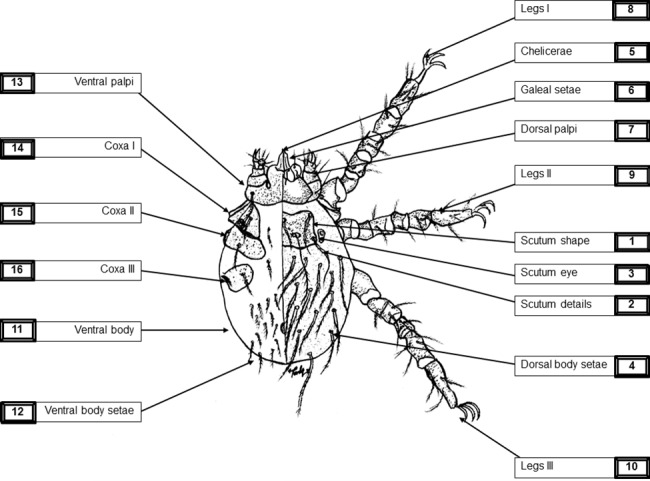
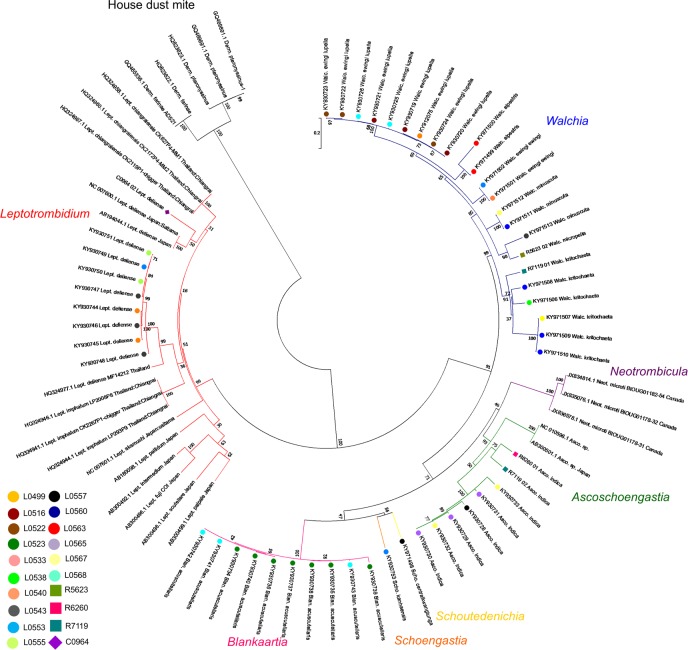
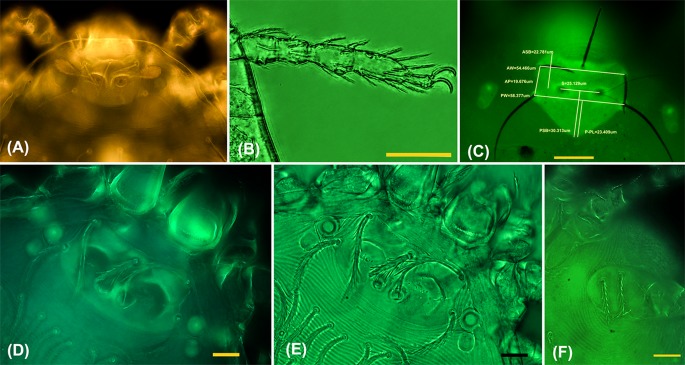
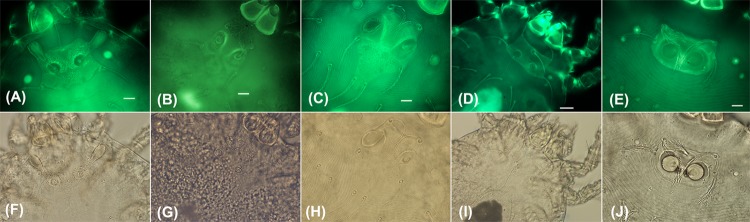
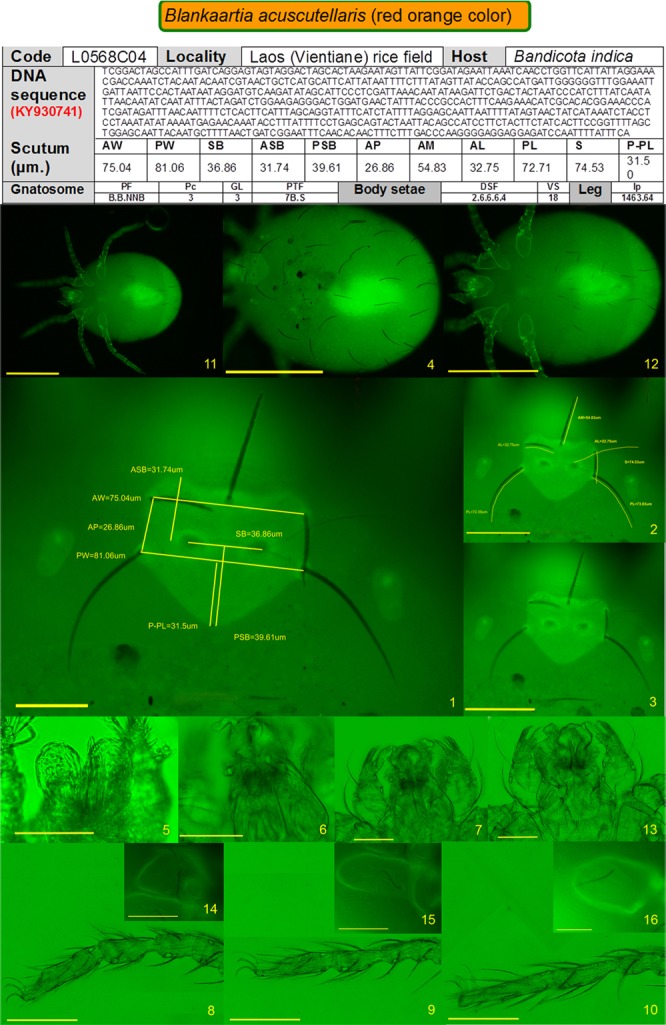
METHODOLOGY/PRINCIPAL FINDINGS: In this study, a novel work flow based on autofluorescence microscopy was developed to enable identification of trombiculid mites to the species level on the basis of morphological traits without any special preparation, while preserving the mite DNA for subsequent genotyping. A panel of 16 specifically selected fluorescence microscopy images of mite features from available identification keys served for complete chigger morphological identification to the species level, and was paired with corresponding genotype data. We evaluated and validated this method for paired chigger morphological and genotypic ID using the mitochondrial cytochrome c oxidase subunit I gene (coi) in 113 chigger specimens representing 12 species and 7 genera (Leptotrombidium, Ascoschoengastia, Gahrliepia, Walchia, Blankaartia, Schoengastia and Schoutedenichia) from the Lao People's Democratic Republic (Lao PDR) to the species level (complete characterization), and 153 chiggers from 5 genera (Leptotrombidium, Ascoschoengastia, Helenicula, Schoengastiella and Walchia) from Thailand, Cambodia and Lao PDR to the genus level. A phylogenetic tree constructed from 77 coi gene sequences (approximately 640 bp length, n = 52 new coi sequences and n = 25 downloaded from GenBank), demonstrated clear grouping of assigned morphotypes at the genus levels, although evidence of both genetic polymorphism and morphological plasticity was found.
CONCLUSIONS/SIGNIFICANCE: With this new methodology, we provided the largest collection of characterized coi gene sequences for trombiculid mites to date, and almost doubled the number of available characterized coi gene sequences with a single study. The ability to provide paired phenotypic-genotypic data is of central importance for future characterization of mites and dissecting the molecular epidemiology of mites transmitting diseases like scrub typhus.
传统的恙螨金标准特征描述涉及化学准备程序(例如标本透明化),以观察形态特征,但这会导致节肢动物宿主 DNA 以及标本内任何共生或病原体 DNA 的破坏。
方法/主要发现:在这项研究中,开发了一种基于自发荧光显微镜的新型工作流程,能够在无需任何特殊准备的情况下,根据形态特征识别恙螨物种,同时保留螨的 DNA 用于后续基因分型。一组从现有鉴定钥匙中选择的 16 张螨特征荧光显微镜图像,用于完整的恙螨形态鉴定到种水平,并与相应的基因型数据配对。我们使用来自老挝人民民主共和国(老挝)的 12 个属和 7 个种的 113 个恙螨标本的线粒体细胞色素 c 氧化酶亚基 I 基因(COI)评估和验证了这种方法,用于配对的恙螨形态和基因型 ID,以及来自泰国、柬埔寨和老挝的 5 个属(Leptotrombidium、Ascoschoengastia、Helenicula、Schoengastiella 和 Walchia)的 153 个恙螨到属水平(完整特征)。从 77 个 COI 基因序列(约 640 bp 长,n = 52 个新 COI 序列和 n = 25 个从 GenBank 下载)构建的系统发育树,在属水平上清楚地显示了分配形态型的分组,尽管发现了遗传多态性和形态可塑性的证据。
结论/意义:使用这种新方法,我们提供了迄今为止最大的恙螨 COI 基因序列特征集合,并通过单一研究几乎将可用的 COI 基因序列特征数量增加了一倍。提供表型-基因型数据的能力对于未来螨类的特征描述和剖析传播恙虫病等疾病的螨类的分子流行病学具有重要意义。