Biswas Tilottama, Joop Gerrit, Rafaluk-Mohr Charlotte
Institute of Insect Biotechnology, Justus-Liebig University Giessen, Heinrich Buff Ring 29-32, 35392 Giessen, Germany.
Institute of Animal Ecology, Leuphana University of Lüneburg, 21335 Lüneburg, Germany.
Insects. 2018 Feb 26;9(1):28. doi: 10.3390/insects9010028.
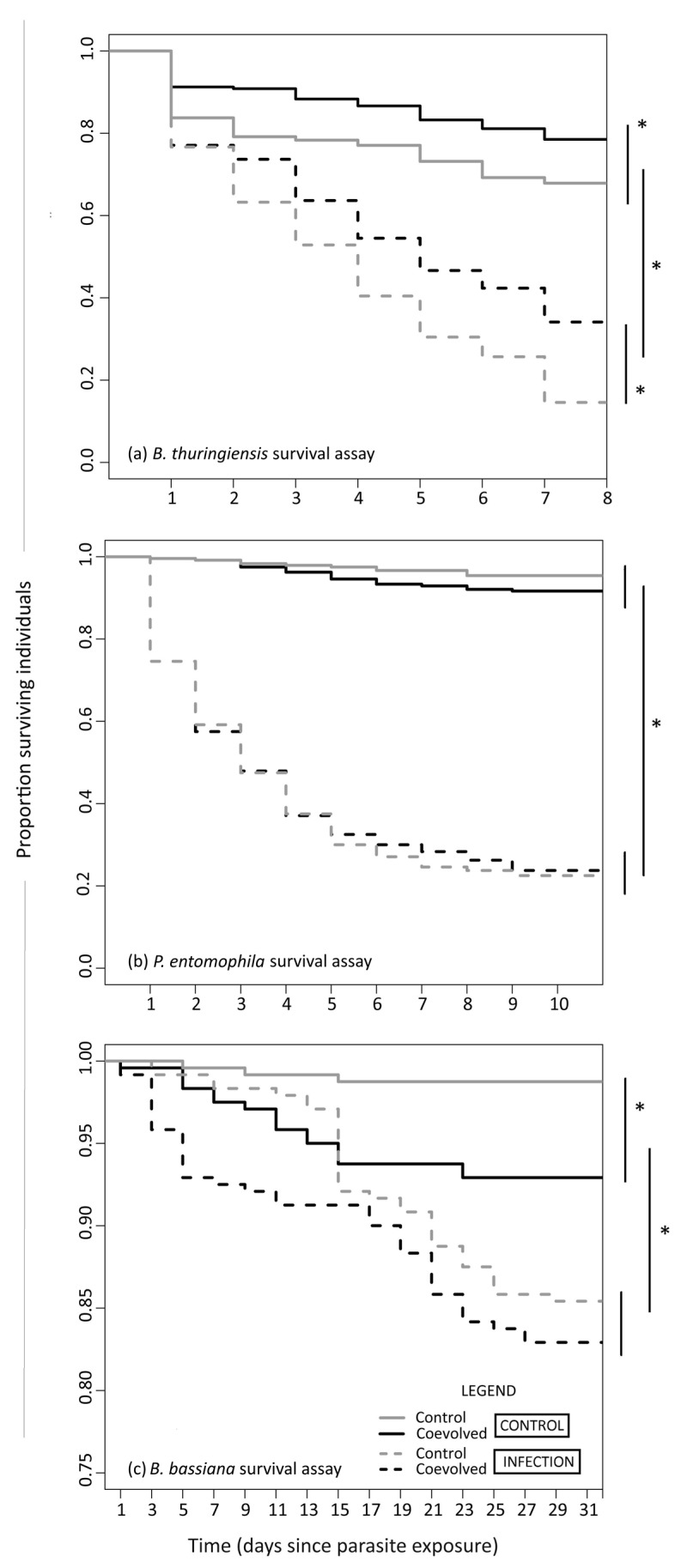
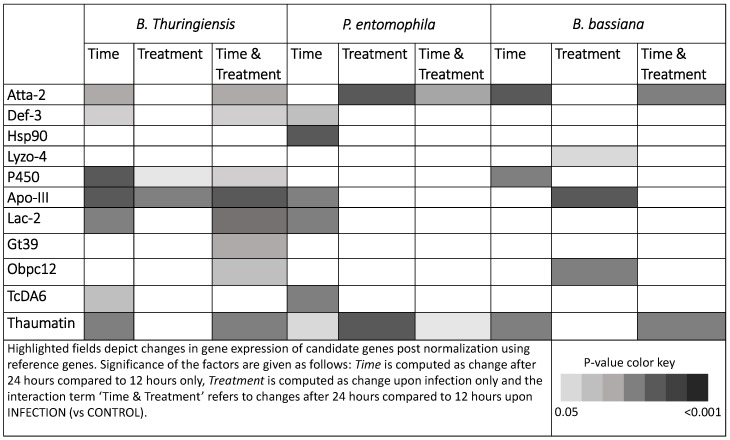
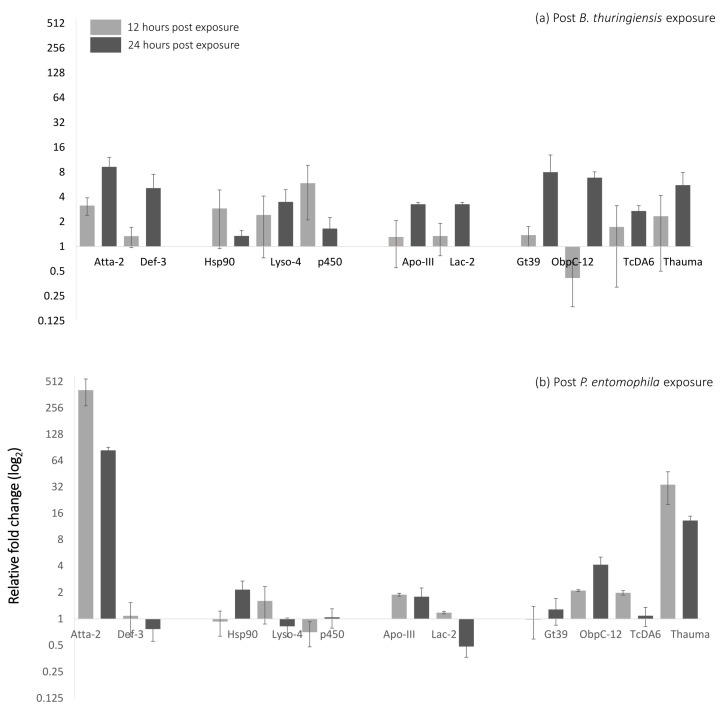
Host-parasite coevolution can influence interactions of the host and parasite with the wider ecological community. One way that this may manifest is in cross-resistance towards other parasites, which has been observed to occur in some host-parasite evolution experiments. In this paper, we test for cross-resistance towards and in the red flour beetle , which was previously allowed to coevolve with the generalist entomopathogenic fungus . We combine survival and gene expression assays upon infection to test for cross-resistance and underlying mechanisms. We show that larvae of that evolved with under coevolutionary conditions were positively cross-resistant to the bacterium but not . Positive cross-resistance was mirrored at the gene expression level with markers that were representative of the oral route of infection being upregulated upon exposure. We find that positive cross-resistance towards evolved in as a consequence of its coevolutionary interactions with . This cross-resistance appears to be a consequence of resistance to oral toxicity. The fact that coevolution with results in resistance to but not implies that and may share mechanisms of infection or toxicity not shared by . This supports previous suggestions that may possess Cry-like toxins, similar to those found in , which allow it to infect orally.
宿主 - 寄生虫的协同进化会影响宿主和寄生虫与更广泛生态群落的相互作用。这种影响可能表现为对其他寄生虫的交叉抗性,在一些宿主 - 寄生虫进化实验中已观察到这种现象。在本文中,我们测试了赤拟谷盗对[具体细菌名称1]和[具体细菌名称2]的交叉抗性,赤拟谷盗此前与广食性昆虫病原真菌[具体真菌名称]共同进化。我们结合感染后的生存和基因表达分析来测试交叉抗性及潜在机制。我们发现,在协同进化条件下与[具体真菌名称]共同进化的赤拟谷盗幼虫对细菌[具体细菌名称1]具有正向交叉抗性,但对[具体细菌名称2]没有。在基因表达水平上也反映出正向交叉抗性,在暴露于[具体细菌名称1]时,代表经口感染途径的标志物上调。我们发现,赤拟谷盗对[具体细菌名称1]的正向交叉抗性是其与[具体真菌名称]协同进化相互作用的结果。这种交叉抗性似乎是对经口毒性产生抗性的结果。与[具体真菌名称]的协同进化导致对[具体细菌名称1]产生抗性而对[具体细菌名称2]不产生抗性这一事实表明,[具体细菌名称1]和[具体真菌名称]可能共享[具体细菌名称2]所没有的感染或毒性机制。这支持了之前的观点,即[具体真菌名称]可能拥有类似于[具体细菌名称3]中发现的Cry样毒素,使其能够经口感染。