Liver Disease Department, Shuguang Hospital Affiliated to Shanghai University of Traditional Chinese Medicine, Shanghai, P.R. China.
Department of pharmacology, School of Pharmacy, Harbin Medical University, Harbin, P.R. China.
Sci Rep. 2018 Mar 1;8(1):3891. doi: 10.1038/s41598-018-22113-2.
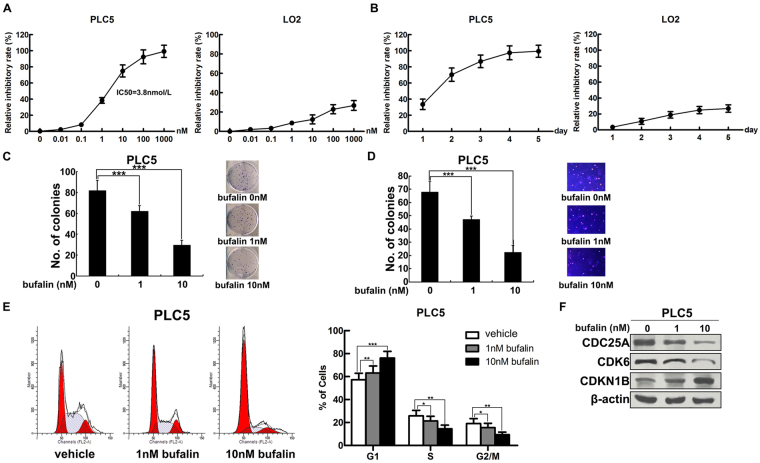
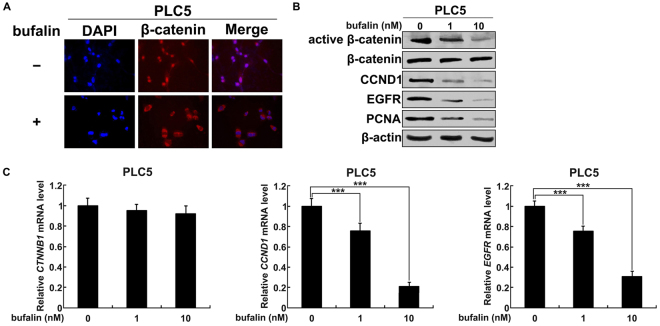
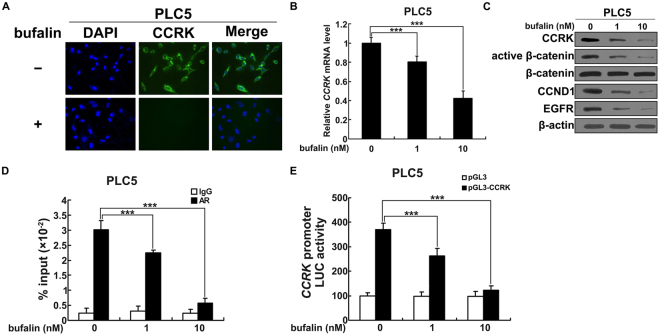
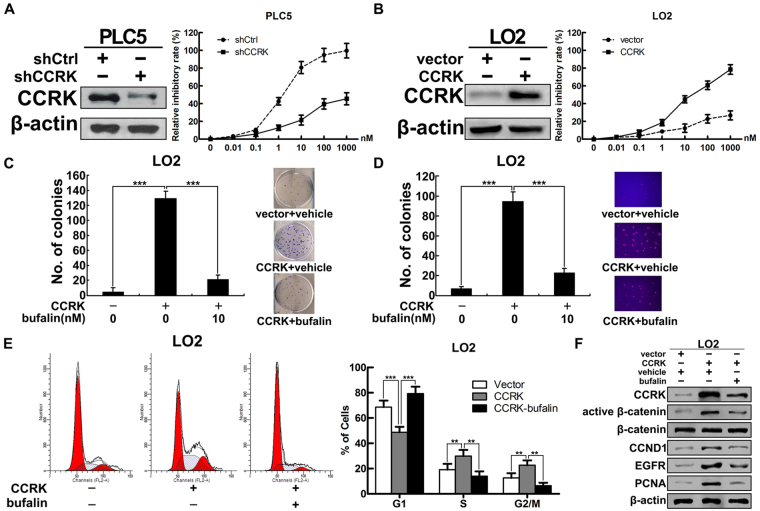
Hepatocellular carcinoma (HCC) is one of the most aggressive malignant tumors, of which treatment options are limited especially in advanced stage. Bufalin, the major digoxin-like component of the traditional Chinese medicine Chansu, exhibits significant antitumor activities in hepatoma cells, but the potential mechanism is obscure. Cell cycle-related kinase (CCRK) is recently identified to be a crucial oncogenic master regulator to drive hepatocarcinogenesis. Here we investigated the molecular function of bufalin on CCRK-regulated signaling pathway, and expounded the underlying mechanism in HCC suppression. In vitro with PLC5 HCC cells and human immortal LO2 cells, proliferation, malignant transformation and cell cycle progression assays were performed to evaluate the antitumor effect of bufalin. In vivo with xenograft and orthotopic mice models, tumor growths with weight and volume change were assessed with or without bufalin treatment. Western blot, RT-qPCR, immunofluorescence and immunohistochemistry were conducted to examine the expression level of CCRK and β-catenin/TCF signaling cascade. We revealed that bufalin suppresses PLC5 HCC cell proliferation, transformation and cell cycle progression rather than LO2 cells, which is correlated with CCRK-mediated β-catenin/TCF signaling. It was also confirmed in mice model. Thus, bufalin is a potential anti-HCC therapeutic candidate through the inhibition of CCRK-driven β-catenin/TCF oncogenic signaling pathway.
肝细胞癌 (HCC) 是最具侵袭性的恶性肿瘤之一,其治疗选择尤其在晚期受到限制。蟾酥是中药的主要洋地黄样成分,其中的主要成分蟾毒灵在肝癌细胞中表现出显著的抗肿瘤活性,但潜在机制尚不清楚。细胞周期相关激酶 (CCRK) 最近被确定为驱动肝癌发生的关键致癌主调节因子。在这里,我们研究了蟾毒灵对 CCRK 调节的信号通路的分子功能,并阐述了其在 HCC 抑制中的潜在机制。在体外,我们使用 PLC5 HCC 细胞和人永生化 LO2 细胞进行增殖、恶性转化和细胞周期进展测定,以评估蟾毒灵的抗肿瘤作用。在体内,我们使用异种移植和原位小鼠模型,评估有无蟾毒灵治疗时肿瘤生长的重量和体积变化。通过 Western blot、RT-qPCR、免疫荧光和免疫组织化学检测 CCRK 和 β-连环蛋白/TCF 信号级联的表达水平。我们揭示蟾毒灵抑制 PLC5 HCC 细胞增殖、转化和细胞周期进展,而对 LO2 细胞无作用,这与 CCRK 介导的 β-连环蛋白/TCF 信号有关。这在小鼠模型中也得到了证实。因此,蟾毒灵通过抑制 CCRK 驱动的β-连环蛋白/TCF 致癌信号通路,是一种有潜力的抗 HCC 治疗候选药物。