Department of Pathology & Laboratory Medicine, University of Wisconsin School of Medicine and Public Health, Madison, Wisconsin, United States of America.
Department of Ophthalmology & Visual Sciences, University of Wisconsin School of Medicine and Public Health, Madison, Wisconsin, United States of America.
PLoS One. 2018 Mar 2;13(3):e0192665. doi: 10.1371/journal.pone.0192665. eCollection 2018.
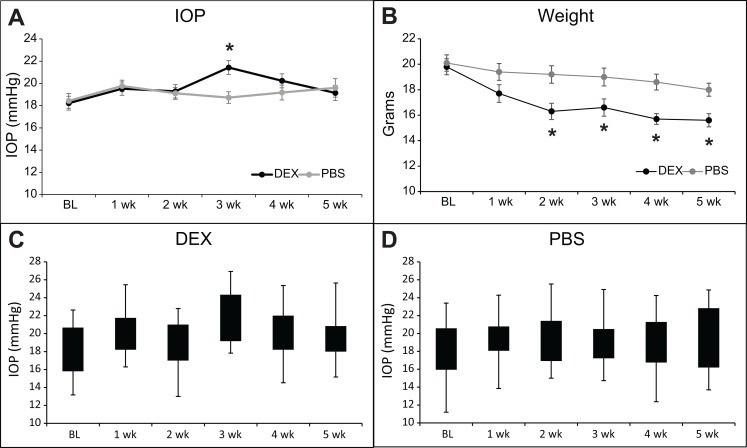
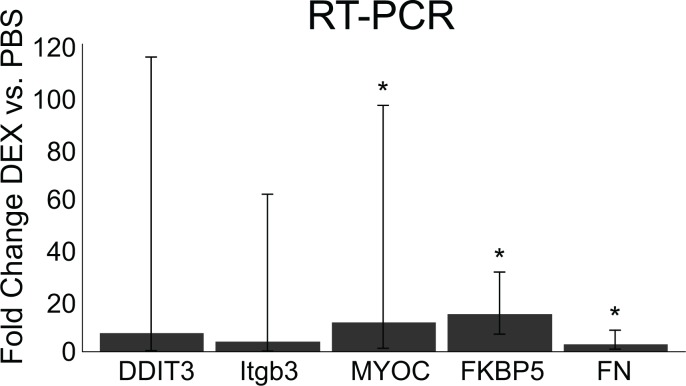
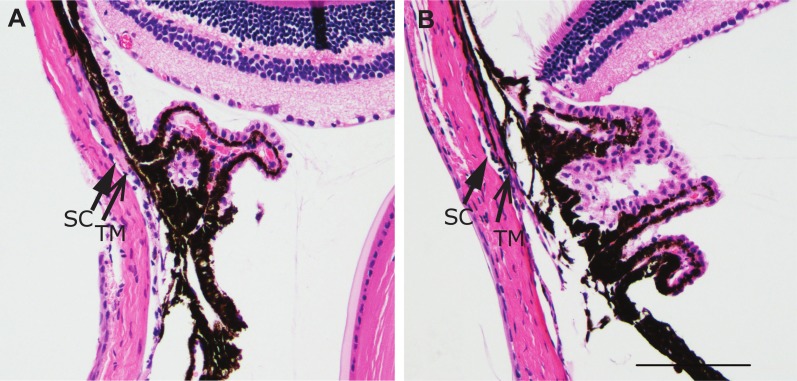
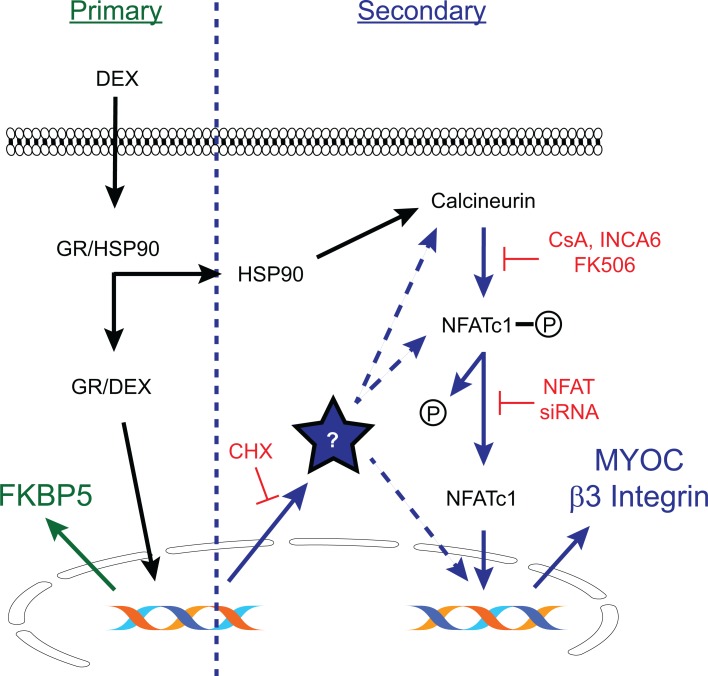
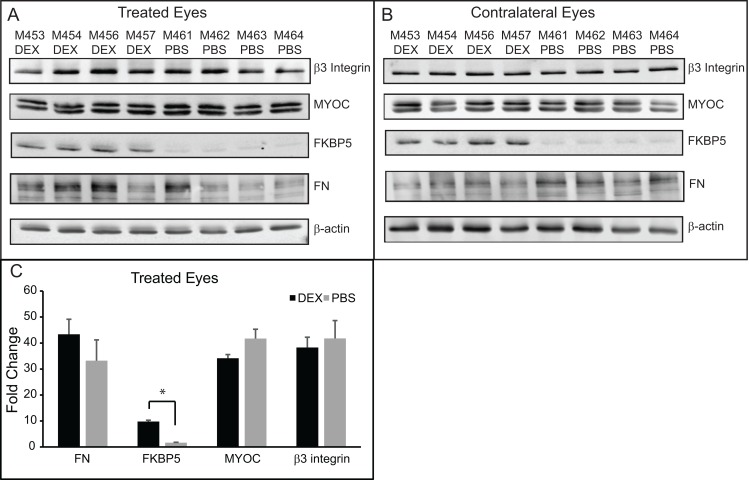
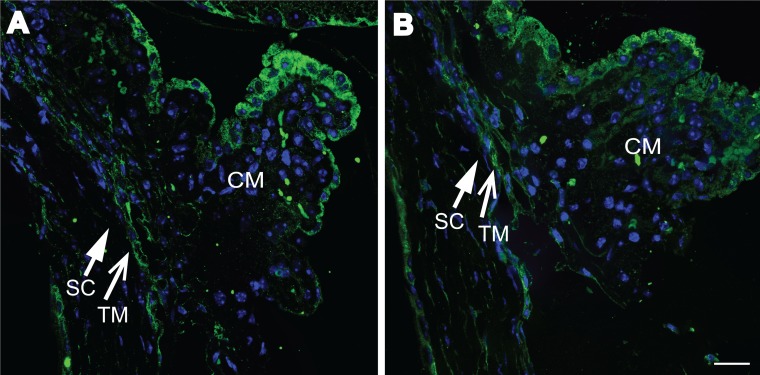
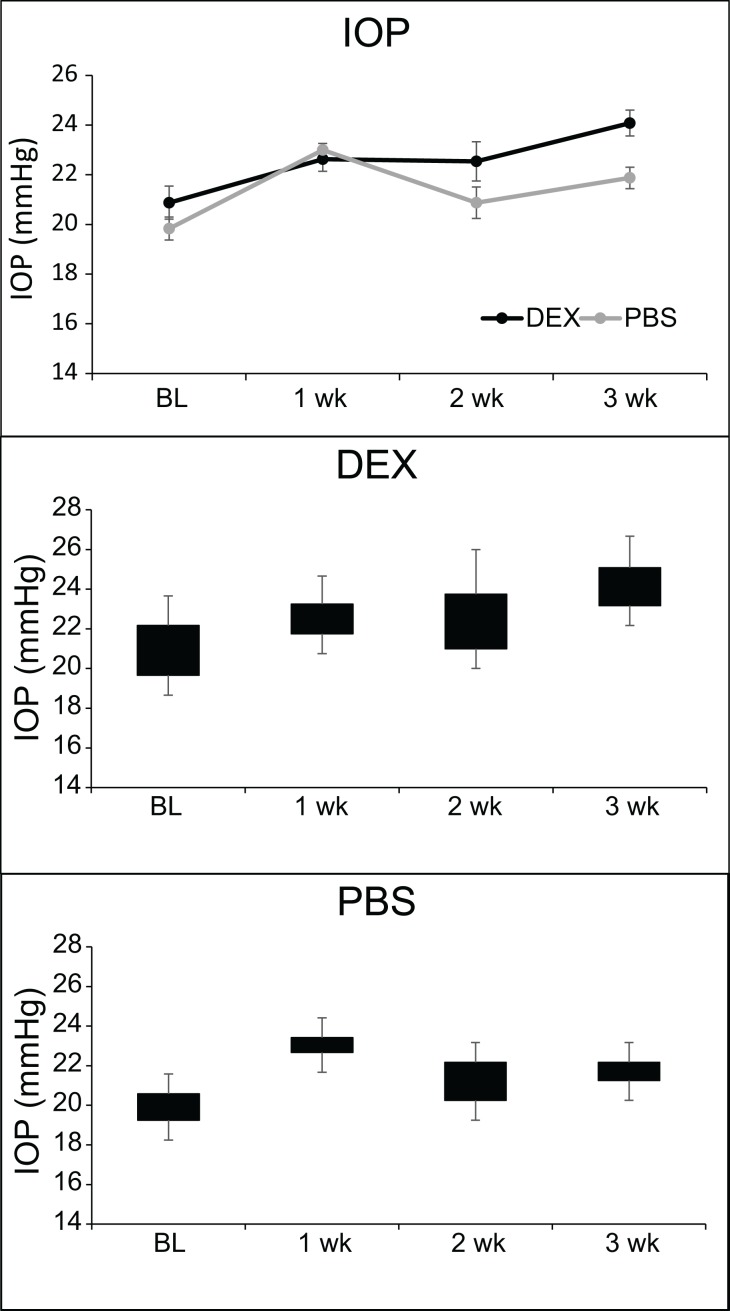
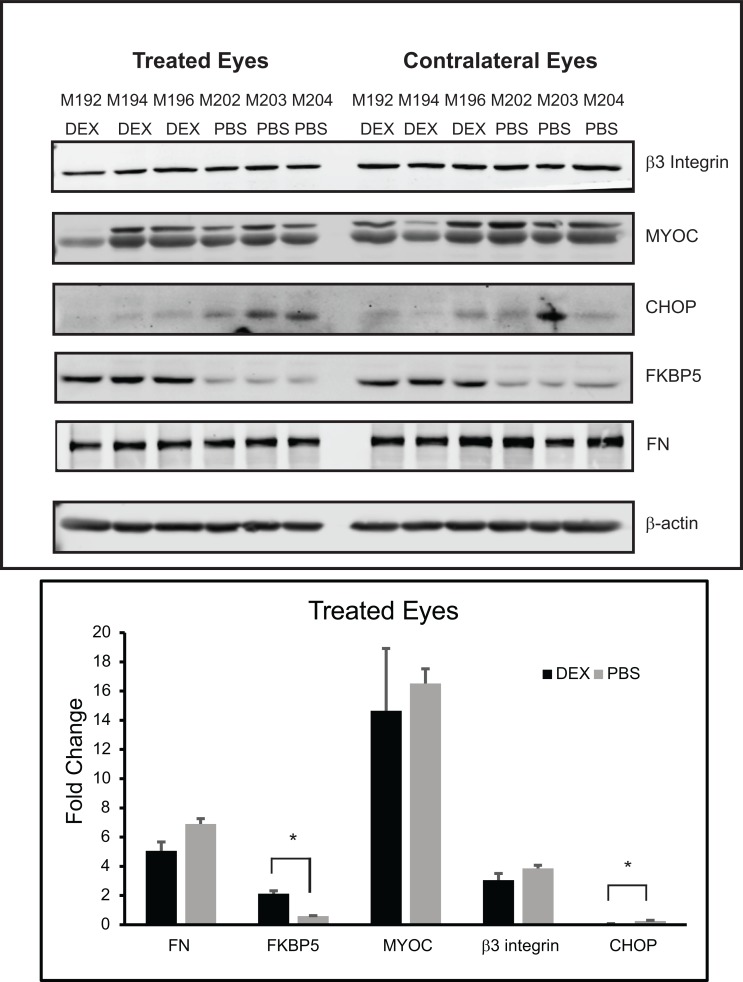
Glucocorticoids such as dexamethasone can cause an increase in intraocular pressure (IOP) in some of the population, but not all. In this paper we used a mouse model of glucocorticoid induced ocular hypertension to examine the changes in the anterior segment of the eye in mice that failed to respond to glucocorticoid treatment with a sustained increase in IOP. C57BL/6J mice were treated with either 0.1% dexamethasone sodium phosphate ophthalmic solution or sterile PBS 3 times daily for up to 5 weeks. IOP was measured weekly at approximately the same time of the day. After 3-5 weeks of treatment, eyes were enucleated and evaluated for changes associated with steroid induced glaucoma. These studies showed that IOP was significantly elevated in dexamethasone (DEX) treated mice compared to PBS treated mice after 3 weeks of treatment, but IOP in DEX treated mice returned to baseline levels after 5 weeks of treatment. All the mice demonstrated a response to the glucocorticoid treatments and showed an elevation in FKBP5 expression after both 3 and 5 weeks of DEX treatment (primary glucocorticoid response protein) and a weight loss. Western blot analysis of anterior segments from treated mice, however, did not show an increase in secondary glucocorticoid response proteins such as β3 integrin or myocilin. Fibronectin levels were also not statistically different. The data suggest that in mice, which do not exhibit a prolonged increase in IOP in response to the DEX treatment, there is a compensatory mechanism that can prevent or turn off the secondary glucocorticoid response.
糖皮质激素,如地塞米松,可引起部分人群眼压(IOP)升高,但并非所有人都会升高。在本文中,我们使用糖皮质激素诱导的小鼠高眼压模型,研究了对糖皮质激素治疗反应不佳、IOP 持续升高的小鼠眼球前段的变化。C57BL/6J 小鼠每天接受 0.1%地塞米松磷酸钠滴眼液或无菌 PBS 滴眼 3 次,最多 5 周。每周在大致相同的时间测量 IOP。治疗 3-5 周后,眼球被摘除,评估与类固醇诱导性青光眼相关的变化。这些研究表明,与 PBS 处理的小鼠相比,地塞米松(DEX)处理的小鼠在治疗 3 周后 IOP 显著升高,但 DEX 处理的小鼠在治疗 5 周后 IOP 恢复到基线水平。所有小鼠对糖皮质激素治疗均有反应,且在 DEX 治疗 3 周和 5 周后,FKBP5 表达升高(初级糖皮质激素反应蛋白),体重减轻。然而,用 DEX 处理的小鼠的眼前节的 Western blot 分析并未显示出二级糖皮质激素反应蛋白(如β3 整合素或肌球蛋白)的增加。纤连蛋白水平也无统计学差异。数据表明,在对 DEX 治疗无长时间 IOP 升高反应的小鼠中,存在一种代偿机制,可以预防或关闭二级糖皮质激素反应。