Bowles Center for Alcohol Studies, University of North Carolina at Chapel Hill, CB #7178, Thurston Bowles Building, Chapel Hill, NC, 27599, USA.
Department of Psychiatry, University of North Carolina at Chapel Hill, Chapel Hill, NC, 27599, USA.
Psychopharmacology (Berl). 2018 Jun;235(6):1681-1696. doi: 10.1007/s00213-018-4870-3. Epub 2018 Mar 3.
There is a clear need for discovery of effective medications to treat behavioral pathologies associated with alcohol addiction, such as chronic drinking.
The goal of this preclinical study was to assess effects of chronic alcohol drinking on the nucleus accumbens (NAcb) proteome to identify and validate novel targets for medications development.
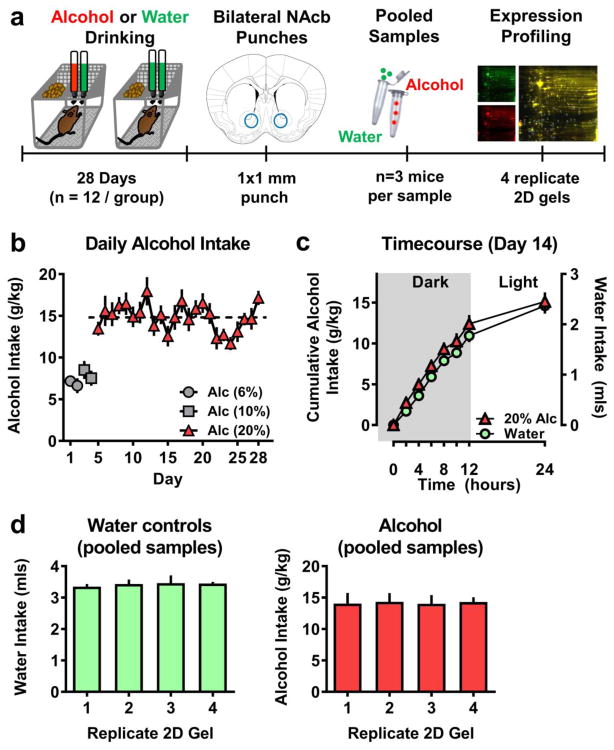
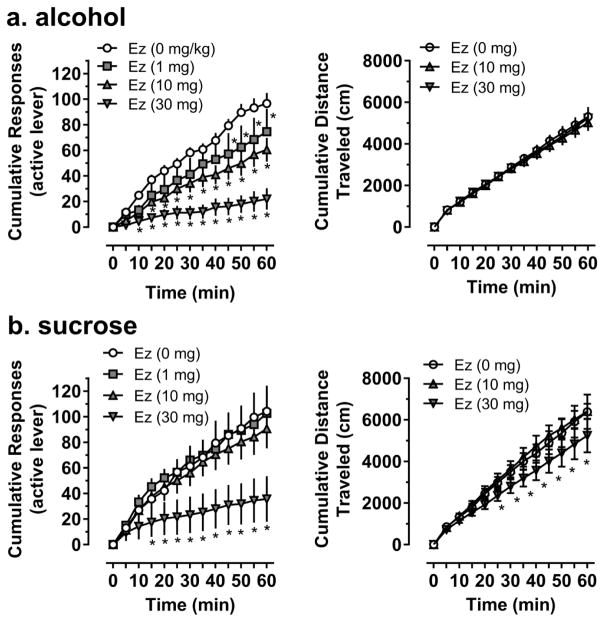
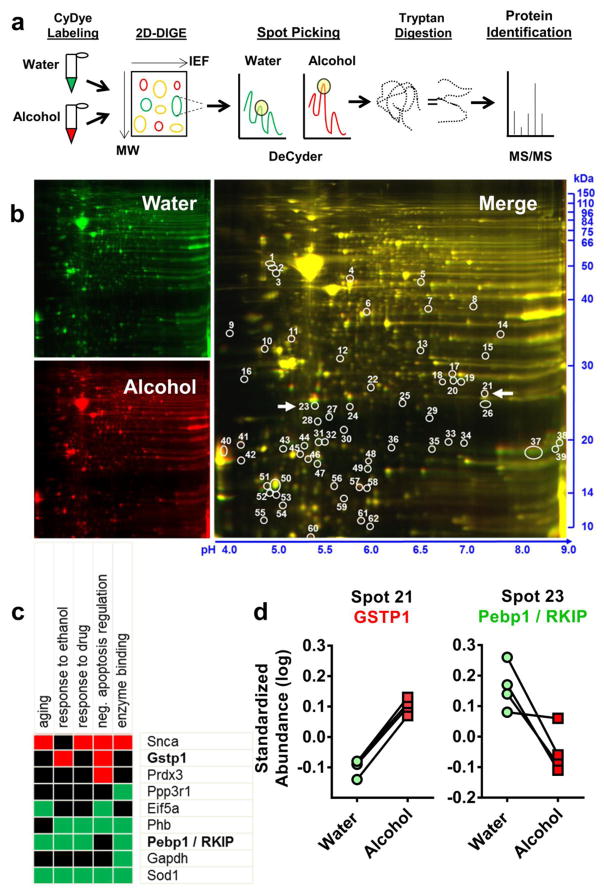
Two-dimensional difference in-gel electrophoresis (2D-DIGE) with matrix-assisted laser desorption ionization tandem time-of-flight (MALDI-TOF/TOF) was used to assess effects of chronic voluntary home-cage (24-h access) alcohol drinking on the NAcb proteome of C57BL/6J mice. To extend these findings to a model of alcohol self-administration and reinforcement, we investigated potential regulation of the positive reinforcing effects of alcohol by the target protein glutathione S-transferase Pi 1 (GSTP1) using a pharmacological inhibition strategy in mice trained to self-administer alcohol or sucrose.
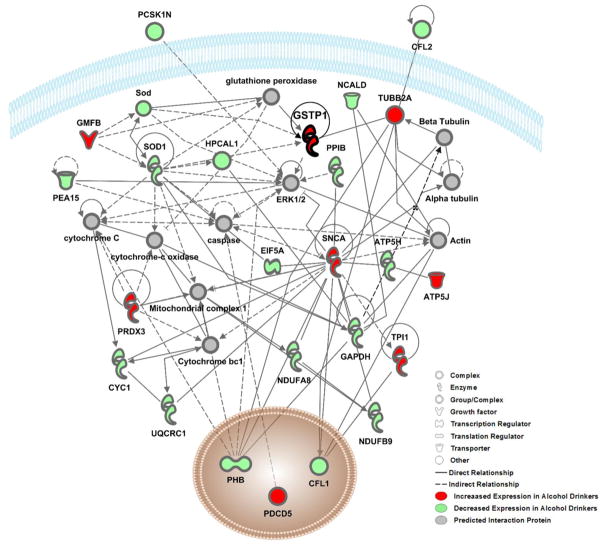
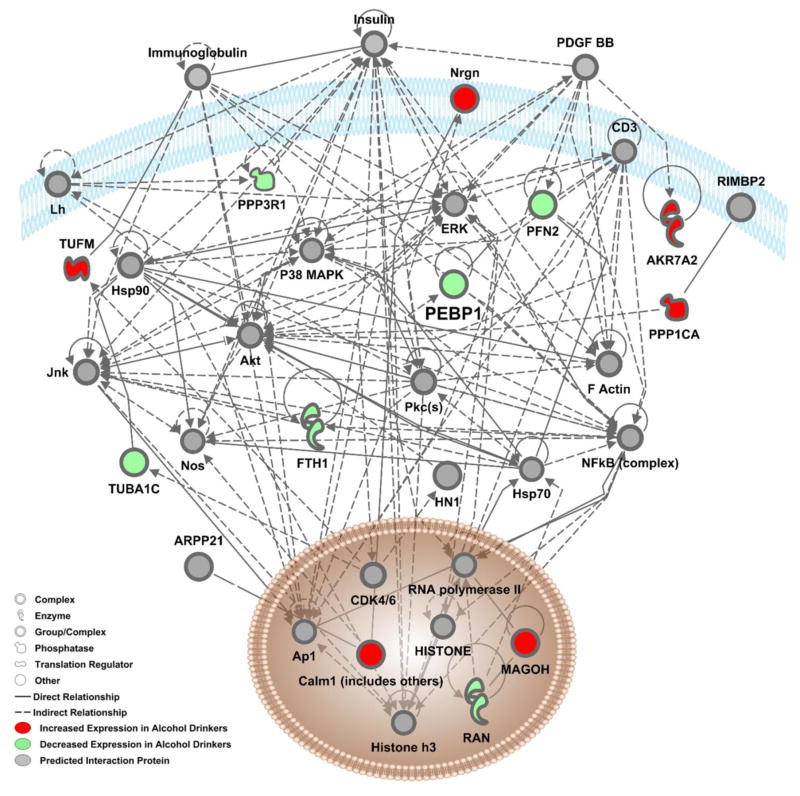
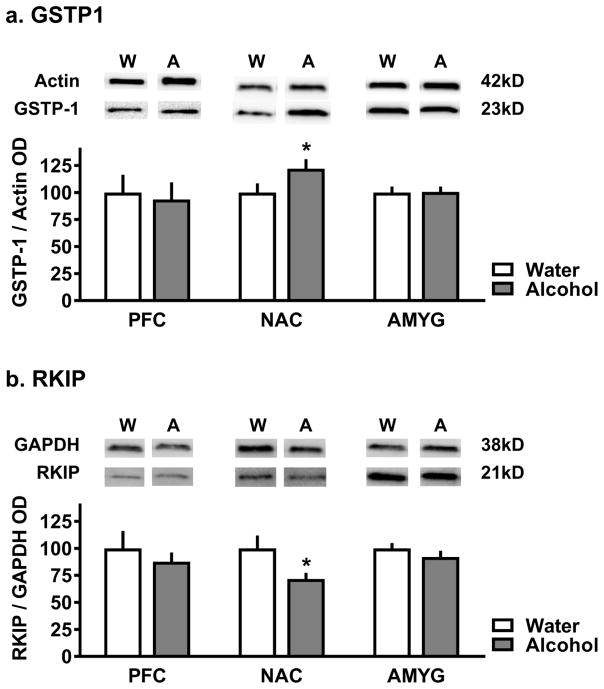
Expression of 52 unique proteins in the NAcb was changed by chronic alcohol drinking relative to water control (23 upregulated, 29 downregulated). Ingenuity Pathway Analysis showed that alcohol drinking altered an array of protein networks associated with neurological and psychological disorders, molecular and cellular functions, and physiological systems and development. DAVID functional annotation analysis identified 9 proteins (SNCA, GSTP1, PRDX3, PPP3R1, EIF5A, PHB, PEBP1/RKIP, GAPDH, AND SOD1) that were significantly overrepresented in a functional cluster that included the Gene Ontology categories "response to alcohol" and "aging." Immunoblots confirmed changes in Pebp1 (RKIP) and GSTP1 in NAcb with no change in amygdala or frontal cortex, suggesting anatomical specificity. Systemic inhibition of GSTP1 with Ezatiostat (0-30 mg/kg, i.p.) dose-dependently reduced the reinforcing effects of alcohol as measured by operant self-administration, in the absence of motor effects. Sucrose self-administration was also reduced but in a manner associated with nonspecific motor inhibition.
Protein expression profiling identified an array of proteins and networks in the NAcb, including GSTP1, that are novel molecular targets of chronic alcohol drinking. Pharmacological inhibition of GSTP1 significantly reduced the positive reinforcing effects of alcohol, which regulate repetitive use and abuse liability. The observation that this protein was both upregulated after chronic drinking and that its inhibition could modulate the reinforcing properties of alcohol suggests that it is a key target for alcohol-related pathologies. Proteomic strategies combined with specific preclinical models has potential to identify and validate novel targets of alcohol that may be useful in the medical management of alcohol addiction.
人们迫切需要发现有效的药物来治疗与酒精成瘾相关的行为病理学,如慢性饮酒。
本临床前研究的目的是评估慢性酒精摄入对伏隔核(NAcb)蛋白质组的影响,以确定和验证药物开发的新靶点。
使用二维差异凝胶电泳(2D-DIGE)结合基质辅助激光解吸电离串联飞行时间(MALDI-TOF/TOF)分析技术,评估慢性自愿性笼内(24 小时摄入)酒精摄入对 C57BL/6J 小鼠 NAcb 蛋白质组的影响。为了将这些发现扩展到酒精自我给药和强化的模型中,我们使用药物抑制策略研究了目标蛋白谷胱甘肽 S-转移酶 Pi 1(GSTP1)对酒精正强化作用的潜在调节作用,该策略用于训练自我给药酒精或蔗糖的小鼠。
与水对照相比,慢性酒精摄入使 NAcb 中 52 种独特蛋白质的表达发生改变(23 种上调,29 种下调)。Ingenuity 通路分析显示,酒精摄入改变了与神经和心理障碍、分子和细胞功能以及生理系统和发育相关的一系列蛋白质网络。DAVID 功能注释分析确定了 9 种蛋白质(SNCA、GSTP1、PRDX3、PPP3R1、EIF5A、PHB、PEBP1/RKIP、GAPDH 和 SOD1),它们在包括“对酒精的反应”和“衰老”在内的功能簇中显著过表达。免疫印迹法证实 NAcb 中 Pebp1(RKIP)和 GSTP1 的变化,而杏仁核或前额叶皮层没有变化,提示具有解剖特异性。Ezatiostat(0-30mg/kg,腹腔注射)的系统 GSTP1 抑制剂量依赖性地降低了操作性自我给药测定的酒精强化作用,而没有运动作用。蔗糖自我给药也减少,但与非特异性运动抑制有关。
蛋白质表达谱分析确定了 NAcb 中包括 GSTP1 在内的一系列蛋白质和网络,它们是慢性酒精摄入的新分子靶点。GSTP1 的药理学抑制显著降低了酒精的正强化作用,从而调节了反复使用和滥用的易感性。观察到这种蛋白质在慢性饮酒后上调,并且其抑制作用可以调节酒精的强化特性,这表明它是酒精相关病理学的关键靶点。结合特定的临床前模型的蛋白质组学策略有可能识别和验证酒精的新靶点,这些靶点可能对酒精成瘾的医学治疗有用。