Huang Chien-Yu, Lee Chia-Hwa, Tu Chao-Chiang, Wu Chih-Hsiung, Huang Ming-Te, Wei Po-Li, Chang Yu-Jia
Department of Surgery, College of Medicine, Taipei Medical University, Taipei, Taiwan.
Division of General Surgery, Department of Surgery, Shuang Ho Hospital, Taipei Medical University, Taipei, Taiwan.
Oncotarget. 2018 Jan 10;9(10):9425-9441. doi: 10.18632/oncotarget.24114. eCollection 2018 Feb 6.
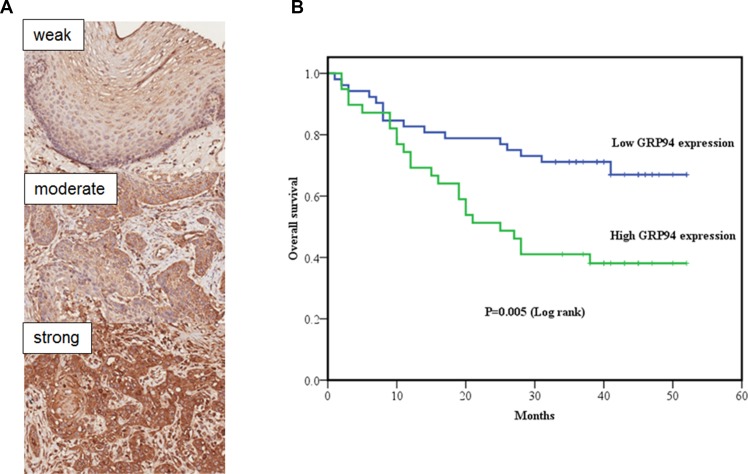
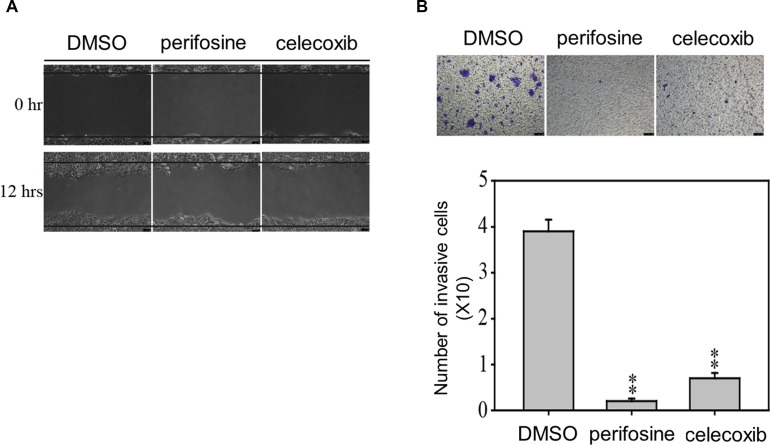
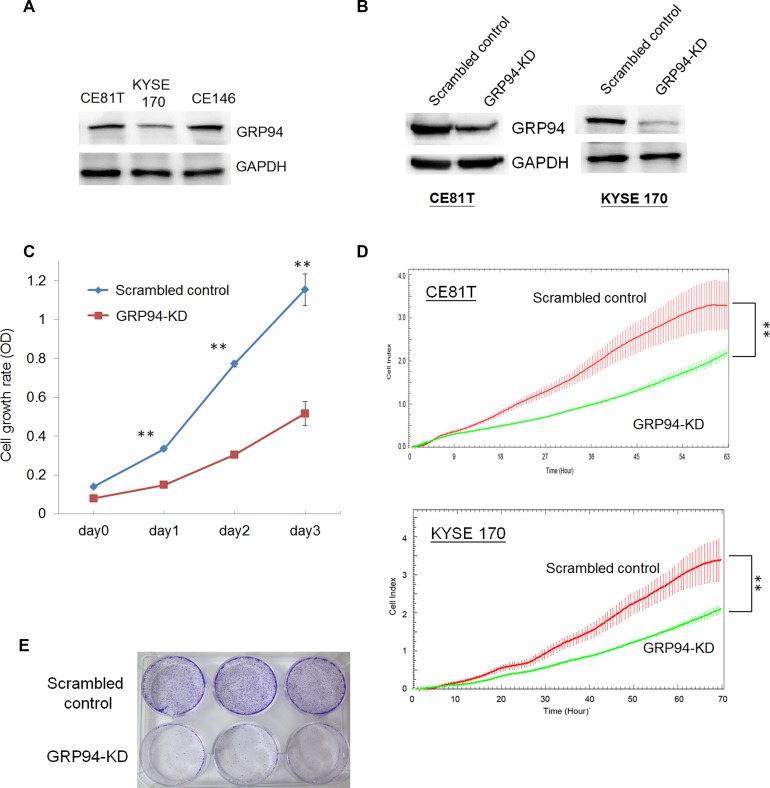
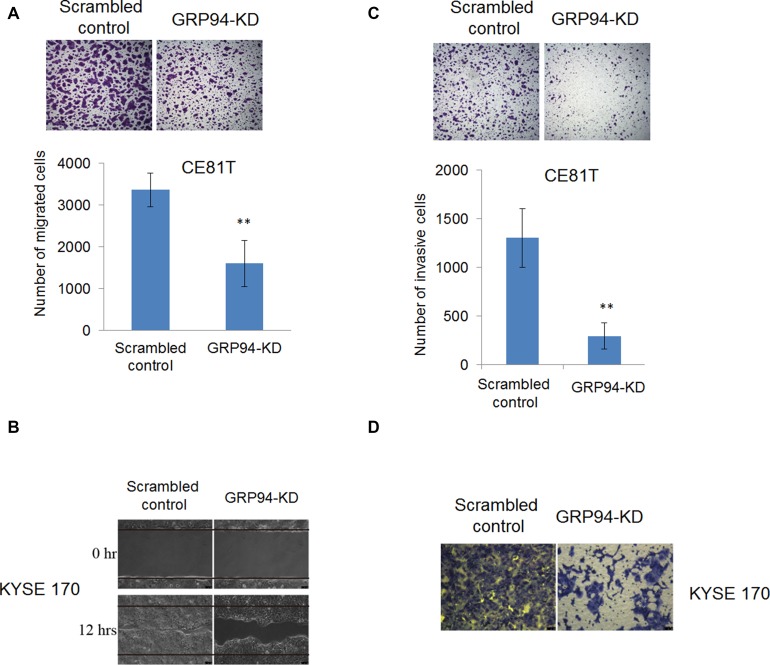
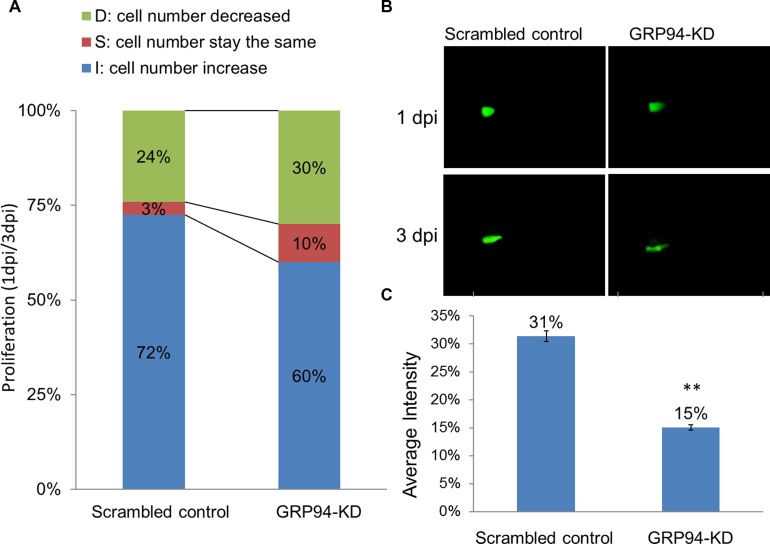
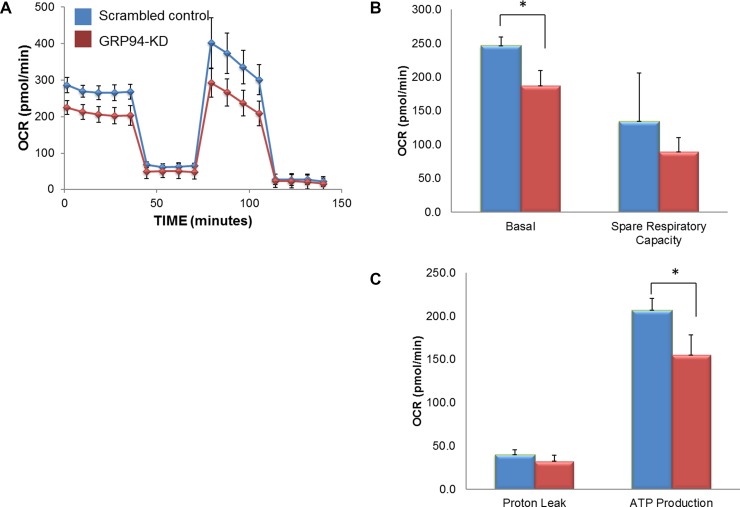
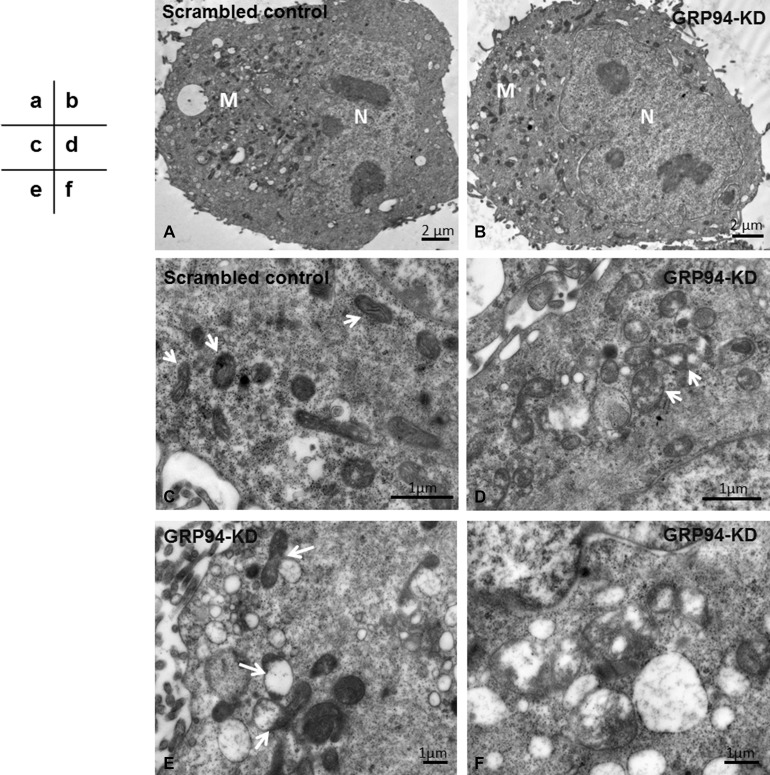
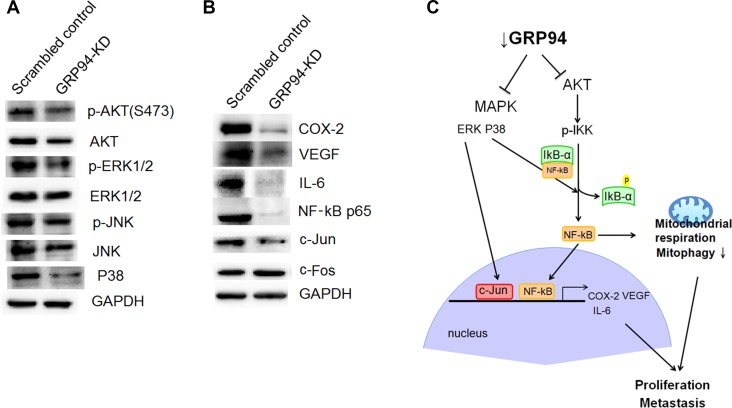
Esophageal cancer is a worldwide health problem with a very poor prognosis. Therefore, new diagnostic biomarkers or therapeutic strategies for identifying and managing esophageal squamous cell carcinoma (ESCC) are urgently needed. Glucose-regulated protein 94 (GRP94) is one of major endoplasmic reticulum-stress response proteins that plays a key role in cancer progression and therapeutic responses. However, the role of GRP94 in ESCC progression and metastasis remains unclear. The tissue array results indicated that higher GRP94 expression levels were associated with lower overall survival and higher lympho-node metastasis. Silencing GRP94 (GRP94-KD) reduced cell proliferation, migration and invasion in ESCC cells. In a xenotransplantation assay, silencing GRP94 reduced cell proliferation in the zebrafish embryo. Transmission electron microscopy revealed impaired mitochondria in GRP94-KD cells, which exhibited reduced basal respiration, spare respiratory capacity and ATP production and increased oxidative damage compared with scrambled control cells. Regarding the molecular mechanism underlying the effects of GRP94 knockdown, we found that silencing GRP94 may reduce the level of NF-kB, c-Jun, p38, IL-6, vascular endothelial growth factor (VEGF), and cyclooxygenase-2 (COX-2) as well as activation of AKT and ERK. In conclusion, our results indicate that silencing GRP94 in ESCC cells suppressed cancer growth and the metastatic potential via mitochondrial functions and NF-kB/COX-2/VEGF in ESCC cells.
食管癌是一个全球性的健康问题,预后很差。因此,迫切需要用于识别和管理食管鳞状细胞癌(ESCC)的新诊断生物标志物或治疗策略。葡萄糖调节蛋白94(GRP94)是主要的内质网应激反应蛋白之一,在癌症进展和治疗反应中起关键作用。然而,GRP94在ESCC进展和转移中的作用仍不清楚。组织芯片结果表明,较高的GRP94表达水平与较低的总生存率和较高的淋巴结转移相关。沉默GRP94(GRP94-KD)可降低ESCC细胞的增殖、迁移和侵袭。在异种移植试验中,沉默GRP94可降低斑马鱼胚胎中的细胞增殖。透射电子显微镜显示GRP94-KD细胞中的线粒体受损,与乱序对照细胞相比,其基础呼吸、备用呼吸能力和ATP产生降低,氧化损伤增加。关于GRP94敲低作用的分子机制,我们发现沉默GRP94可能会降低NF-κB、c-Jun、p38、IL-6、血管内皮生长因子(VEGF)和环氧合酶-2(COX-2)的水平以及AKT和ERK的激活。总之,我们的结果表明,在ESCC细胞中沉默GRP94可通过线粒体功能和ESCC细胞中的NF-κB/COX-2/VEGF抑制癌症生长和转移潜能。