
微小 RNA 是 HIV-1 感染的重要参与者吗?最新研究进展。
Are microRNAs Important Players in HIV-1 Infection? An Update.
机构信息
Center for AIDS Health Disparities Research, Tennessee Center for AIDS Research; Meharry Medical College, Nashville, TN 37208, USA.
Department of Biochemistry and Cancer Biology, Meharry Medical College, Nashville, TN 37208, USA.
出版信息
Viruses. 2018 Mar 3;10(3):110. doi: 10.3390/v10030110.
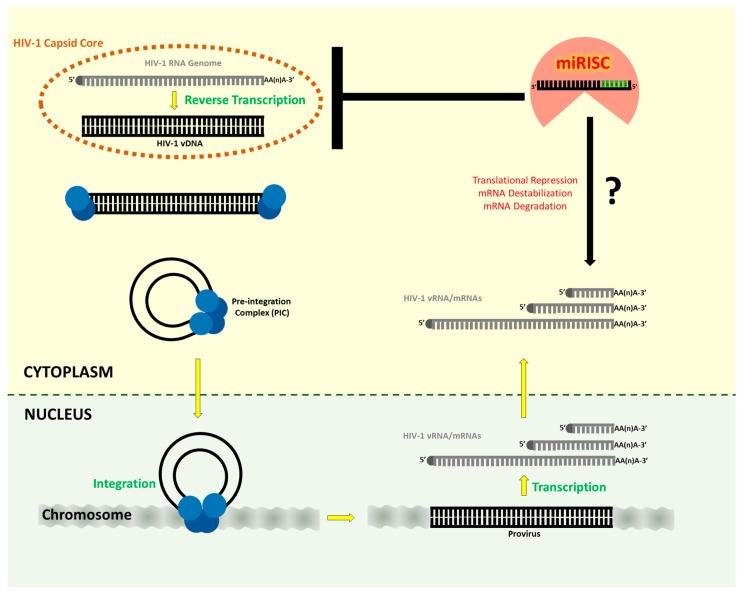
HIV-1 has already claimed over 35 million human lives globally. No curative treatments are currently available, and the only treatment option for over 36 million people currently living with HIV/AIDS are antiretroviral drugs that disrupt the function of virus-encoded proteins. However, such virus-targeted therapeutic strategies are constrained by the ability of the virus to develop drug-resistance. Despite major advances in HIV/AIDS research over the years, substantial knowledge gaps exist in many aspects of HIV-1 replication, especially its interaction with the host. Hence, understanding the mechanistic details of virus-host interactions may lead to novel therapeutic strategies for the prevention and/or management of HIV/AIDS. Notably, unprecedented progress in deciphering host gene silencing processes mediated by several classes of cellular small non-coding RNAs (sncRNA) presents a promising and timely opportunity for developing non-traditional antiviral therapeutic strategies. Cellular microRNAs (miRNA) belong to one such important class of sncRNAs that regulate protein synthesis. Evidence is mounting that cellular miRNAs play important roles in viral replication, either usurped by the virus to promote its replication or employed by the host to control viral infection by directly targeting the viral genome or by targeting cellular proteins required for productive virus replication. In this review, we summarize the findings to date on the role of miRNAs in HIV-1 biology.
HIV-1 已在全球范围内导致超过 3500 万人死亡。目前尚无治愈方法,全球超过 3600 万艾滋病毒携带者的唯一治疗选择是抗逆转录病毒药物,这些药物会破坏病毒编码蛋白的功能。然而,这种针对病毒的治疗策略受到病毒产生耐药性的能力的限制。尽管多年来在 HIV/AIDS 研究方面取得了重大进展,但 HIV-1 复制的许多方面,尤其是其与宿主的相互作用,仍然存在大量知识空白。因此,了解病毒-宿主相互作用的机制细节可能会为预防和/或管理 HIV/AIDS 提供新的治疗策略。值得注意的是,在揭示几类细胞小非编码 RNA(sncRNA)介导的宿主基因沉默过程方面取得了前所未有的进展,为开发非传统抗病毒治疗策略提供了一个有希望和及时的机会。细胞 microRNA(miRNA)属于一类重要的 sncRNA,可调节蛋白质合成。越来越多的证据表明,细胞 miRNA 在病毒复制中发挥重要作用,病毒可以利用它们来促进自身复制,或者宿主可以通过直接针对病毒基因组或靶向病毒复制所需的细胞蛋白来控制病毒感染,从而发挥作用。在这篇综述中,我们总结了迄今为止关于 miRNA 在 HIV-1 生物学中的作用的研究结果。


 Zotero 插件