Department of Evolutionary Biology and Environmental Studies, University of Zurich, Winterthurerstrasse 190, 8057 Zurich, Switzerland
Department of Ecology and Environmental Science, Umeå University, 90187 Umeå, Sweden.
Proc Biol Sci. 2018 Mar 14;285(1874). doi: 10.1098/rspb.2017.2550.
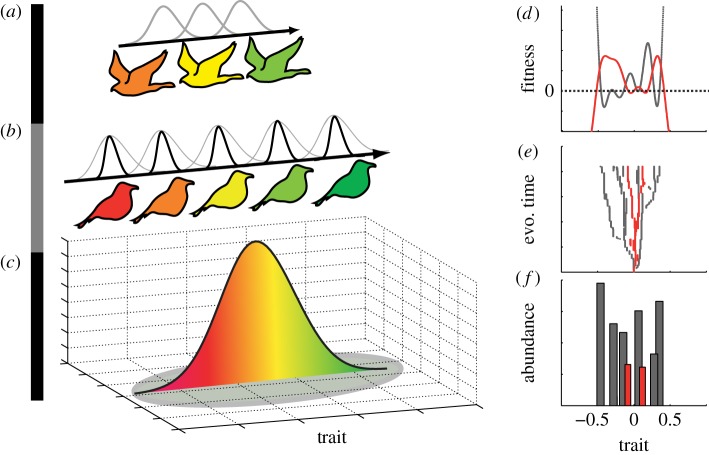
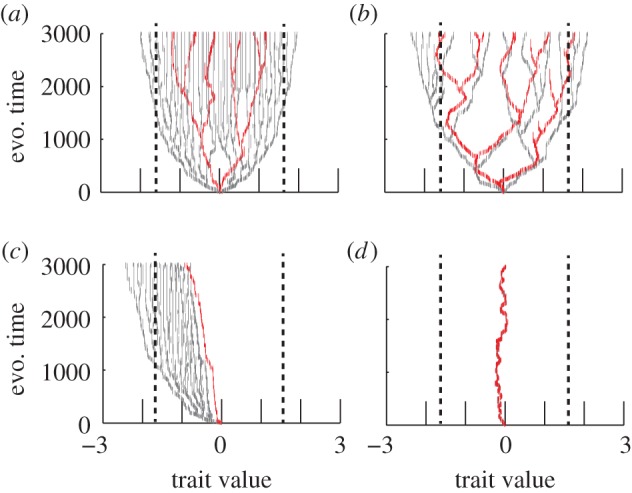
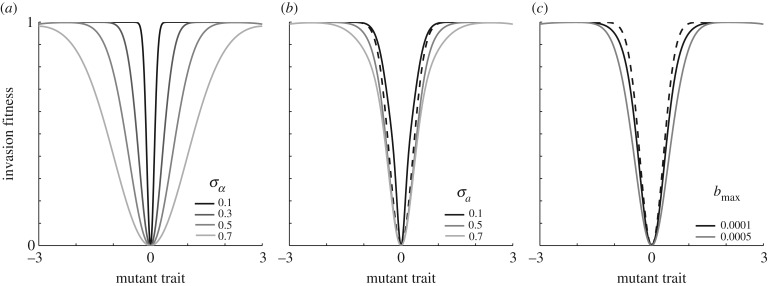
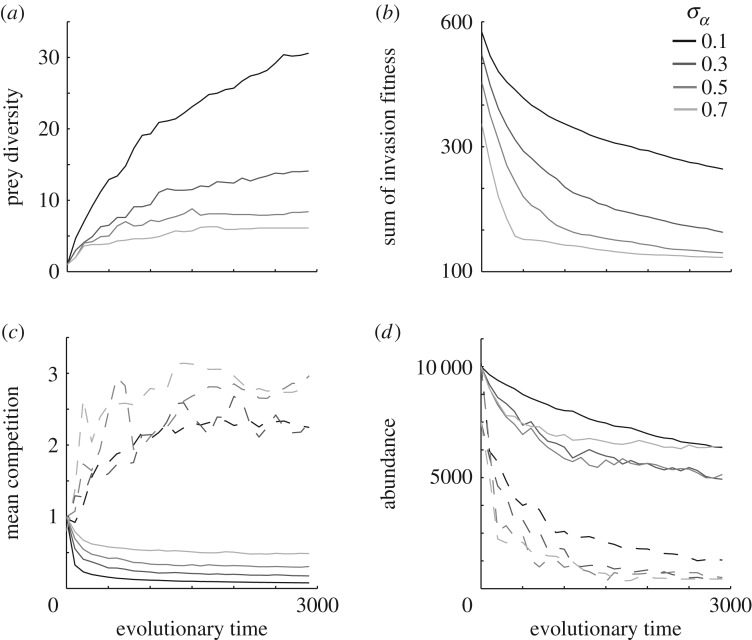
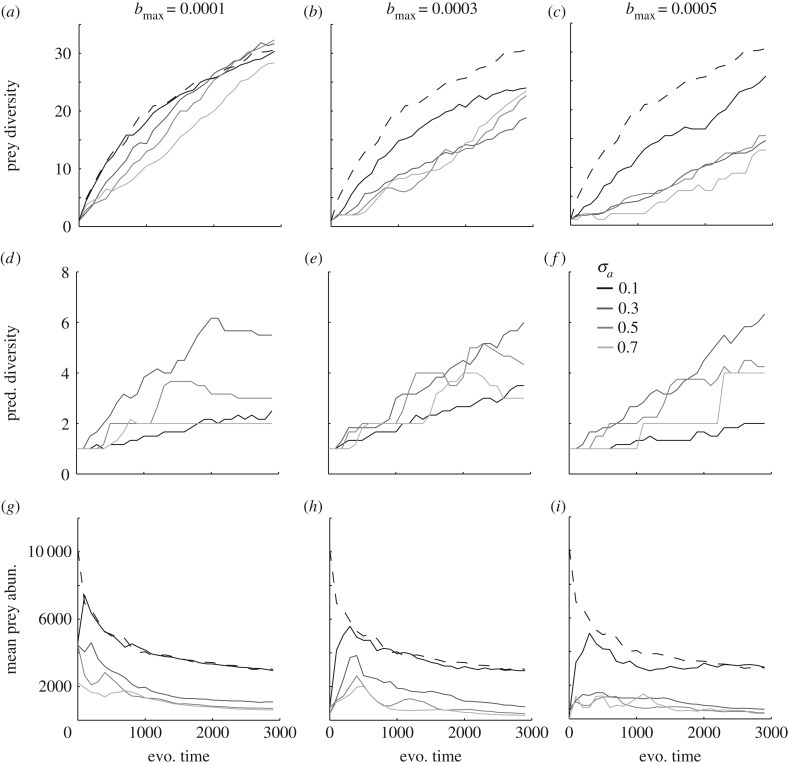
Much of life's diversity has arisen through ecological opportunity and adaptive radiations, but the mechanistic underpinning of such diversification is not fully understood. Competition and predation can affect adaptive radiations, but contrasting theoretical and empirical results show that they can both promote and interrupt diversification. A mechanistic understanding of the link between microevolutionary processes and macroevolutionary patterns is thus needed, especially in trophic communities. Here, we use a trait-based eco-evolutionary model to investigate the mechanisms linking competition, predation and adaptive radiations. By combining available micro-evolutionary theory and simulations of adaptive radiations we show that intraspecific competition is crucial for diversification as it induces disruptive selection, in particular in early phases of radiation. The diversification rate is however decreased in later phases owing to interspecific competition as niche availability, and population sizes are decreased. We provide new insight into how predation tends to have a negative effect on prey diversification through decreased population sizes, decreased disruptive selection and through the exclusion of prey from parts of niche space. The seemingly disparate effects of competition and predation on adaptive radiations, listed in the literature, may thus be acting and interacting in the same adaptive radiation at different relative strength as the radiation progresses.
生命的多样性很大程度上是通过生态机遇和适应性辐射产生的,但这种多样化的机械基础还不完全清楚。竞争和捕食会影响适应性辐射,但对比理论和实证结果表明,它们既可以促进也可以中断多样化。因此,需要有一种机制上的理解,将微观进化过程与宏观进化模式联系起来,特别是在营养社区中。在这里,我们使用基于特征的生态进化模型来研究连接竞争、捕食和适应性辐射的机制。通过结合可用的微观进化理论和适应性辐射的模拟,我们表明种内竞争对于多样化至关重要,因为它会引起破坏性选择,特别是在辐射的早期阶段。然而,由于种间竞争导致生态位可用性和种群大小减少,多样化率在后期阶段会降低。我们提供了新的见解,即捕食如何通过减少种群数量、减少破坏性选择以及将猎物排斥在部分生态位空间之外,对猎物的多样化产生负面影响。因此,文献中列出的竞争和捕食对适应性辐射的看似不同的影响,可能会随着辐射的进行,在不同的相对强度下在同一适应性辐射中发挥作用和相互作用。