Hwang Ae-Rang, Nam Ju-Ock, Kang Young Jin
Department of Pharmacology, College of Medicine, Yeungnam University, Daegu 42415, Korea.
School of Food Science and Biotechnology, Kyungpook National University, Daegu 41566, Korea.
Korean J Physiol Pharmacol. 2018 Mar;22(2):193-201. doi: 10.4196/kjpp.2018.22.2.193. Epub 2018 Feb 23.
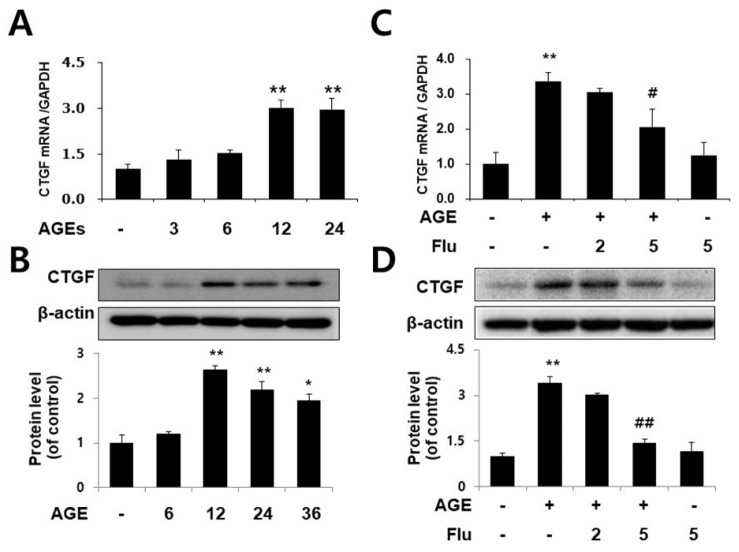
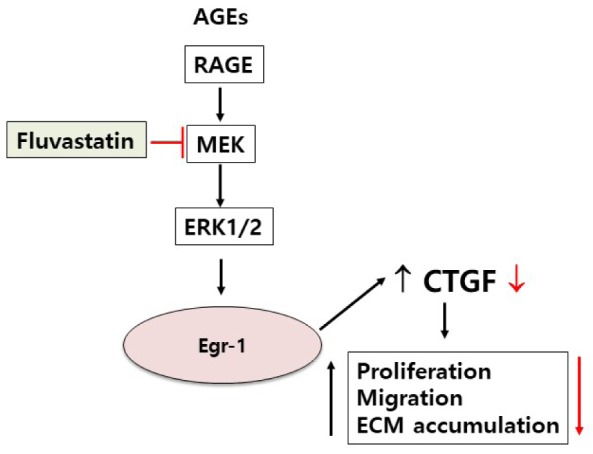
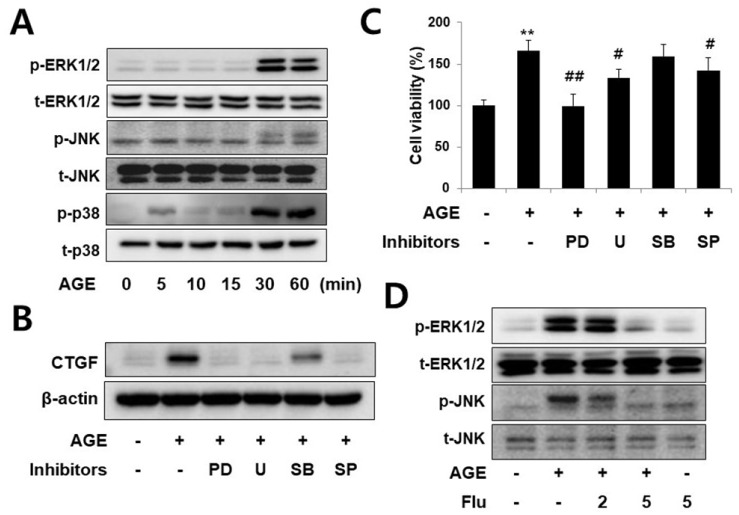
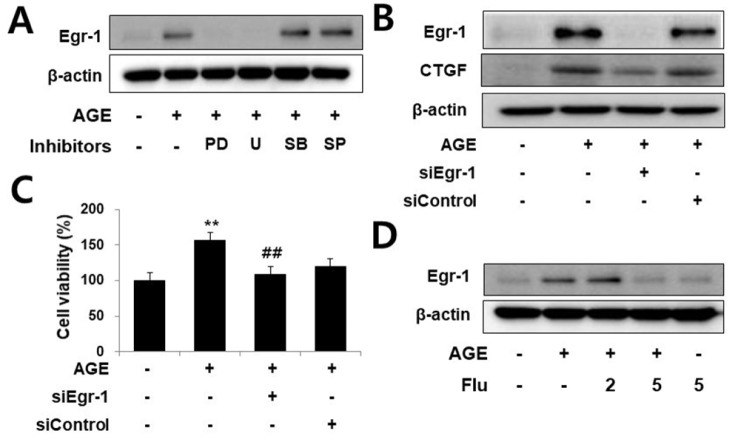
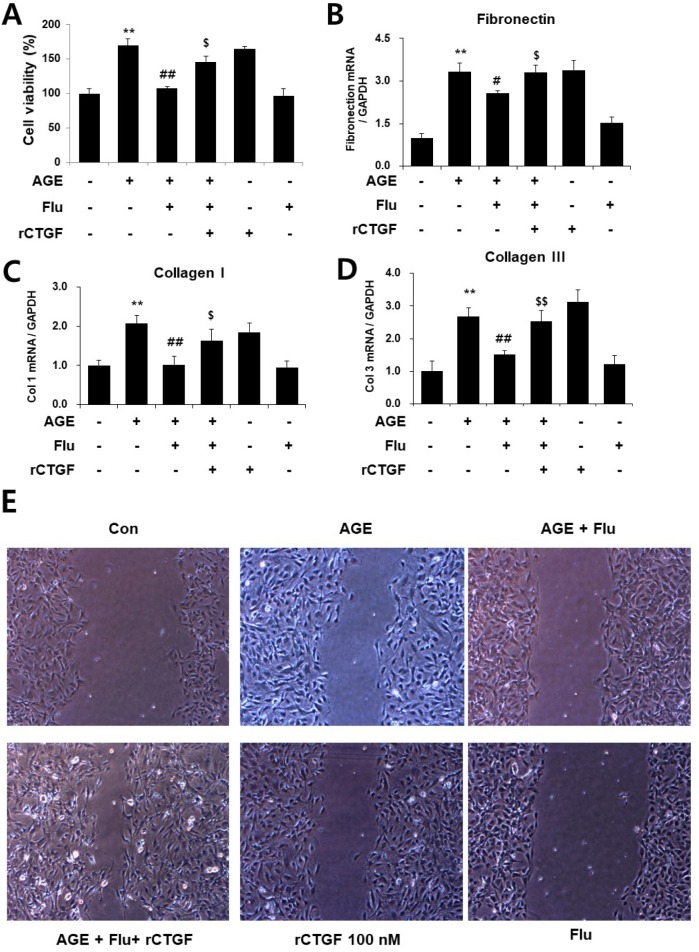
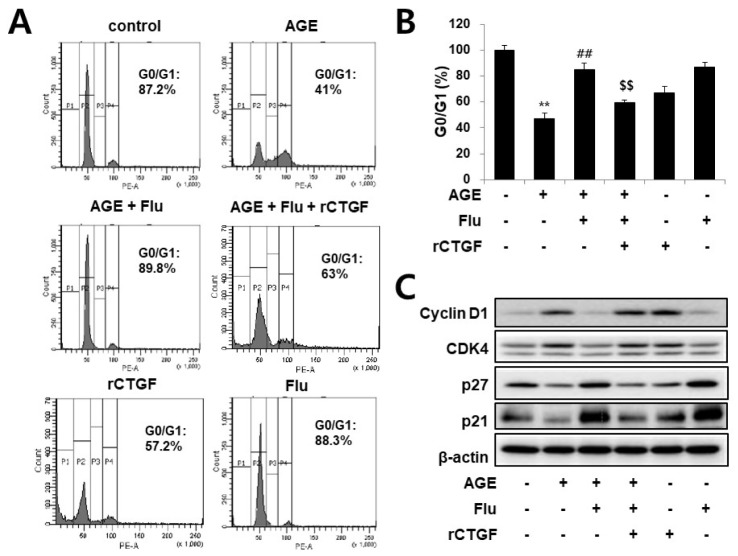
Connective tissue growth factor (CTGF) is a novel fibrotic mediator, which is considered to mediate fibrosis through extracellular matrix (ECM) synthesis in diabetic cardiovascular complications. Statins have significant immunomodulatory effects and reduce vascular injury. We therefore examined whether fluvastatin has anti-fibrotic effects in vascular smooth muscle cells (VSMCs) and elucidated its putative transduction signals. We show that advanced glycation end products (AGEs) stimulated CTGF mRNA and protein expression in a time-dependent manner. AGE-induced CTGF expression was mediated via ERK1/2, JNK, and Egr-1 pathways, but not p38; consequently, cell proliferation and migration and ECM accumulation were regulated by CTGF signaling pathway. AGE-stimulated VSMC proliferation, migration, and ECM accumulation were blocked by fluvastatin. However, the inhibitory effect of fluvastatin was restored by administration of CTGF recombinant protein. AGE-induced VSMC proliferation was dependent on cell cycle arrest, thereby increasing G1/G0 phase. Fluvastatin repressed cell cycle regulatory genes cyclin D1 and Cdk4 and augmented cyclin-dependent kinase inhibitors p27 and p21 in AGE-induced VSMCs. Taken together, fluvastatin suppressed AGE-induced VSMC proliferation, migration, and ECM accumulation by targeting CTGF signaling mechanism. These findings might be evidence for CTGF as a potential therapeutic target in diabetic vasculature complication.
结缔组织生长因子(CTGF)是一种新型纤维化介质,被认为在糖尿病心血管并发症中通过细胞外基质(ECM)合成介导纤维化。他汀类药物具有显著的免疫调节作用,并可减轻血管损伤。因此,我们研究了氟伐他汀在血管平滑肌细胞(VSMC)中是否具有抗纤维化作用,并阐明其可能的转导信号。我们发现晚期糖基化终末产物(AGEs)以时间依赖性方式刺激CTGF mRNA和蛋白表达。AGE诱导的CTGF表达通过ERK1/2、JNK和Egr-1途径介导,但不通过p38;因此,细胞增殖、迁移和ECM积累受CTGF信号通路调节。AGE刺激的VSMC增殖、迁移和ECM积累被氟伐他汀阻断。然而,给予CTGF重组蛋白可恢复氟伐他汀的抑制作用。AGE诱导的VSMC增殖依赖于细胞周期停滞,从而增加G1/G0期。氟伐他汀抑制AGE诱导的VSMC中细胞周期调节基因细胞周期蛋白D1和细胞周期蛋白依赖性激酶4(Cdk4),并增加细胞周期蛋白依赖性激酶抑制剂p27和p21。综上所述,氟伐他汀通过靶向CTGF信号机制抑制AGE诱导的VSMC增殖、迁移和ECM积累。这些发现可能为CTGF作为糖尿病血管并发症潜在治疗靶点提供证据。