Centre de Recherche en Transplantation et Immunologie UMR1064, INSERM, Université de Nantes, Nantes, France.
Institut de Transplantation Urologie Nephrologie (ITUN), CHU Nantes, Nantes, France.
Front Immunol. 2018 Feb 19;9:274. doi: 10.3389/fimmu.2018.00274. eCollection 2018.
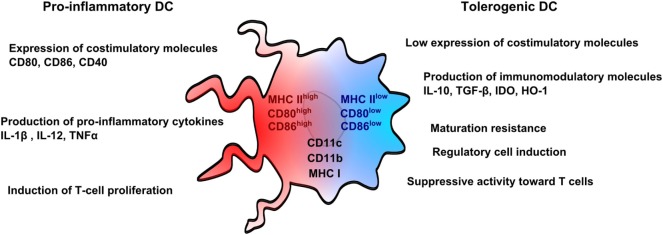
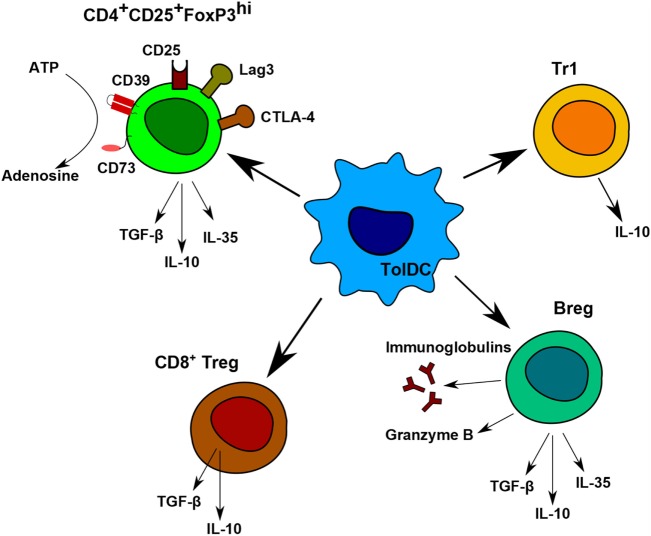
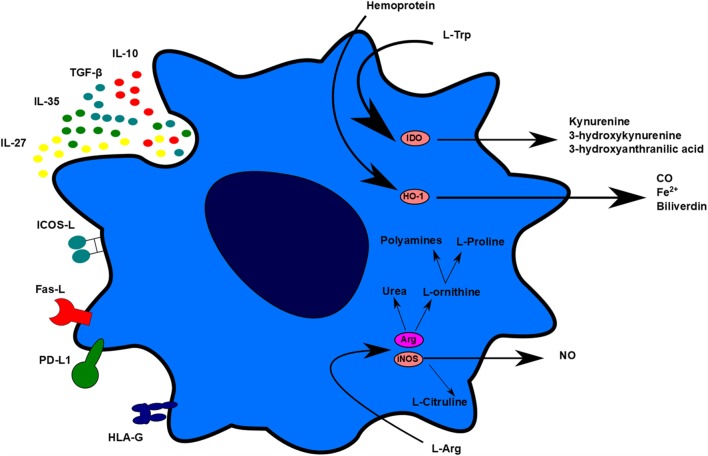
Over the past century, solid organ transplantation has been improved both at a surgical and postoperative level. However, despite the improvement in efficiency, safety, and survival, we are still far from obtaining full acceptance of all kinds of allograft in the absence of concomitant treatments. Today, transplanted patients are treated with immunosuppressive drugs (IS) to minimize immunological response in order to prevent graft rejection. Nevertheless, the lack of specificity of IS leads to an increase in the risk of cancer and infections. At this point, cell therapies have been shown as a novel promising resource to minimize the use of IS in transplantation. The main strength of cell therapy is the opportunity to generate allograft-specific tolerance, promoting in this way long-term allograft survival. Among several other regulatory cell types, tolerogenic monocyte-derived dendritic cells (Tol-MoDCs) appear to be an interesting candidate for cell therapy due to their ability to perform specific antigen presentation and to polarize immune response to immunotolerance. In this review, we describe the characteristics and the mechanisms of action of both human Tol-MoDCs and rodent tolerogenic bone marrow-derived DCs (Tol-BMDCs). Furthermore, studies performed in transplantation models in rodents and non-human primates corroborate the potential of Tol-BMDCs for immunoregulation. In consequence, Tol-MoDCs have been recently evaluated in sundry clinical trials in autoimmune diseases and shown to be safe. In addition to autoimmune diseases clinical trials, Tol-MoDC is currently used in the first phase I/II clinical trials in transplantation. Translation of Tol-MoDCs to clinical application in transplantation will also be discussed in this review.
在过去的一个世纪里,实体器官移植在手术和术后水平都得到了改善。然而,尽管在效率、安全性和存活率方面都有所提高,但在没有伴随治疗的情况下,我们仍然远未获得对各种同种异体移植物的完全接受。如今,移植患者接受免疫抑制药物(IS)治疗,以最大限度地减少免疫反应,从而防止移植物排斥。然而,IS 的缺乏特异性导致癌症和感染风险增加。在这一点上,细胞疗法已被证明是一种有前途的新资源,可以最大限度地减少移植中 IS 的使用。细胞治疗的主要优势在于有机会产生同种异体特异性耐受,从而促进长期同种异体移植物存活。在其他几种调节性细胞类型中,耐受型单核细胞来源的树突状细胞(Tol-MoDC)由于其具有进行特异性抗原呈递的能力,并能将免疫反应极化至免疫耐受,因此似乎是细胞治疗的一个有趣候选者。在这篇综述中,我们描述了人类 Tol-MoDC 和啮齿动物耐受型骨髓来源的树突状细胞(Tol-BMDC)的特征和作用机制。此外,在啮齿动物和非人类灵长类动物移植模型中进行的研究证实了 Tol-BMDC 在免疫调节方面的潜力。因此,Tol-MoDC 最近已在各种自身免疫性疾病的临床试验中进行了评估,并被证明是安全的。除了自身免疫性疾病临床试验外,Tol-MoDC 目前还用于移植的 I/II 期临床试验。本文还将讨论将 Tol-MoDC 转化为移植中的临床应用。