Fabis-Strobin Anna, Topol Miroslaw, Fabis Jaroslaw, Niedzielski Kryspin, Podgorski Michal, Strobin Lukasz, Polguj Michal
Clinic of Orthopaedic and Traumatology, Polish Mother's Memorial Hospital Research Institute, Rzgowska 281/289, 93-338, Lodz, Poland.
Department of Normal and Clinical Anatomy, Interfaculty Chair of Anatomy and Histology, Medical University of Łódź, Narutowicza 60, 90-136, Lodz, Poland.
Surg Radiol Anat. 2018 Mar;40(3):333-341. doi: 10.1007/s00276-018-1996-2. Epub 2018 Mar 9.
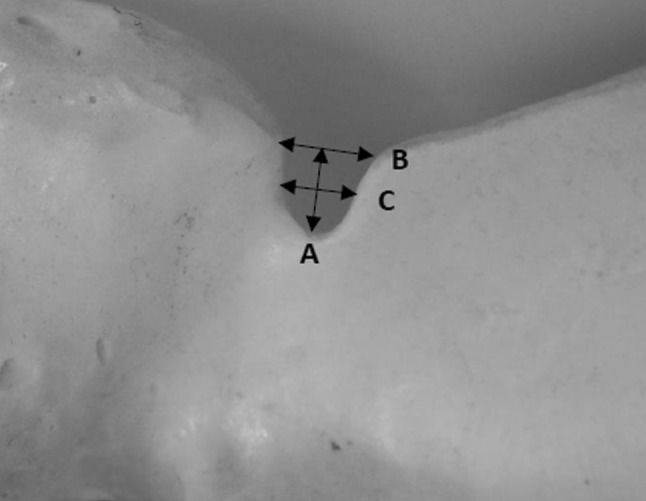
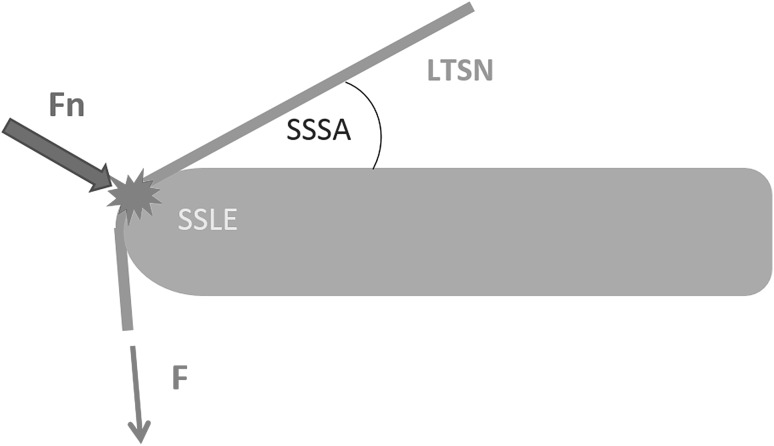
Although the pathomechanism of isolated infraspinatus atrophy (ISA) in throwing sports is known to be traction, it is unclear why only some players are affected. One likely explanation is that the infraspinatus pulling force exerted by its contracture generate the compressive resultant component force (Fn) compressing the lateral trunk of the suprascapular nerve (LTSN) against the edge of scapular spine. This paper makes two key assumptions (1) the course of LTSN in relation to the scapular spine, defined as the suprascapular-scapular spine angle (SSSA) is the key individual anatomical feature influencing the Fn magnitude, and thus potentially ISA development (2) SSSA is correlated with scapular notch type.
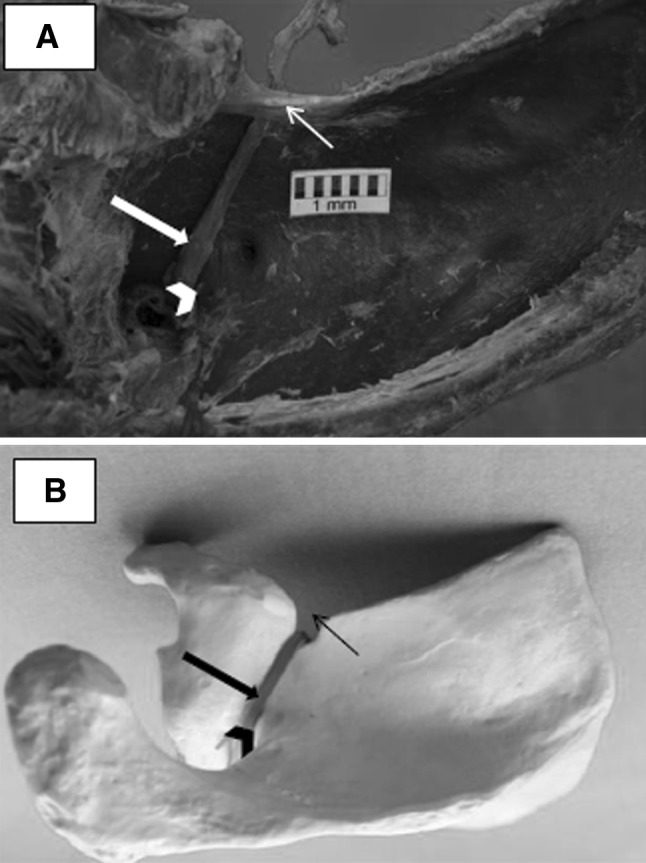
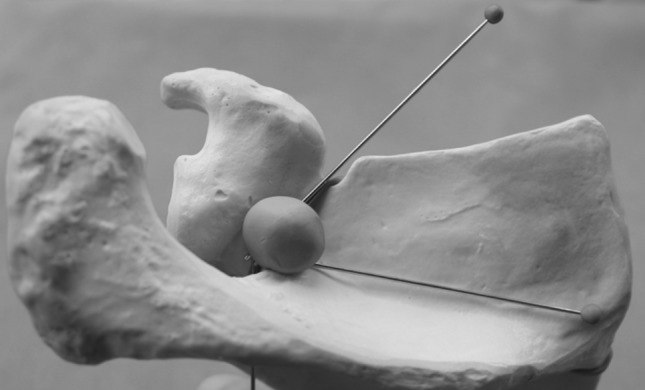
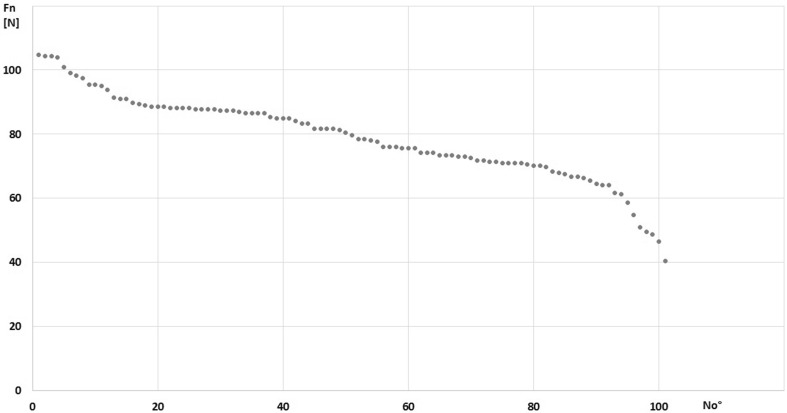
The bone landmarks of the LTSN course were identified in 18 formalin-fixed cadaveric shoulders, and the SSSA was measured in 101 dry scapulae. The correlation between the SSSA and suprascapular notch type was evaluated. The Fn value was simulated mathematically based on the values of the SSSA of 101 dry scapulae and the prevalence of ISA in chosen throwing sports, as given in the literature: i.e., beach volleyball - 34% (group A1 - 34%; group A2-remaining 66% of scapulae) and tennis - 52% (group B1 - 52%; group B2-remaining 48% of scapulae).
The mean SSSA value was 44.57° (± 7.9) and Fn 79 N (± 13.1). No statistically significant correlation was revealed between suprascapular notch type and SSSA. Groups A1 and B1 possessed significantly lower SSSA values (p < 0.000) and significantly higher Fn magnitude (p < 0.000) than groups A2 and B2 respectively. The average difference of Fn was 28.1% between group A1 and A2 and 31% between group B1 and B2.
The SSSA has a wide range of values depending on the individual: the angle influencing the magnitude of the compressive resultant force Fn on the LTSN at the lateral edge of the scapular spine via contraction of the infraspinatus muscle. The prevalence of ISA in throwing sports may be correlated with the SSSA of the LTSN. However, further combined clinical, MRI or/and CT studies are needed to confirm this.
尽管已知投掷运动中孤立性冈下肌萎缩(ISA)的病理机制是牵引,但尚不清楚为何只有部分运动员会受到影响。一种可能的解释是,冈下肌挛缩产生的拉力会产生压缩合力分量(Fn),将肩胛上神经外侧干(LTSN)压向肩胛冈边缘。本文提出两个关键假设:(1)LTSN相对于肩胛冈的走行,定义为肩胛上-肩胛冈角(SSSA),是影响Fn大小的关键个体解剖特征,因此可能影响ISA的发展;(2)SSSA与肩胛切迹类型相关。
在18个福尔马林固定的尸体肩部中确定LTSN走行的骨标志,并在101个干燥肩胛骨中测量SSSA。评估SSSA与肩胛切迹类型之间的相关性。根据101个干燥肩胛骨的SSSA值和文献中给出的选定投掷运动中ISA的患病率,通过数学模拟Fn值:即沙滩排球——34%(A1组——34%;A2组——其余66%的肩胛骨)和网球——52%(B1组——52%;B2组——其余48%的肩胛骨)。
SSSA的平均数值为44.57°(±7.9),Fn为79 N(±13.1)。肩胛切迹类型与SSSA之间未显示出统计学上的显著相关性。A1组和B1组的SSSA值分别显著低于A2组和B2组(p<0.000),Fn大小则显著高于A2组和B2组(p<0.000)。A1组和A2组之间Fn的平均差异为28.1%,B1组和B2组之间为31%。
SSSA因个体不同而有广泛的数值范围:该角度通过冈下肌收缩影响肩胛冈外侧边缘对LTSN的压缩合力Fn的大小。投掷运动中ISA的患病率可能与LTSN的SSSA相关。然而,需要进一步结合临床、MRI或/和CT研究来证实这一点。