Center for Sleep and Circadian Neurobiology, Perelman School of Medicine at the University of Pennsylvania, Philadelphia, PA 19104, USA; Chronobiology Program at Penn and Howard Hughes Medical Institute, Perelman School of Medicine at the University of Pennsylvania, Philadelphia, PA 19104, USA.
Chronobiology Program at Penn and Howard Hughes Medical Institute, Perelman School of Medicine at the University of Pennsylvania, Philadelphia, PA 19104, USA.
Cell. 2018 Mar 22;173(1):130-139.e10. doi: 10.1016/j.cell.2018.02.017. Epub 2018 Mar 8.
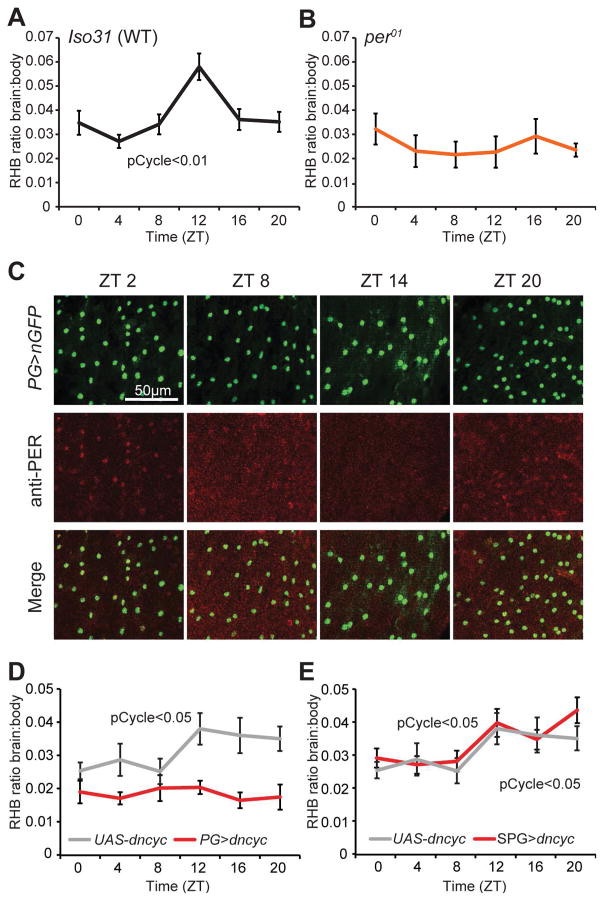
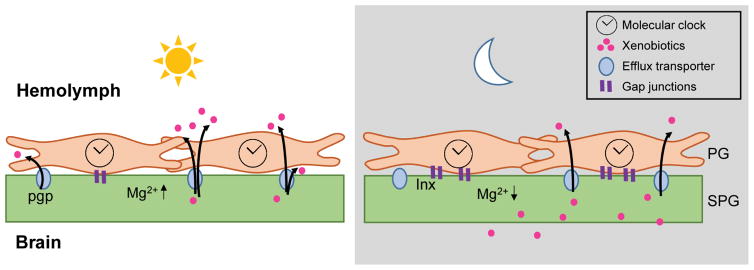
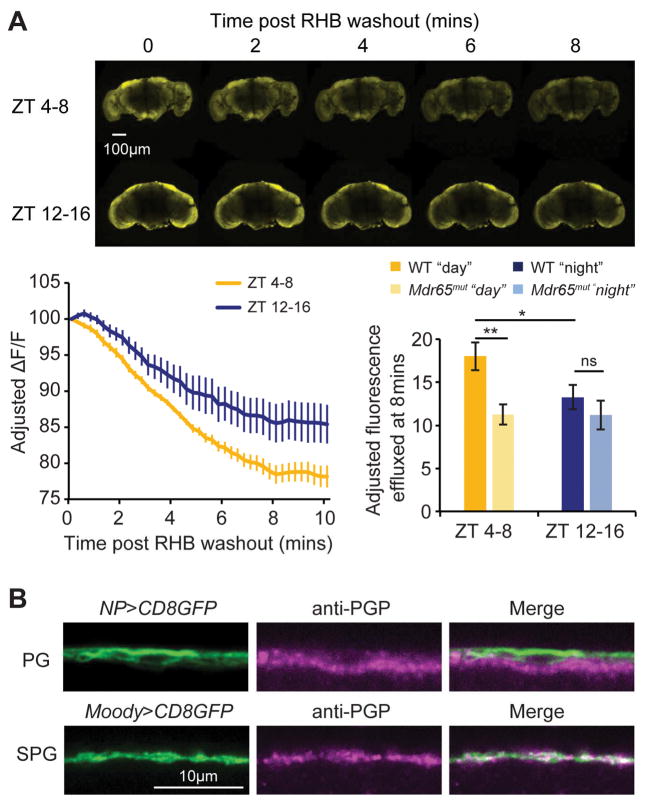
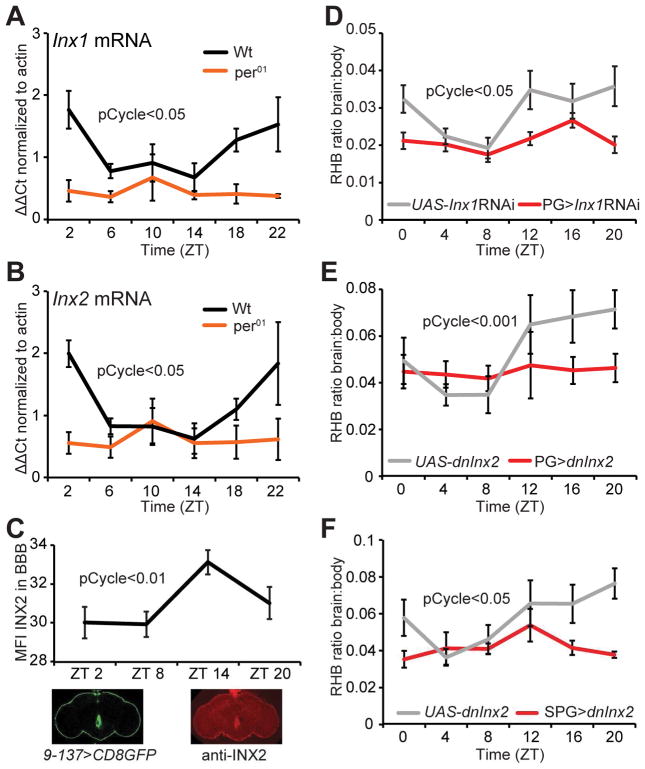
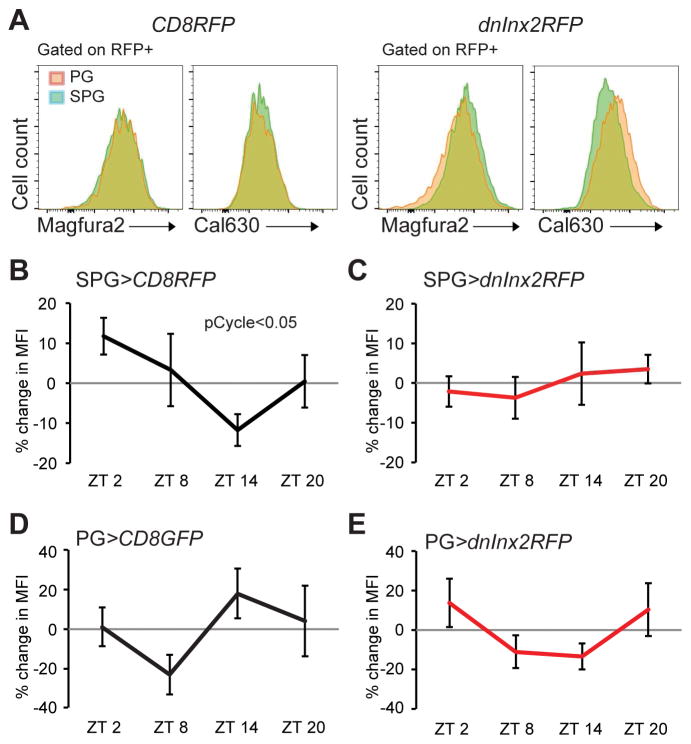
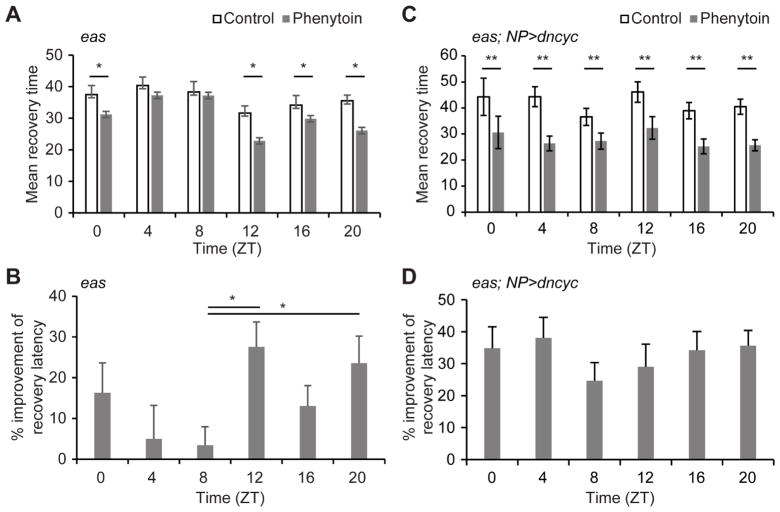
Endogenous circadian rhythms are thought to modulate responses to external factors, but mechanisms that confer time-of-day differences in organismal responses to environmental insults/therapeutic treatments are poorly understood. Using a xenobiotic, we find that permeability of the Drosophila "blood"-brain barrier (BBB) is higher at night. The permeability rhythm is driven by circadian regulation of efflux and depends on a molecular clock in the perineurial glia of the BBB, although efflux transporters are restricted to subperineurial glia (SPG). We show that transmission of circadian signals across the layers requires cyclically expressed gap junctions. Specifically, during nighttime, gap junctions reduce intracellular magnesium ([Mg]i), a positive regulator of efflux, in SPG. Consistent with lower nighttime efflux, nighttime administration of the anti-epileptic phenytoin is more effective at treating a Drosophila seizure model. These findings identify a novel mechanism of circadian regulation and have therapeutic implications for drugs targeted to the central nervous system.
内源性昼夜节律被认为调节对外部因素的反应,但昼夜节律对机体对外界刺激/治疗反应的差异的机制还知之甚少。本文使用一种外源性物质,发现果蝇“血脑”屏障(BBB)的通透性在夜间更高。渗透性节律是由昼夜节律对流出的调节驱动的,并且依赖于 BBB 神经周细胞中的分子钟,尽管流出转运体仅限于神经周细胞下(SPG)。本文表明,跨层传递昼夜信号需要周期性表达的缝隙连接。具体来说,在夜间,缝隙连接会降低 SPG 中的细胞内镁([Mg]i),这是流出的正调节剂。与夜间流出较低一致,夜间给予抗癫痫苯妥英钠治疗果蝇癫痫模型更有效。这些发现确定了昼夜节律调节的新机制,并且对靶向中枢神经系统的药物具有治疗意义。