Greimler Josef, Schulze Christian H, López Sepúlveda Patricio, Novoa Patricio, Gatica Alejandro, Reiter Karl, Wessely Johannes, Baeza Carlos, Peñailillo Patricio, Ruiz Eduardo, Stuessy Tod
Department of Botany and Biodiversity Research University of Vienna Vienna Austria.
Departamento de Botánica Universidad de Concepción Concepción Chile.
Ecol Evol. 2018 Feb 1;8(5):2527-2533. doi: 10.1002/ece3.3882. eCollection 2018 Mar.
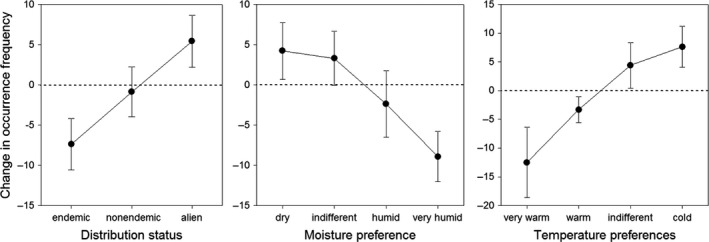
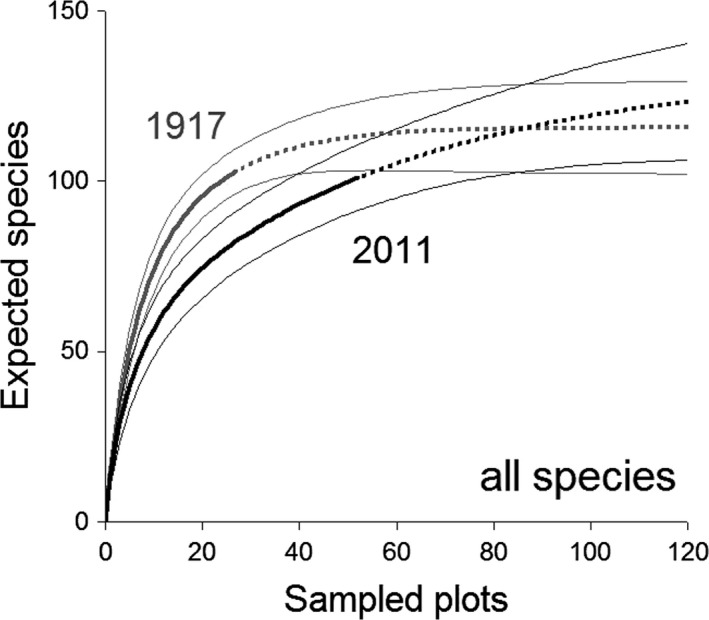
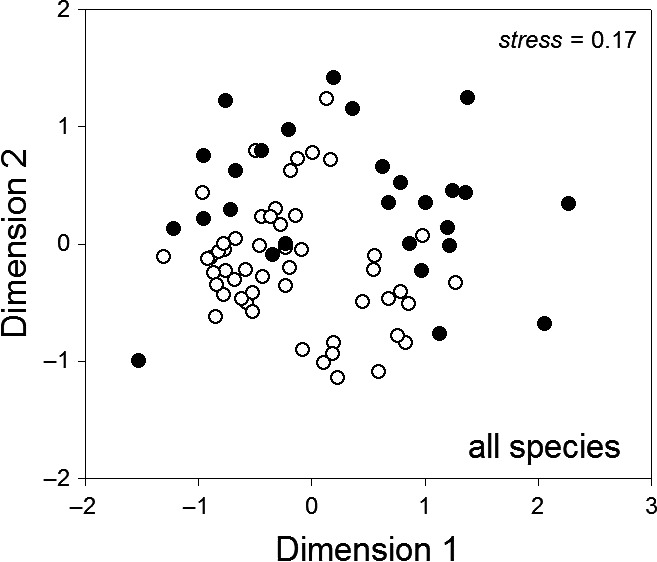
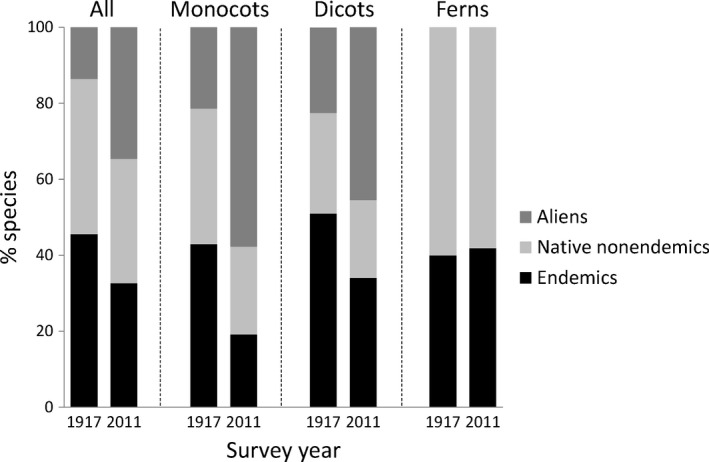
Oceanic islands are vulnerable ecosystems and their flora has been under pressure since the arrival of the first humans. Human activities and both deliberately and inadvertently introduced biota have had and continue to have a severe impact on island endemic plants. The number of alien plants has increased nearly linearly on many islands, perhaps resulting in extinction-based saturation of island floras. Here, we provide evidence for such a scenario in Alejandro Selkirk, Robinson Crusoe Islands (Archipelago Juan Fernández, Chile). We compared species richness and species composition of historical vegetation samples from 1917 with recent ones from 2011. Changes in species' relative occurrence frequency were related to their taxonomic affiliation, dispersal mode, distribution status, and humidity and temperature preferences. While total species richness of vascular plants remained relatively similar, species composition changed significantly. Plants endemic to the Robinson Crusoe Islands declined, exotic species increased substantially within the period of ca. 100 years. Further, the relative occurrence frequency of plants with preferences for very warm and humid climate decreased, while the opposite was found for plants preferring drier and colder environments. Potential drivers responsible for this dramatic shift in the vegetation within only one century might have been the large goat population affecting especially small populations of endemic plants and climatic changes. Taking into account a substantial extinction debt, we expect further shifts in the vegetation of this small oceanic island toward alien plants. This would have significant negative consequences on global biodiversity, considering that island floras contribute substantially to global plant species richness due to their high proportion of endemics.
大洋岛屿是脆弱的生态系统,自首批人类抵达以来,其植物群就一直面临压力。人类活动以及有意无意引入的生物群已经并将继续对岛屿特有植物产生严重影响。在许多岛屿上,外来植物的数量几乎呈线性增长,这可能导致岛屿植物群基于灭绝的饱和状态。在此,我们为智利胡安·费尔南德斯群岛的亚历杭德罗·塞尔扣克岛(鲁滨逊·克鲁索岛)出现这种情况提供了证据。我们将1917年历史植被样本的物种丰富度和物种组成与2011年的近期样本进行了比较。物种相对出现频率的变化与其分类归属、扩散模式、分布状况以及湿度和温度偏好有关。虽然维管植物的总物种丰富度保持相对相似,但物种组成发生了显著变化。在大约100年的时间里,鲁滨逊·克鲁索岛特有的植物减少,外来物种大幅增加。此外,偏好非常温暖潮湿气候的植物的相对出现频率下降,而偏好较干燥寒冷环境的植物则相反。仅在一个世纪内导致这种植被急剧变化的潜在驱动因素可能是大量的山羊种群,它们尤其影响了特有植物的小种群以及气候变化。考虑到大量的灭绝债务,我们预计这个小海洋岛屿的植被将进一步向外来植物转变。鉴于岛屿植物群因其高比例的特有物种而对全球植物物种丰富度有重大贡献,这将对全球生物多样性产生重大负面影响。