Deraska Peter V, O'Leary Colin, Reavis Hunter D, Labe Shelby, Dinh Tru-Khang, Lazaro Jean-Bernard, Sweeney Christopher, D'Andrea Alan D, Kozono David
1Department of Radiation Oncology, Dana-Farber Cancer Institute, Boston, MA USA.
2Center for DNA Damage and Repair, Dana-Farber Cancer Institute, Boston, MA USA.
Cell Death Discov. 2018 Feb 7;4:10. doi: 10.1038/s41420-017-0008-3. eCollection 2018 Dec.
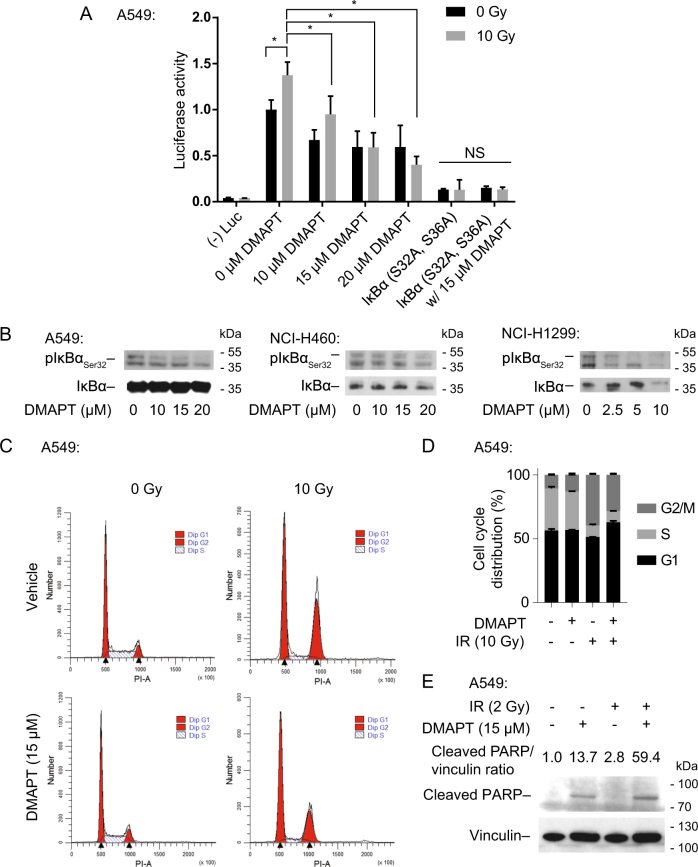
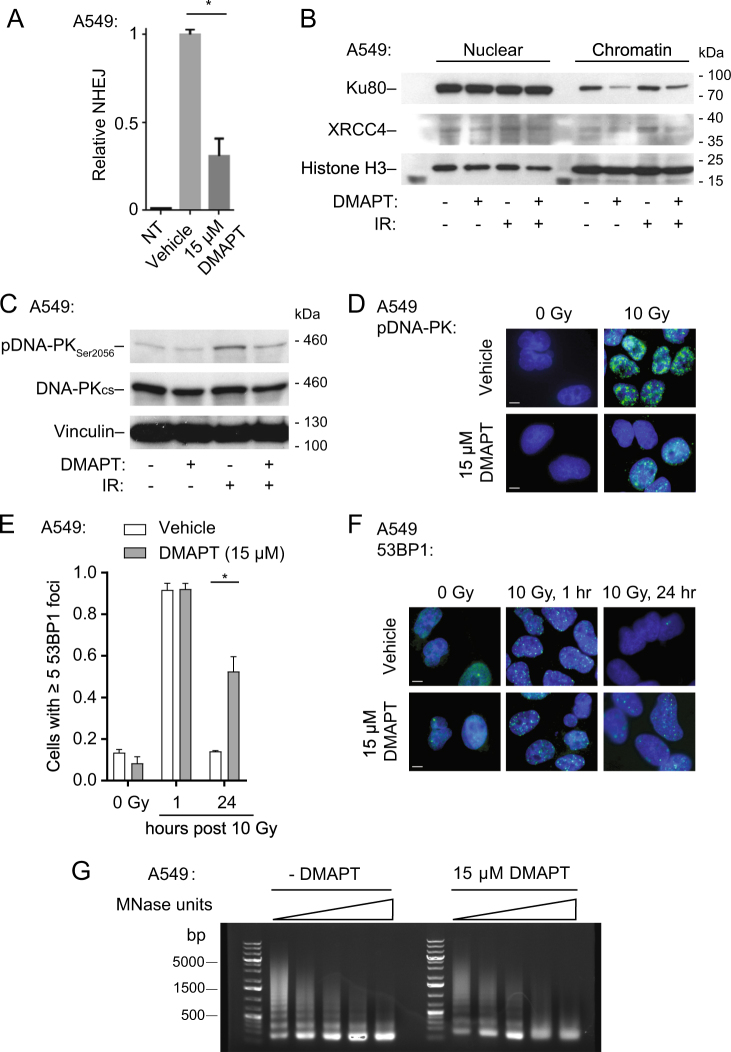
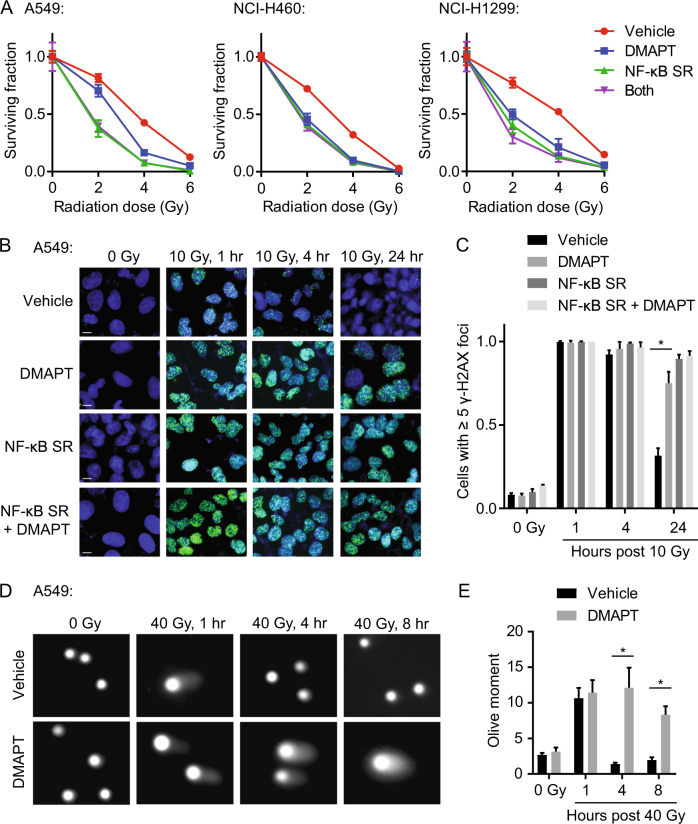
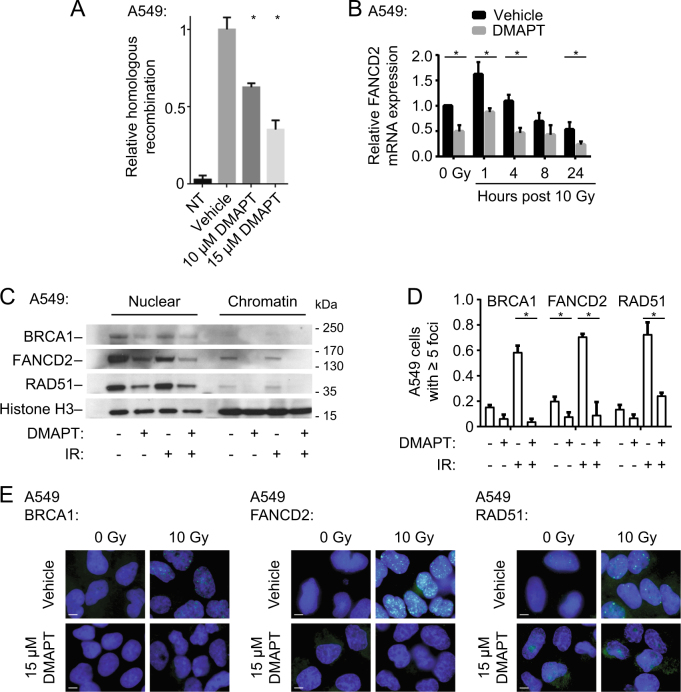
Despite optimal chemotherapy, radiotherapy (RT), and/or surgery, non-small-cell lung carcinoma (NSCLC) remains the leading cause of cancer-related death in the US and worldwide. Thoracic RT, a mainstay in the treatment of locally advanced NSCLC, is often restricted in efficacy by a therapeutic index limited by sensitivity of tissues surrounding the malignancy. Therefore, radiosensitizers that can improve the therapeutic index are a vital unmet need. Inhibition of the NF-κB pathway is a proposed mechanism of radiosensitization. Here we demonstrate that inhibition of the canonical NF-κB pathway by dimethylaminoparthenolide (DMAPT) radiosensitizes NSCLC by blocking DNA double-strand break (DSB) repair. NF-κB inhibition results in significant impairment of both homologous recombination (HR) and non-homologous end joining (NHEJ), as well as reductions in ionizing radiation (IR)-induced DNA repair biomarkers. NF-κB inhibition by DMAPT shows preclinical potential for further investigation as a NSCLC radiosensitizer.
尽管采用了最佳的化疗、放疗(RT)和/或手术,但非小细胞肺癌(NSCLC)仍然是美国和全球癌症相关死亡的主要原因。胸部放疗是局部晚期NSCLC治疗的主要手段,但其疗效常常受到肿瘤周围组织敏感性所限的治疗指数的限制。因此,能够提高治疗指数的放射增敏剂是一项至关重要的未满足需求。抑制NF-κB信号通路是一种放射增敏的机制。在此我们证明,二甲基氨基半日花醇酯(DMAPT)对经典NF-κB信号通路的抑制作用通过阻断DNA双链断裂(DSB)修复使NSCLC对放疗更加敏感。抑制NF-κB会导致同源重组(HR)和非同源末端连接(NHEJ)均受到显著损害,同时也会使电离辐射(IR)诱导的DNA修复生物标志物减少。DMAPT对NF-κB的抑制作用显示出作为NSCLC放射增敏剂进行进一步研究的临床前潜力。