Baxter Alison, Salmon Christina, Dufresne Kristen, Carasco-Lee Alexandra, Matheson Flora I
Centre for Research on Inner City Health in the Li Ka Shing Knowledge Institute of St. Michael's Hospital, 30 Bond Street, Toronto, ON, Canada M5B 1W8.
Knowledge Translation Program in the Li Ka Shing Knowledge Institute of St. Michael's Hospital, 209 Victoria Street, Toronto, ON, Canada M5C 1N8.
Addict Behav Rep. 2015 Nov 3;3:1-8. doi: 10.1016/j.abrep.2015.10.001. eCollection 2016 Jun.
Men and women differ in their patterns of help-seeking for health and social problems. For people experiencing problem gambling, feelings of stigma may affect if and when they reach out for help. In this study we examine men's and women's perceptions of felt stigma in relation to help-seeking for problematic gambling.
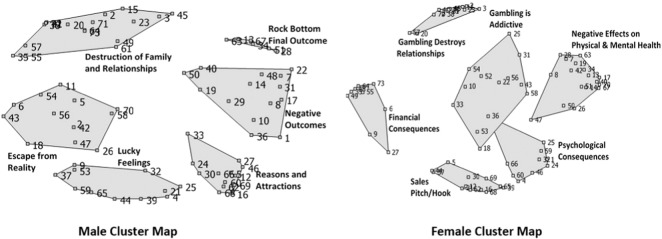
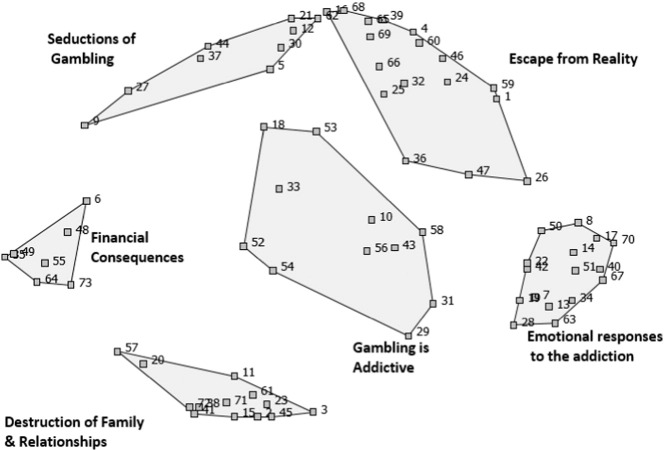
Using concept mapping, we engaged ten men and eighteen women in group activities. We asked men and women about their perceptions of the pleasurable aspects and negative consequences of gambling; they generated a list of four hundred and sixteen statements. These statements were parsed for duplication and for relevance to the study focal question and reduced to seventy-three statements by the research team. We then asked participants to rate their perceptions of how much felt stigma (negative impact on one's own or family's reputation) interfered with help-seeking for gambling. We analyzed the data using a gender lens.
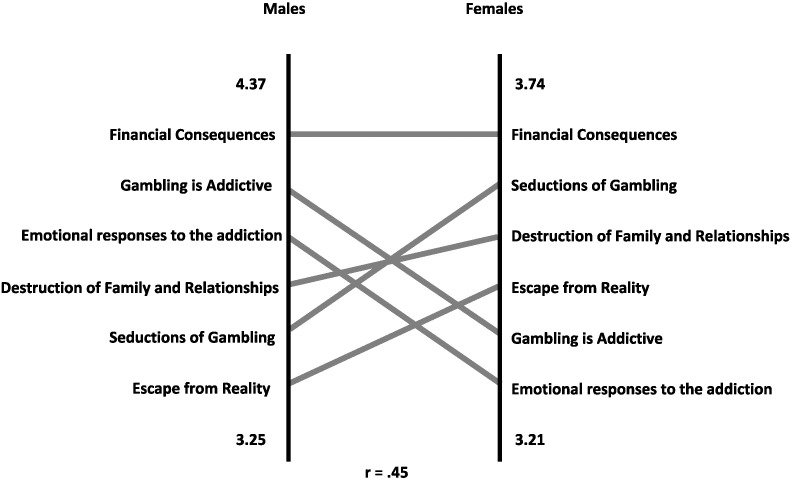
Men and women felt that shame associated with gambling-related financial difficulties was detrimental to help-seeking. For men, the addictive qualities of and emotional responses to gambling were perceived as stigma-related barriers to help-seeking. For women, being seduced by the 'bells and whistles' of the gambling venue, their denial of their addiction, their belief in luck and that the casino can be beat, and the shame of being dishonest were perceived as barriers to help-seeking.
Efforts to engage people who face gambling problems need to consider gendered perceptions of what is viewed as stigmatizing.
男性和女性在寻求健康和社会问题帮助的模式上存在差异。对于有问题赌博经历的人来说,耻辱感可能会影响他们是否以及何时寻求帮助。在本研究中,我们考察了男性和女性在寻求问题赌博帮助方面对感知到的耻辱感的看法。
我们采用概念绘图法,让10名男性和18名女性参与小组活动。我们询问男性和女性对赌博的愉悦方面和负面后果的看法;他们列出了416条陈述。研究团队对这些陈述进行了重复内容和与研究焦点问题相关性的分析,并将其缩减至73条陈述。然后,我们要求参与者对他们认为感知到的耻辱感(对自己或家庭声誉的负面影响)在多大程度上妨碍寻求赌博帮助进行评分。我们从性别视角分析了数据。
男性和女性都认为与赌博相关的经济困难所带来的羞耻感不利于寻求帮助。对于男性而言,赌博的成瘾特质和情感反应被视为寻求帮助的耻辱感相关障碍。对于女性来说,被赌博场所的“花里胡哨”所诱惑、否认自己成瘾、相信运气以及认为赌场可以被击败,以及不诚实的羞耻感被视为寻求帮助的障碍。
促使面临赌博问题的人寻求帮助的努力需要考虑到对被视为耻辱之事的性别化认知。