Molinier Cécile, Reisser Céline M O, Fields Peter, Ségard Adeline, Galimov Yan, Haag Christoph R
Centre d'Ecologie Fonctionnelle et Evolutive (CEFE)- Unité Mixte de Recherche 5175, Centre National de la Recherche Scientifique (CNRS)-Université de Montpellier-Université Paul-Valéry Montpellier-Ecole Pratique des Hautes Etudes (EPHE), 1919 Route de Mende, 34293 Montpellier Cedex 5, France
Centre d'Ecologie Fonctionnelle et Evolutive (CEFE)- Unité Mixte de Recherche 5175, Centre National de la Recherche Scientifique (CNRS)-Université de Montpellier-Université Paul-Valéry Montpellier-Ecole Pratique des Hautes Etudes (EPHE), 1919 Route de Mende, 34293 Montpellier Cedex 5, France.
G3 (Bethesda). 2018 May 4;8(5):1523-1533. doi: 10.1534/g3.118.200174.
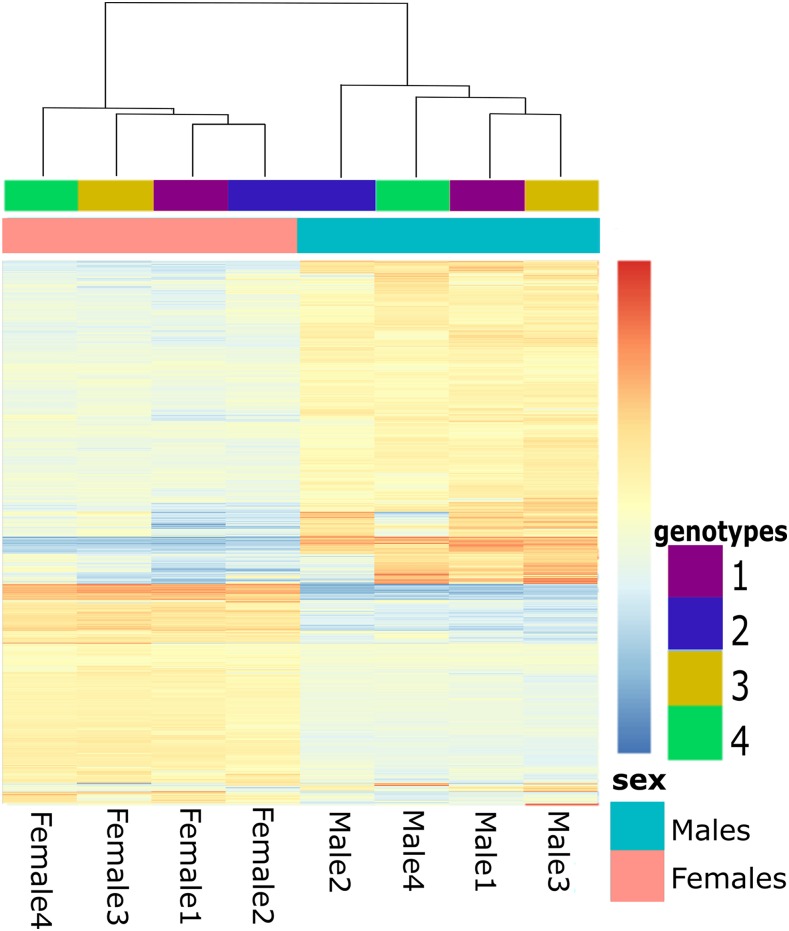
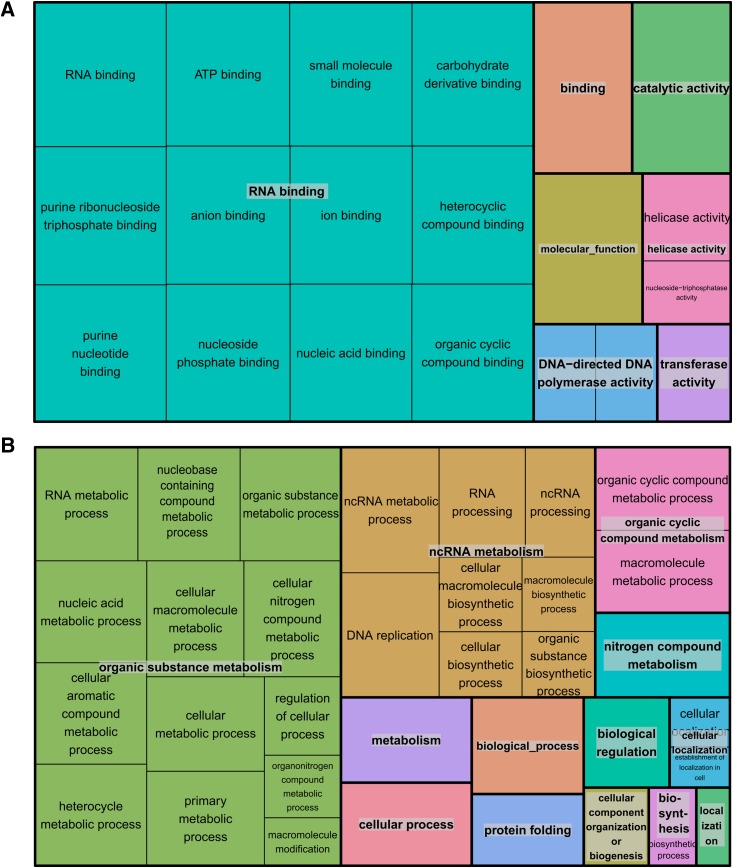
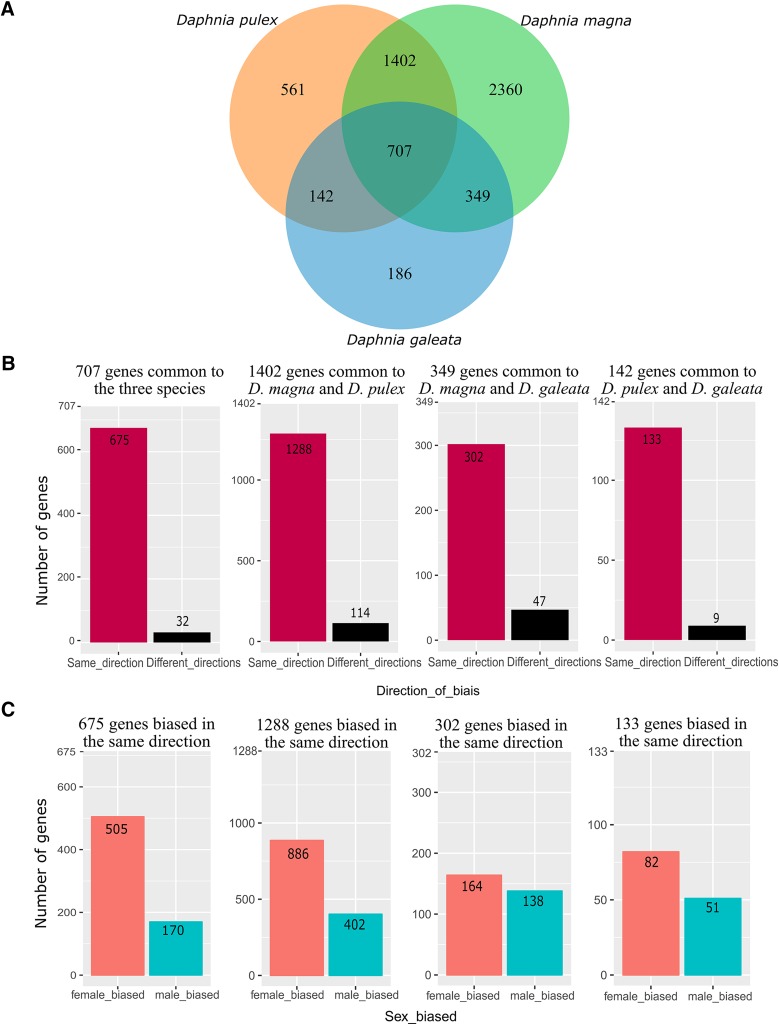
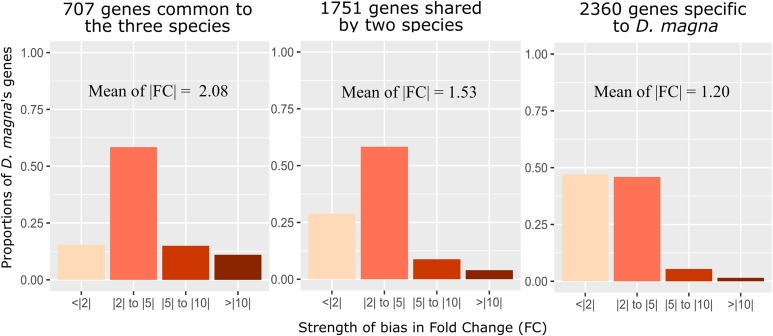
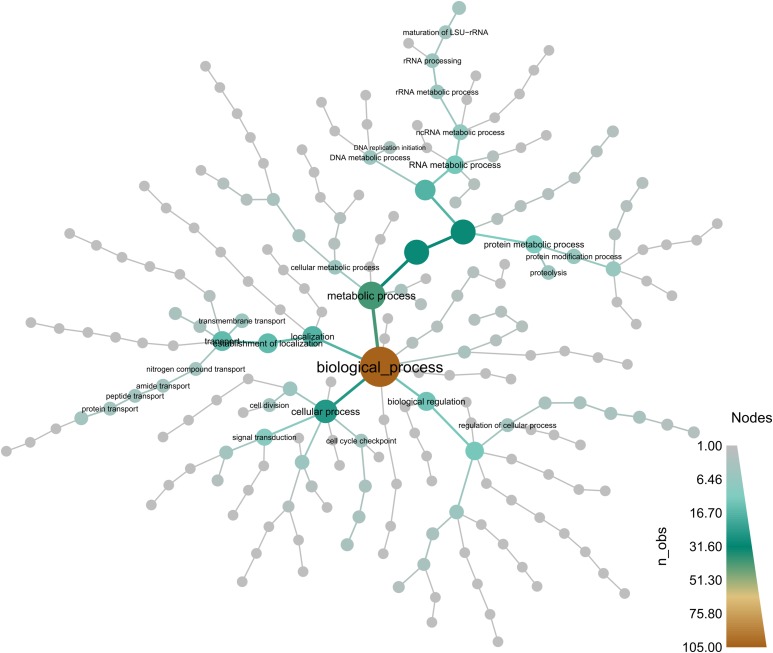
reproduce by cyclic-parthenogenesis, where phases of asexual reproduction are intermitted by sexual production of diapause stages. This life cycle, together with environmental sex determination, allow the comparison of gene expression between genetically identical males and females. We investigated gene expression differences between males and females in four genotypes of and compared the results with published data on sex-biased gene expression in two other species, each representing one of the major phylogenetic clades within the genus. We found that 42% of all annotated genes showed sex-biased expression in This proportion is similar both to estimates from other species as well as from species with genetic sex determination, suggesting that sex-biased expression is not reduced under environmental sex determination. Among 7453 single copy, one-to-one orthologs in the three species, 707 consistently showed sex-biased expression and 675 were biased in the same direction in all three species. Hence these genes represent a core-set of genes with consistent sex-differential expression in the genus. A functional analysis identified that several of them are involved in known sex determination pathways. Moreover, 75% were overexpressed in females rather than males, a pattern that appears to be a general feature of sex-biased gene expression in .
通过周期性孤雌生殖进行繁殖,其中无性繁殖阶段会被滞育阶段的有性生殖所中断。这种生命周期,连同环境性别决定,使得能够比较基因相同的雄性和雌性之间的基因表达。我们研究了四种基因型的[物种名称未给出]雄性和雌性之间的基因表达差异,并将结果与另外两种[物种名称未给出]物种中已发表的性别偏向基因表达数据进行了比较,每种物种代表该属内主要系统发育分支之一。我们发现,在[物种名称未给出]中,所有注释基因的42%表现出性别偏向表达。这一比例与其他[物种名称未给出]物种以及具有遗传性别决定的物种的估计值相似,表明在环境性别决定下,性别偏向表达并未减少。在这三个[物种名称未给出]物种的7453个单拷贝、一对一直系同源基因中,707个始终表现出性别偏向表达,675个在所有三个物种中都偏向相同方向。因此,这些基因代表了该属中具有一致性别差异表达的一组核心基因。功能分析表明,其中一些基因参与了已知的性别决定途径。此外,75%在雌性中而非雄性中过度表达,这种模式似乎是[物种名称未给出]中性别偏向基因表达的一个普遍特征。