Department of Neurosciences, University of California-San Diego, La Jolla, CA, 92093, USA.
Department of Neurological Surgery, University of California-San Francisco, San Francisco, CA, 94103, USA.
Gene Ther. 2018 Apr;25(2):104-114. doi: 10.1038/s41434-018-0010-2. Epub 2018 Mar 13.
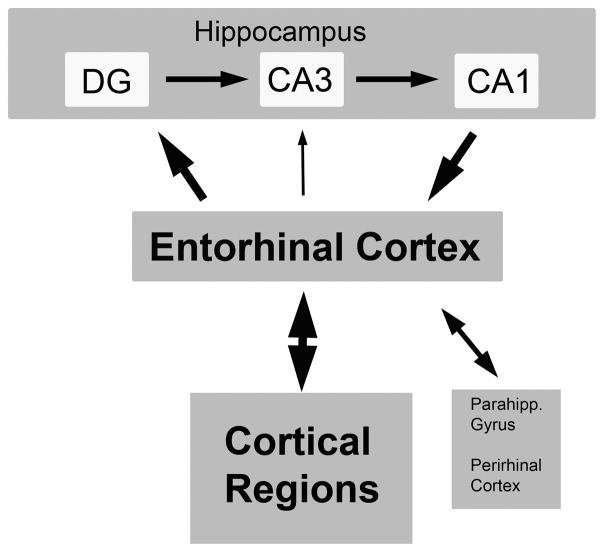
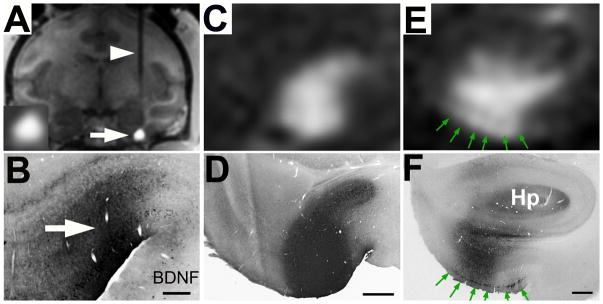
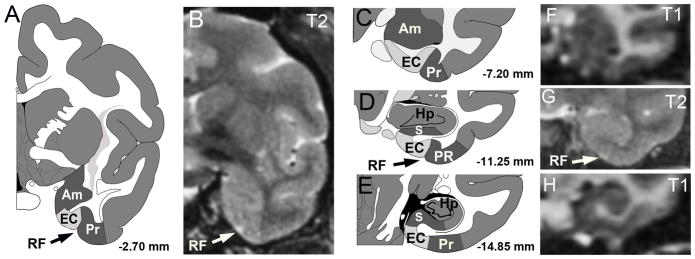
Brain-derived neurotrophic factor (BDNF) gene delivery to the entorhinal cortex is a candidate for treatment of Alzheimer's disease (AD) to reduce neurodegeneration that is associated with memory loss. Accurate targeting of the entorhinal cortex in AD is complex due to the deep and atrophic state of this brain region. Using MRI-guided methods with convection-enhanced delivery, we were able to accurately and consistently target AAV2-BDNF delivery to the entorhinal cortex of non-human primates; 86 ± 3% of transduced cells in the targeted regions co-localized with the neuronal marker NeuN. The volume of AAV2-BDNF (3 × 10 vg/µl) infusion linearly correlated with the number of BDNF labeled cells and the volume (mm) of BDNF immunoreactivity in the entorhinal cortex. BDNF is normally trafficked to the hippocampus from the entorhinal cortex; in these experiments, we also found that BDNF immunoreactivity was elevated in the hippocampus following therapeutic BDNF vector delivery to the entorhinal cortex, achieving growth factor distribution through key memory circuits. These findings indicate that MRI-guided infusion of AAV2-BDNF to the entorhinal cortex of the non-human primate results in safe and accurate targeting and distribution of BDNF to both the entorhinal cortex and the hippocampus. These methods are adaptable to human clinical trials.
脑源性神经营养因子 (BDNF) 基因递送至内嗅皮层是治疗阿尔茨海默病 (AD) 的候选方法,可减少与记忆丧失相关的神经退行性变。由于该脑区深度和萎缩,AD 中内嗅皮层的精确靶向非常复杂。使用 MRI 引导的方法进行对流增强递药,我们能够准确且一致地将 AAV2-BDNF 递送至非人类灵长类动物的内嗅皮层;靶向区域中 86±3%的转导细胞与神经元标志物 NeuN 共定位。AAV2-BDNF(3×10vg/µl)输注体积与 BDNF 标记细胞数量以及内嗅皮层中 BDNF 免疫反应性体积(mm)呈线性相关。BDNF 通常从内嗅皮层运送到海马体;在这些实验中,我们还发现,在内嗅皮层给予治疗性 BDNF 载体后,BDNF 免疫反应性在内侧海马体中升高,通过关键记忆回路实现生长因子分布。这些发现表明,将 AAV2-BDNF 经 MRI 引导递送至非人类灵长类动物的内嗅皮层可实现 BDNF 对内嗅皮层和海马体的安全且准确靶向和分布。这些方法适用于人类临床试验。