College of Pharmacy, Pusan National University, Busan, Republic of Korea.
Int J Nanomedicine. 2018 Feb 28;13:1225-1240. doi: 10.2147/IJN.S157566. eCollection 2018.
Colon-targeted oral nanoparticles (NPs) have emerged as an ideal, safe, and effective therapy for ulcerative colitis (UC) owing to their ability to selectively accumulate in inflamed colonic mucosa. Cyclosporine A (CSA), an immunosuppressive agent, has long been used as rescue therapy in severe steroid-refractory UC. In this study, we developed CSA-loaded dual-functional polymeric NPs composed of Eudragit FS30D as a pH-sensitive polymer for targeted delivery to the inflamed colon, and poly(lactic-co-glycolic acid) (PLGA) as a sustained-release polymer.
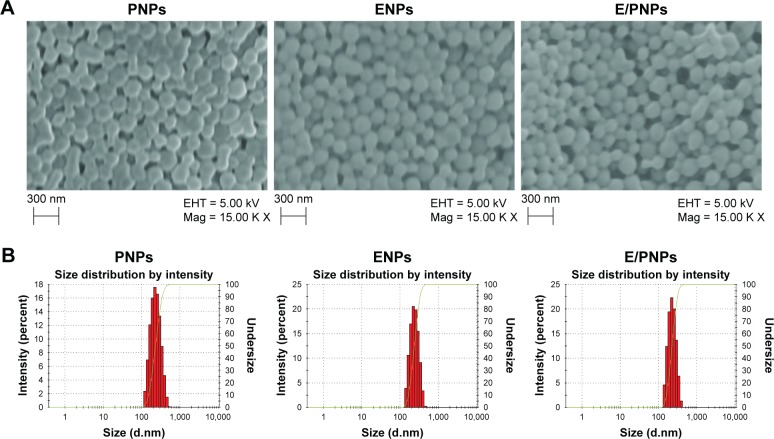
CSA-loaded Eudragit FS30D nanoparticles (ENPs), PLGA nanoparticles (PNPs), and Eudragit FS30D/PLGA nanoparticles (E/PNPs) were prepared using the oil-in-water emulsion method. Scanning electron microscope images and zeta size data showed successful preparation of CSA-loaded NPs.
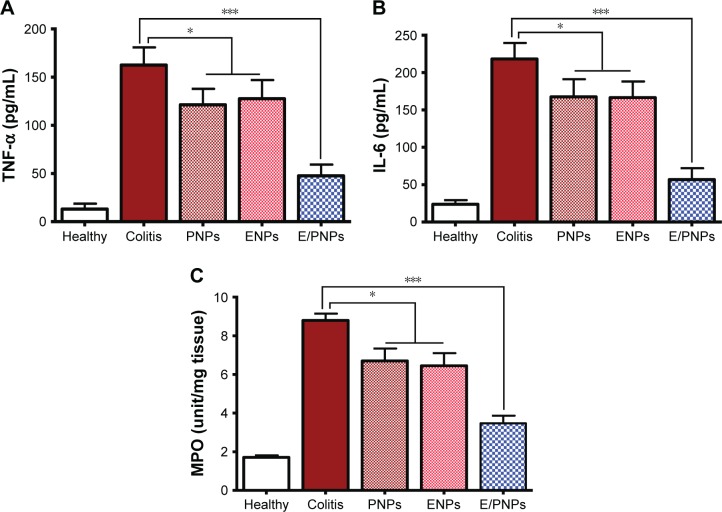
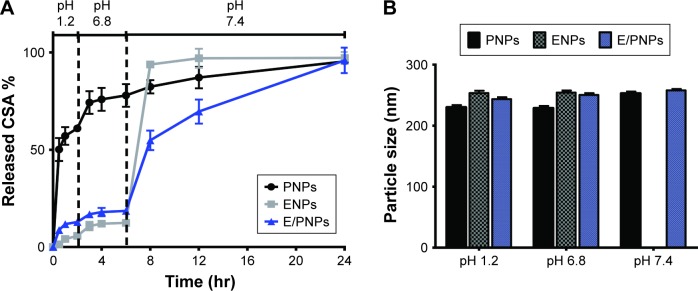
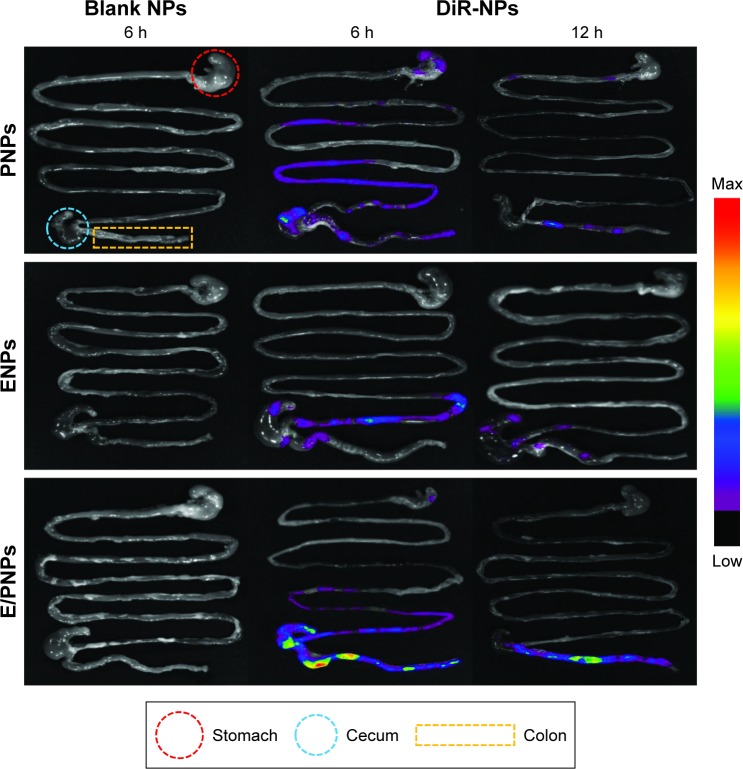
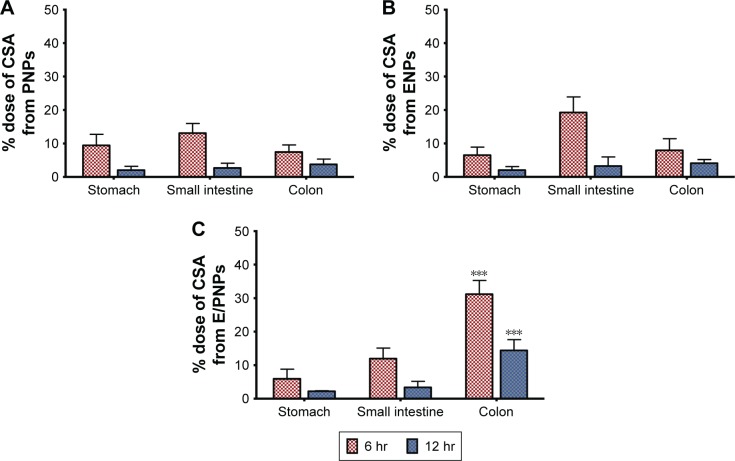
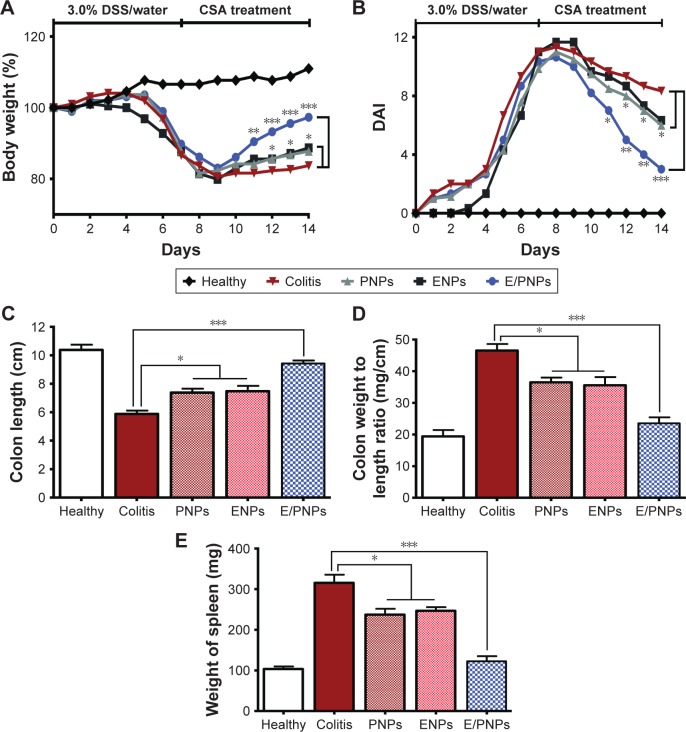
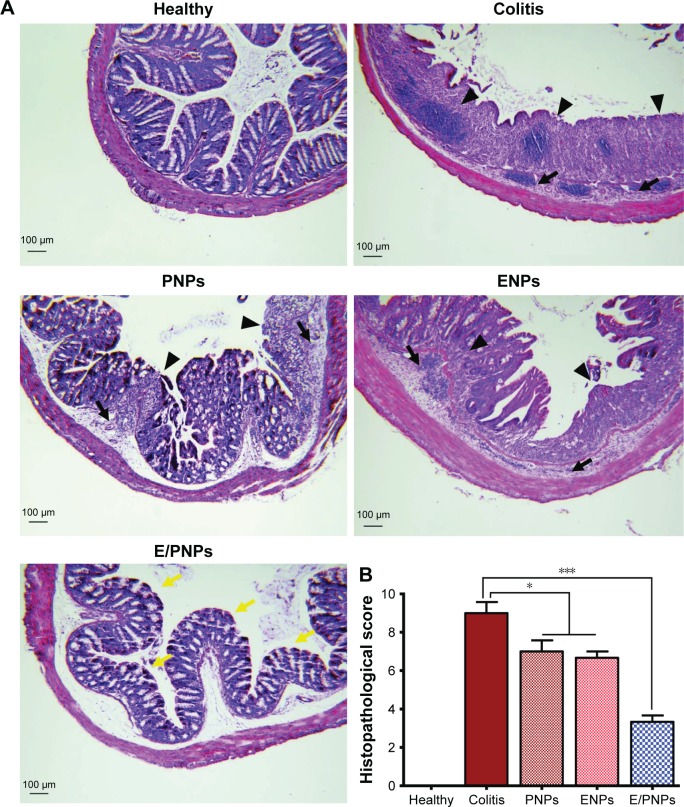
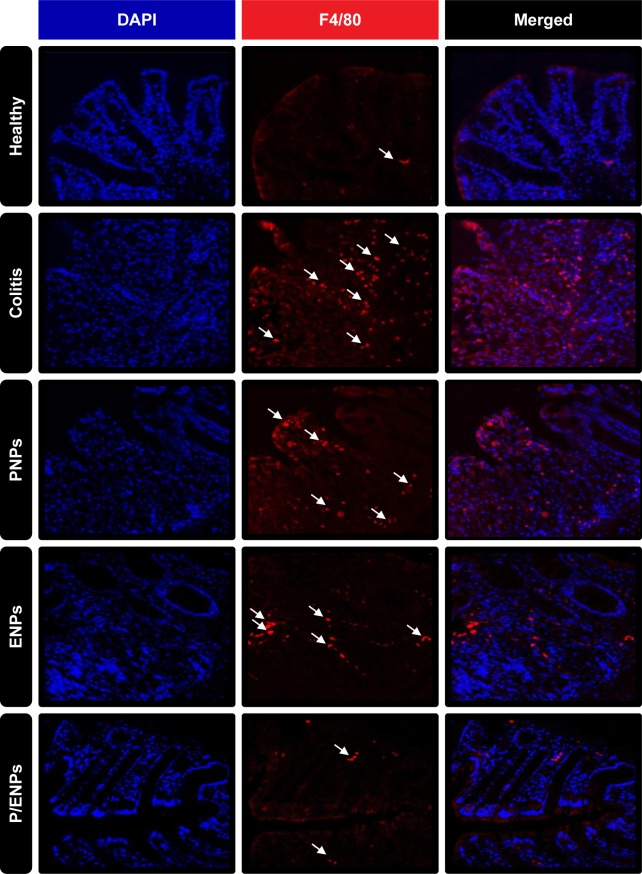
PNPs exhibited a burst drug release of >60% at pH 1.2 (stomach pH) in 0.5 h, which can lead to unwanted systemic absorption and side effects. ENPs effectively inhibited the burst drug release at pH 1.2 and 6.8 (proximal small intestine pH); however, nearly 100% of the CSA in ENPs was released rapidly at pH 7.4 (ileum-colon pH) owing to complete NP dissolution. In contrast to single-functional PNPs and ENPs, the dual-functional E/PNPs minimized burst drug release (only 18%) at pH 1.2 and 6.8, and generated a sustained release at pH 7.4 thereafter. Importantly, in distribution studies in the gastrointestinal tracts of mice, E/PNPs significantly improved CSA distribution to the colon compared with PNPs or ENPs. In a mouse model of colitis, E/PNP treatment improved weight loss and colon length, and decreased rectal bleeding, spleen weight, histological scoring, myeloperoxidase activity, macrophage infiltration, and expression of proinflammatory cytokines compared with PNPs or ENPs.
Overall, this work confirms the benefits of CSA-loaded E/PNPs for efficiently delivering CSA to the colon, suggesting their potential for UC therapy.
由于其选择性地在炎症性结肠黏膜中积聚的能力,结肠靶向口服纳米粒子(NPs)已成为溃疡性结肠炎(UC)的一种理想、安全且有效的治疗方法。环孢素 A(CSA)是一种免疫抑制剂,长期以来一直被用作严重类固醇难治性 UC 的挽救治疗。在这项研究中,我们开发了 CSA 负载的双功能聚合物 NPs,由 Eudragit FS30D 作为 pH 敏感聚合物用于靶向递送至炎症性结肠,以及聚乳酸-共-羟基乙酸(PLGA)作为缓释聚合物。
CSA 负载的 Eudragit FS30D 纳米粒子(ENPs)、PLGA 纳米粒子(PNPs)和 Eudragit FS30D/PLGA 纳米粒子(E/PNPs)是通过油包水乳液法制备的。扫描电子显微镜图像和 Zeta 粒径数据表明成功制备了 CSA 负载的 NPs。
PNPs 在 pH 1.2(胃 pH)下 0.5 h 内表现出超过 60%的突释药物释放,这可能导致不必要的全身吸收和副作用。ENPs 有效抑制了 pH 1.2 和 6.8(近端小肠 pH)下的突释药物释放;然而,由于完全 NP 溶解,ENPs 中的几乎 100% CSA 迅速在 pH 7.4(回肠-结肠 pH)下快速释放。与单功能 PNPs 和 ENPs 相比,双功能 E/PNPs 在 pH 1.2 和 6.8 下最小化了突释药物释放(仅 18%),并在随后的 pH 7.4 下产生了持续释放。重要的是,在小鼠胃肠道分布研究中,与 PNPs 或 ENPs 相比,E/PNPs 显著改善了 CSA 向结肠的分布。在结肠炎小鼠模型中,与 PNPs 或 ENPs 相比,E/PNP 治疗改善了体重减轻和结肠长度,并减少了直肠出血、脾脏重量、组织学评分、髓过氧化物酶活性、巨噬细胞浸润和促炎细胞因子的表达。
总的来说,这项工作证实了 CSA 负载的 E/PNPs 高效地将 CSA 递送至结肠的优势,表明其在 UC 治疗中的潜力。